

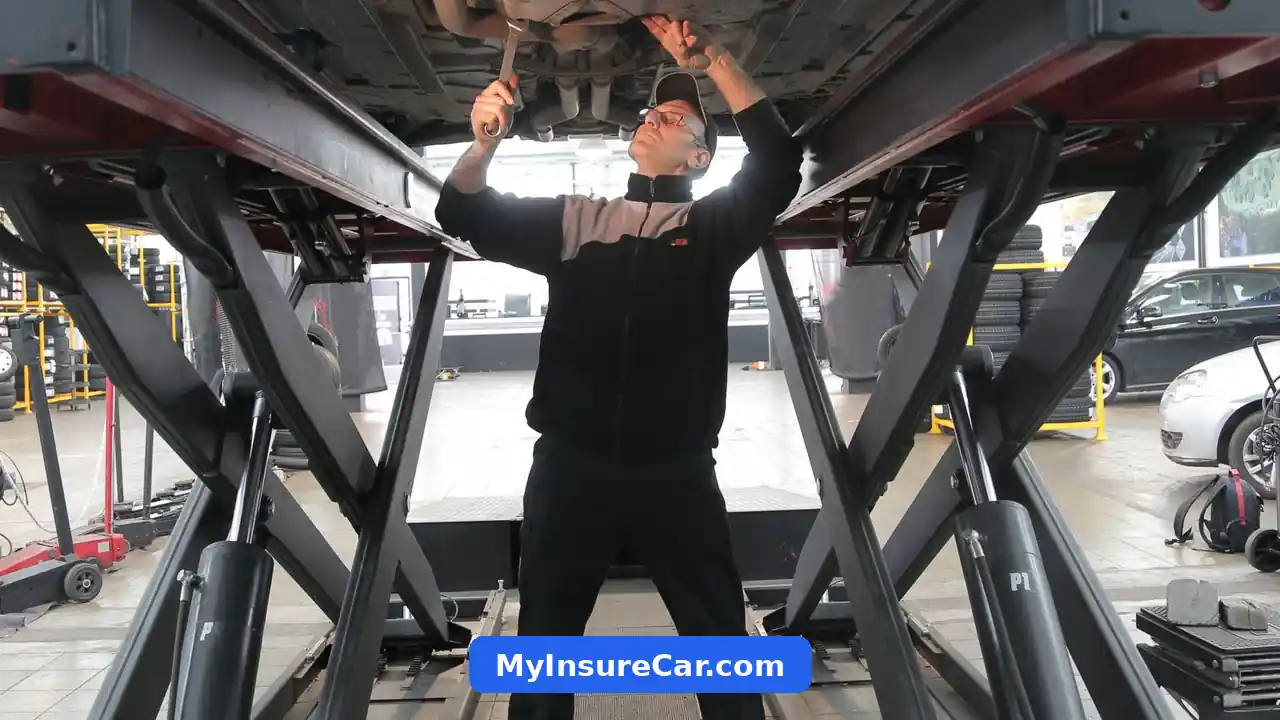
Your car is sitting in the repair shop, and your phone is silent. Nobody has called. Nobody has explained anything. You just want your car back, fixed, quickly, without a fight.
The repair itself is only half of what happens next. The other half is a process run by your insurer, with an adjuster, an estimate, a repair shop, and rules about what gets paid for and what does not. So let us walk through that process in the order you will meet it, so you know what is happening at every step, and what to do when it stalls.
Reporting the accident and opening a claim
Report the accident to your insurer as soon as it is safe, ideally the same day. Give the facts: where and when it happened, who was involved, what was damaged, and whether anyone was hurt. Do not guess at fault or at the cost of repairs. The Insurance Information Institute gives a clear checklist for what to record at the scene.
Take photos before anything is moved, if safe: every damaged panel, the other vehicle, road, skid marks, debris. If there are witnesses, take their names and numbers. This evidence becomes the backbone of your claim. A clear set of photos taken at the scene is worth more than a long argument later, because photos do not forget and people do.
Your insurer will give you a claim number. Use it in every call and email. Keep a log of who you spoke to, when, and what was agreed. Claims go wrong most often when nobody can reconstruct what was promised. If you have never done this before, read our guide to filing a car insurance claim properly before you make the first call.
The adjuster decides what the insurer pays
The adjuster decides, on your insurer’s behalf, how much your claim is worth. The adjuster inspects your car, reviews your photos and the police report, and writes an estimate. That estimate is the starting point, not the final word. If the shop finds more damage once your car is taken apart, it sends a supplement, a request to add the extra work to your claim.
You are allowed to ask questions. If the estimate assumes aftermarket parts and you want original parts, ask what the policy says and what the price difference is. If it leaves out damage you can see, point it out. Adjusters handle many claims at once, and a polite, specific question usually gets a faster answer than a complaint. You are probably thinking: I do not want to be difficult. You are not being difficult. You are the only person in the process whose job is to look after your car.
If you disagree with the outcome, you can ask for a review, and complain through the insurer’s formal process. Keep every document, because a review runs on paperwork, not memory. And once the estimate is agreed, the next question is where the work happens.
Approved shops and direct repair programmes
Many insurers run a direct repair programme: a network of shops that agree to the insurer’s pricing and guarantee their work. Using one is usually fastest. The shop deals directly with the insurer, the paperwork moves quickly, and the work is often guaranteed for as long as you own the car. If this is you, the driver who just wants the car back with the least hassle, the network shop is your easiest path.
You are not normally forced to use a network shop. In many states you can choose your own repairer, and the insurer must still pay the reasonable cost. The trade off is a longer wait for approval, and you may have to pay the shop and claim the money back. If you have a shop you trust, tell the insurer early and ask how the process works out of network.
Ask the shop for a written estimate before work starts, and whether the price covers all parts and labour or only part of the job. A shop that is vague about price is a shop to avoid.
How repair costs are estimated
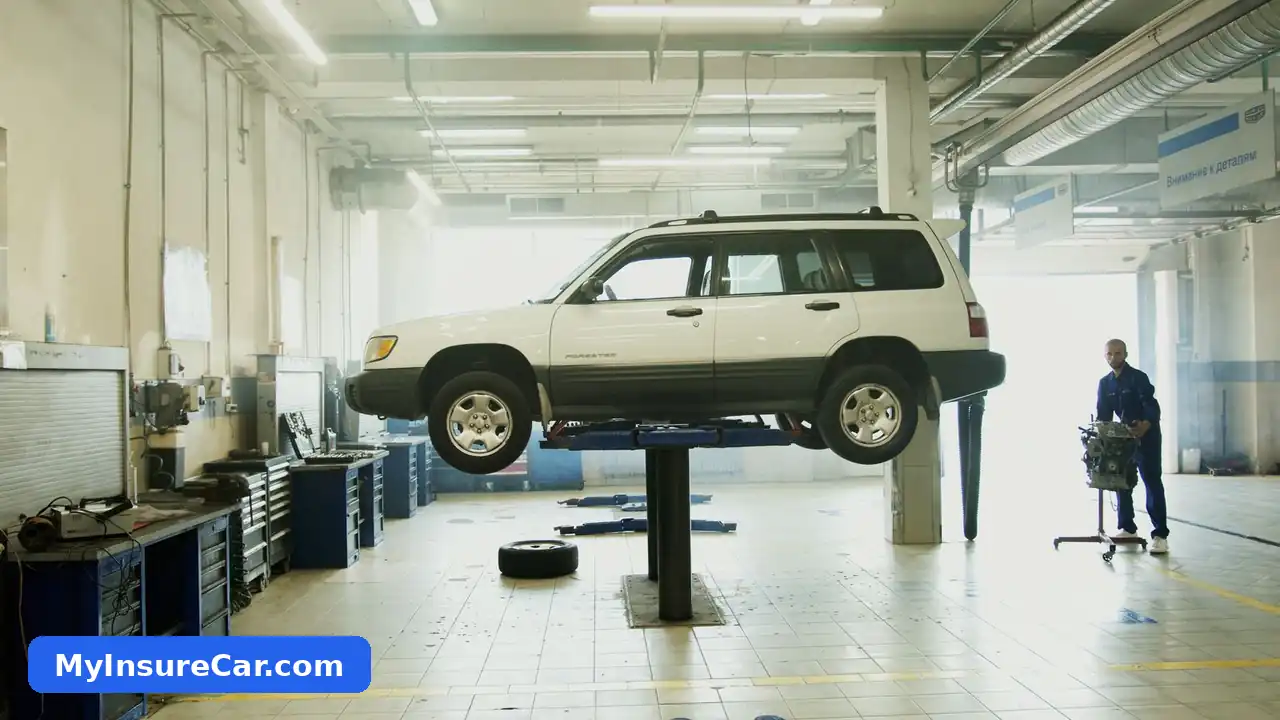
Repair estimates are built from three ingredients: labour, parts, and materials. Labour is the shop’s hourly rate multiplied by the hours the estimating software says the job should take. Parts are priced as new original, aftermarket, or used, depending on the policy and the age of the car. Materials cover paint, fillers, and consumables. That is the whole recipe.
Modern cars are expensive to fix for reasons that have nothing to do with the bodywork. A cracked bumper can hide parking sensors. A windscreen can carry a lane keeping camera. Replacing and recalibrating those systems adds cost and time, and it is why a repair that looks minor can run into thousands. You are probably thinking: it is just a bumper, how can it cost that much? It is never just a bumper any more.
When the shop finds extra damage, it stops and sends a supplement. Supplements are normal, not a sign that the shop is inflating the bill. Watch for a supplement that appears with no photos or no explanation. Ask for both, because a supplement with photos is a repair, and one without them is a question mark on your money.
The appraisal clause: your right to dispute the number
Most standard auto policies include a provision most drivers never read until they need it: the appraisal clause. It sits in the physical damage section of the standard ISO personal auto policy, which most carriers use as their template, and it gives either side a way out when they disagree on the amount of a loss. If your insurer’s repair estimate is far below your shop’s, or its total loss valuation is far below market value, you can demand an appraisal in writing. A phone call is not enough; the demand has to be written.
The process is simple and it is binding. You pick an independent appraiser and the insurer picks one. The two appraisers pick a neutral umpire if they disagree. A decision agreed by any two of the three is binding. Each side pays its own appraiser and the two sides split the umpire’s cost. Two limits matter. First, appraisal settles the dollar amount only, not whether the loss is covered at all, so it cannot help if the insurer is denying the claim. Second, it is a first-party right, for a claim on your own policy, not a claim against the other driver’s insurer. Some insurers are now removing the clause from new policies, and Texas and Washington have passed laws to preserve it, so check whether your policy still has it before you need it. Our guide to what happens to insurance after a total loss payout explains the valuation fight in detail, and our guide to diminished value claims after a car accident covers the loss an appraisal cannot fix.
When the insurer calls it a total loss
If repair costs come close to what your car is worth, the insurer may declare it a total loss and pay actual cash value instead of repairing it. Each state sets its own threshold, often a percentage of the car’s value. Your state insurance department can tell you the threshold that applies where you live.
Actual cash value is not what you paid, and it is not the cost of a replacement. It is what a similar car of the same age, mileage, and condition would sell for today. If the valuation is too low, gather adverts for comparable cars in your area and present them. Insurers do revise valuations when the evidence is solid.
A total loss does not mean you must accept the first figure. It means your negotiation moves from repair costs to the value of your car. Keep your service history, receipts for recent tyres or repairs, and photos from before the accident. All of it supports a fair valuation. But the repair bill is not the only money at stake.
Diminished value: the claim the estimate never includes
A repair estimate pays for the repair. It does not pay for what the car lost by being in a crash at all. A repaired car is worth less than an identical car that was never damaged, and that gap is diminished value. It is a separate claim, and the insurer will not offer it unless you ask. Against the at-fault driver’s insurer, as a third-party claim, it is recoverable in 37 of 51 US jurisdictions. Against your own policy, as a first-party claim, it is a different story: only a handful of states allow it, and Georgia leads them. In State Farm v. Mabry (2001), the Georgia Supreme Court held that insurers must evaluate diminished value on first-party claims, even when the driver never asks.
Insurers that do pay usually start from the 17c formula, which caps the loss at 10 percent of the car’s pre-accident value and then multiplies by a damage factor and a mileage factor. Take a $30,000 car with moderate structural damage and 50,000 miles: $30,000 times 10 percent is $3,000, times 0.75 for the damage, times 0.60 for the mileage, which comes to $1,350. That is the insurer’s starting number, not what you are owed. The legal measure in most states is the car’s market value before the crash minus its value after repair, which an independent appraisal establishes, and an appraisal regularly produces a higher figure than the formula. Most states give you two to three years to file, and the sooner you act, the stronger your documentation. Our guide to diminished value claims after a car accident walks through the filing steps, and our guide to what happens to insurance after a total loss payout explains when a car is repaired and when it is written off.
Hidden costs after an accident
Repairs are not the only cost. You may need a hire car while yours is in the shop, and hire car cover is only included if your policy has it. You may lose value even after a perfect repair, because a car with an accident on its record sells for less. That loss is called diminished value, and in some states you can claim it from the at fault driver’s insurer. If this is you, the driver with a repaired car that buyers suddenly value less, that lost value is a claim of its own, not just bad luck.
There is also the effect on your next premium. An at fault claim usually raises your price at renewal, sometimes for several years. A not at fault claim usually has a smaller effect. Before you claim for minor damage, compare the repair bill with your excess and the likely premium increase. Sometimes paying for a small repair yourself is cheaper over two years, and it keeps your premium where it is.
If the other driver was at fault, their insurer should pay for your repairs. In practice, that can take time, and you can claim on your own policy first and let the insurers sort out reimbursement. This is called subrogation, and it should not leave you out of pocket for the excess in the long run if the other driver is found at fault. So you do not have to wait for the other insurer to move.
Technology is speeding claims up
Many insurers now let you start a claim from an app, upload photos, and get an estimate without an inspection. For straightforward damage, this can cut days off the process. For complex damage, an in person inspection is still the norm, because photos cannot show a bent subframe. You are probably thinking: so the app is fast but only for the easy stuff. That is exactly right, and knowing which kind of claim yours is tells you how long to expect.
The fastest claims share a pattern: report early, upload clear photos, answer the adjuster’s questions promptly, and keep every document in one place. Speed comes from evidence, not from pressure. An adjuster can approve a well documented claim in a day. A thin file with missing photos can sit for weeks. Knowing how long a car insurance claim takes helps you judge whether your own claim is on track or stalled.
If your claim stalls, ask one specific question: what exactly is the insurer still waiting for? Usually a document, a photo, or a decision from the other driver’s insurer. Once you know which one, you can usually supply it or chase it.
Frequently Asked Questions
Can I choose my own repair shop?
In many states, yes. You can use a shop outside your insurer’s network, but approval may take longer and you may need to pay first and claim back. Ask your insurer how it handles out of network repairs before work starts.
What is a supplement in a car insurance claim?
A supplement is an extra claim from the repair shop for damage found after your car is taken apart. Supplements are normal. Ask for photos and an explanation for each extra item on your bill.
Why does a small dent cost so much to repair?
Modern cars hide sensors, cameras, and driver assistance systems behind bumpers and windscreens. Replacing and recalibrating those systems adds cost and time for you, even when the visible damage looks minor.
What happens if my car is declared a total loss?
The insurer pays your car’s actual cash value minus any excess, instead of paying for repairs. If you think the valuation is low, present adverts for comparable cars in your area and ask for a review.
Should I claim for minor damage?
Compare the repair bill with your excess and the likely premium increase. For small damage, paying yourself can be cheaper over two years than claiming and paying higher premiums.
Your repair process rewards one habit above all: document everything and ask specific questions. Report early, photograph thoroughly, keep your claim number and log, and never approve work you do not understand. Do that, and your claim will most likely move faster than you expect. And if your estimate has already landed, read it line by line tonight, and call the adjuster tomorrow with your questions.
This guide is general education, not professional insurance advice, so confirm the details in your own policy and with a licensed insurance professional before you act. Full disclaimer




[…] Comprehensive only insurance is the most common solution for long-term storage. It covers non-collision losses and is significantly cheaper than full coverage.Comprehensive claims often involve stored vehicles. Fires, floods, and theft are not rare. If you cancel coverage entirely, none of these events are covered.Understanding how insurers evaluate claim costs helps explain why comprehensive coverage matters: https://myinsurecar.com/how-companies-handle-repairs-and-claim-costs/ […]
[…] The total loss claim process follows a structured sequence.First, the insurer inspects the vehicle and confirms repair costs exceed thresholds. Next, they calculate actual cash value using market data, condition, and mileage. Then the settlement offer is issued.Once accepted, ownership transfers to the insurer unless you choose to retain the vehicle. Lienholders are paid first if a loan exists.For a deeper look at how insurers handle claims and payouts, this breakdown explains the process clearly: https://myinsurecar.com/how-companies-handle-repairs-and-claim-costs/ […]
[…] Insurance companies use your driving record as one of the most critical factors in determining your risk profile. Even minor infractions like illegal turns or failure to yield can trigger rate hikes, while serious offenses like DUIs or reckless driving may lead to policy cancellation or non-renewal. Understanding exactly how and why traffic violations affect your insurance costs empowers you to make smarter driving decisions—and keep more money in your pocket. […]
[…] Insurance companies use age as a key factor in determining risk—and for good reason. Statistically, drivers over 50 are involved in fewer accidents than younger age groups, especially those under 25. This improved safety record translates into lower premiums for many mature drivers. But not all insurers treat this demographic equally. Some overlook the nuances of older drivers, while others actively reward experience and responsibility. […]
[…] insurance. If you’re leasing a vehicle, standard minimum coverage won’t cut it. Leasing companies require comprehensive protection, and choosing the best car insurance for leased cars means […]
[…] financial risk. For instance, personal policies rarely cover administrative fees charged by rental companies. According to the National Association of Insurance Commissioners, these gaps can lead to […]
[…] insurance companies offer a specialized financial safety net designed specifically for this situation. This type of […]
[…] you do not have a specific vehicle attached to the policy, insurance companies view you as a lower risk. Therefore, premiums are remarkably affordable compared to traditional […]
[…] Claims during court-ordered driving are heavily scrutinized.If the accident occurs while driving within approved restrictions and the insurer was properly informed, coverage may apply normally.If the accident occurs outside permitted hours or purposes, the insurer may deny the claim even if the policy is active.Documentation matters. Police reports, timestamps, and driving purpose are often reviewed.Understanding how insurers evaluate claims helps avoid surprises: https://myinsurecar.com/how-companies-handle-repairs-and-claim-costs/ […]
[…] Insurance companies assess risk based on driving behavior, and speeding is a clear indicator of higher risk. When you receive a speeding ticket, it signals to insurers that you may be more likely to cause an accident or file a claim. As a result, they adjust your premium to reflect this increased risk. This isn’t arbitrary—actuarial data consistently shows that drivers who speed are involved in more collisions than those who obey speed limits. […]
[…] some insurance companies charge a convenience fee for credit card transactions. This fee is often a flat rate of a few […]
[…] Insurance companies do not deny coverage simply because you do not have a job. However, your employment status can influence your rates and the types of discounts you qualify for. […]
[…] Filing a claim during bankruptcy is allowed. Insurance payouts are not automatically taken by the court, but how funds are handled depends on the case type and timing.In Chapter 7, large payouts may be reviewed if they exceed exemption limits. In Chapter 13, payouts may be directed toward vehicle repair to protect the asset.Always notify your attorney if a major claim occurs during bankruptcy.For insight into how insurers calculate and manage claim costs, this breakdown explains the process: https://myinsurecar.com/how-companies-handle-repairs-and-claim-costs/ […]
[…] slightly differently by billing plan, so ask before switching. And if you ever need to claim, how insurers handle repairs and claim costs is worth understanding regardless of how you pay. The III’s guide to basic auto policies is a […]
[…] settled, and statistically the safest, this group is every insurer’s favourite customer. How insurers handle claims and costs shows why they compete hardest for these […]
[…] a company with a smooth claims process is worth a small premium over one that fights payouts. How insurers handle claims and costs is worth a skim before you […]
[…] grounded by understanding how insurers think about repairs and costs generally. Our article on how companies handle repairs and claim costs explains the incentives driving the adjuster’s […]
[…] close to a total loss, read our guide on total loss payouts before you sign anything. Our guide on how insurers handle repairs shows what goes on behind the […]
[…] validation is quick, and some providers pre-authorise repairs with partner garages, much like how insurers handle post-accident repairs on modern digital […]
[…] Moderate collisions with hidden damage and supplements often take three to six weeks. Our guide to how repair costs are handled explains why supplements and parts delays stretch this […]