

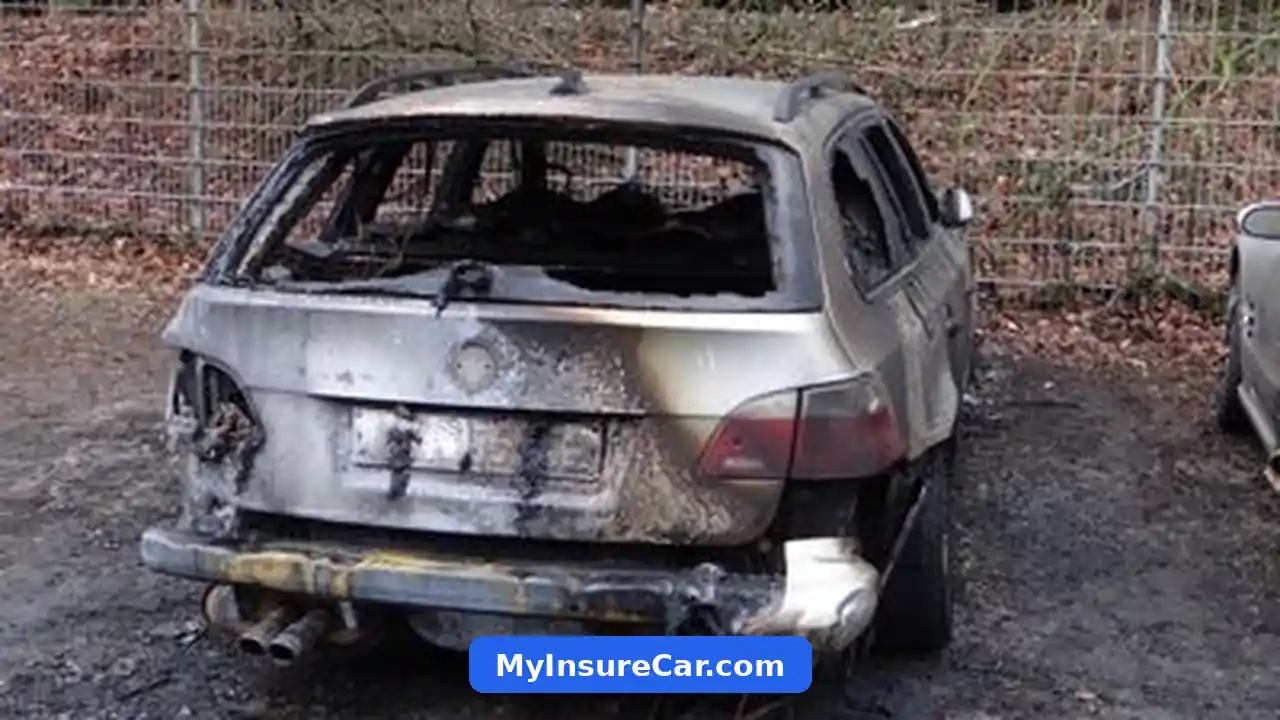
Your car is wrecked. The tow truck has taken it, your phone rings, and the voice on the other end says the words total loss. You hang up and the questions pile up all at once. What exactly will they pay you? What happens to the loan if you still owe more than the car was worth? And what happens to your policy while you sort out a replacement? You are probably thinking: I just lost my car, and now I have to fight for the money too? Not fight. But you do have to know the order things happen in, because that order is where your money is.
The short version is reassuring: cover for that vehicle effectively ends, money starts moving in both directions, and the clock starts on decisions about refunds, loans and replacement cars. This is a stressful week for you, and the process is easier if you know what happens in what order. Here is the sequence, and the choices inside it that are worth getting right. But there is one catch, and it is the one that decides your payout: the first number they offer is rarely the last one.
What a total loss means for your policy
If this is you, the one staring at a car that still looks drivable and wondering why they totaled it, here is how your insurer decides: your car is totaled when repairs would cost at or above a set percentage of its actual cash value. The threshold varies by state and insurer, but the outcome is the same: the company pays your car’s value instead of fixing it.
Your policy does not automatically cancel at that point. Cover for the totaled car ends, while the policy itself may stay open. On a multi-car policy, the totaled vehicle simply drops off and everything else continues.
On a single-car policy, liability often stays active temporarily until you cancel or replace the car.
Never assume anything happened automatically. Call and confirm, because assumptions here cost money either way. Filing a car insurance claim properly covers the notification steps that protect you while the total-loss decision is being made.
Refunds: what you get back
You are owed a refund for cover you paid for but can no longer use. When the totaled car comes off the policy, the insurer returns the unused portion of the premium for that vehicle. If you paid for a full year upfront, the refund can be substantial.
The refund is not instant. It usually arrives after the settlement is finalised and the car is removed from the policy, so expect days or weeks rather than hours. If it does not arrive, chase it, because insurers do not always process it without prompting.
Watch the arithmetic if you had a loan. You are probably thinking: the settlement is mine, why is the lender getting it? In many cases the settlement goes to the lender first, and the refund is a separate payment to you. Keep the two apart in your head, or you will think you have been short-changed when you have not. And speaking of the loan, that is where total losses hurt most, which is next.
The threshold number: when a car is totaled
A car is totaled when repairs cost at or above a set percentage of its actual cash value, and that percentage is set by state law in about 30 states. Oklahoma sets the line at 60 percent. Most states with a fixed percentage use 70 to 80 percent. Texas and Colorado use 100 percent, which means the repair bill must match the car’s entire value before the state forces a total loss. About 20 states, including California, use a formula instead: if the repair cost plus the salvage value reaches the actual cash value, the car is totaled.
Where the state leaves the decision to the insurer, most companies use around 70 percent as their own rule. That is why two adjusters can look at the same car and disagree: the estimate is not exact, and a few thousand dollars either way can cross the line. If your car sits near the threshold, get a second repair estimate before you accept the decision, because the estimate is the number that decides it. Our guide to diminished value claims after a car accident explains what happens to a car that is repaired rather than totaled, and our guide to filing a car insurance claim properly covers the notification steps that protect you while the decision is being made.
If you still owe money on the car
This is where total losses hurt. The insurer pays actual cash value: what the car was worth the moment before the crash, not what you paid for it and not what you owe on it. If you owe more than the car was worth, the gap is yours unless you have gap insurance.
Gap insurance exists for exactly this situation. It pays the difference between the settlement and the remaining loan balance, and it turns a financial disaster into a manageable one. If you bought it, now is the time to claim on it.
A plain explanation of what gap insurance is will show you how it works and what paperwork the gap insurer needs.
If this is you, the one who owes more than the car was worth and has no gap cover, the remaining balance does not vanish. You still owe it, and you will need to negotiate a payment plan with the lender. Do it early, before the debt goes to collections, because lenders are more flexible with you if you call first.

Insuring the replacement car
Most policies give you a short grace period to add a replacement car to the existing policy, often with the same cover as the old one. That grace period is your breathing room, but it is not unlimited, and it is not a reason to delay.
Call the insurer as soon as you buy the replacement and add it formally. If the replacement is worth more than the old car, expect the premium to change. If it is worth less, ask for the saving.
Either way, get the change confirmed in writing.
This is also a good moment to re-shop. A total-loss claim changes your risk profile, and a different insurer may price the new situation better than your current one. Transferring car insurance to a new vehicle walks through the sequence without creating a lapse.
Keeping the totaled car
Sometimes the insurer lets you keep your totaled car for a reduced settlement. This is called owner retention, and it can make sense if the car is repairable, if you want parts, or if the damage is mostly cosmetic.
Go in with your eyes open. A retained totaled car usually gets a salvage title, which makes it hard to insure and hard to sell. Many insurers will only offer liability cover on a salvage-title car, and some will not cover it at all.
If you plan to repair and drive it, confirm the insurance position before you accept the retention deal, not after.
The same caution applies if the car is still drivable. A totaled car that still runs is not the same as a roadworthy car. Get it inspected, and do not assume the insurer’s decision to total it was a mistake.
Insurers total cars because the repair economics fail, not because the car cannot move.
If you do not replace the car right away
If you will be without a car for a while, you have two sensible options. Keep a basic policy running so your cover stays continuous, or buy a non-owner policy if you will drive borrowed or hired cars. What you should not do is let cover lapse entirely. Nobody can pick between those two for you, because the right one depends on how long you will be carless and what you will drive meanwhile. Your agent can price both in one call, and the cheaper answer is usually obvious once you see the two numbers side by side.
A lapse marks you as a higher risk and raises your price when you return to driving. A cheap non-owner policy, or a reduced policy with no vehicle attached, keeps your insurance history alive at a fraction of the cost of full cover.
The National Association of Insurance Commissioners offers consumer resources on total-loss claims that explain your rights and the settlement process in plain terms.
Will it raise your future rates?
Probably, if the loss was your fault. An at-fault total-loss claim is one of the largest claims you can file, and insurers price it accordingly. The increase can last for years, though it usually fades as the claim ages.
If the loss was not your fault, the effect is usually smaller, but not always zero. Some insurers still raise rates after a not-at-fault claim, and some states restrict that practice. Ask your insurer directly how the claim will be treated at renewal, and get the answer in writing if you can.
Either way, compare quotes at renewal. The insurer that paid your claim is not obliged to offer you its best price next year.
What the settlement must include: tax, title, and fees
The settlement is not just the car’s value. In many states the insurer must also pay the sales tax and the title and transfer fees on a comparable replacement car, because those are part of what it costs you to replace the car. Check your state’s rule before you accept the figure, and ask the adjuster in writing whether tax and fees are included. If they are not, and your state requires them, the settlement is short by hundreds of dollars.
The value itself comes from a valuation report, usually built by CCC One or Mitchell from comparable cars for sale in your area. Ask for that report, then check it: are the comparable cars the same year, mileage, and condition as yours, and are they actually for sale near you? If the report undervalues your car, present your own comparable listings and ask for a revised figure. Most policies also carry an appraisal clause, which lets you demand a binding independent appraisal when you and the insurer cannot agree. Our guide to transferring car insurance to a new vehicle walks through the replacement step, and our guide to what gap insurance is covers the loan gap when the settlement is smaller than what you owe.
Mistakes to avoid
The biggest mistake is accepting the first settlement figure without checking it. You are probably thinking: the adjuster is the expert, who am I to argue? You are the one who knows what your car was worth to replace. When the adjuster calls with a number, ask for the valuation report behind it, then research what similar cars actually sell for in your area, with the same age, mileage and condition. If your insurer’s valuation is low, present your evidence and negotiate. The Insurance Information Institute also publishes guides on what happens after a total loss that are worth reading before you accept a settlement offer.
The second mistake is forgetting the refund. The unused premium on the totaled car is your money. Chase it if it does not arrive.
The third mistake is driving the replacement car uninsured, even for a day. A grace period is not a guarantee, and a crash in the gap would be yours alone. Confirm cover before you drive, every time. Your next step is this sequence: check the settlement figure against real local prices, chase your refund, sort the loan gap with your lender, and get your replacement car confirmed in writing before you drive it.
Frequently Asked Questions
Does my car insurance cancel automatically after a total loss payout?
Usually not. Cover for your totaled car ends, but your policy itself may stay open. Call and confirm whether your policy continues, ends, or needs you to add a replacement car.
Will I receive a refund after a total loss settlement?
Yes. You are owed a refund for the unused premium on your totaled car. It usually arrives after the settlement is finalised, so chase it if it does not appear.
What happens if I owe more on my loan than the payout?
The gap is yours unless you have gap insurance, which pays the difference between the settlement and your remaining loan balance. Without gap cover, negotiate a payment plan with your lender early.
Can I drive a replacement car straight after a total loss?
Most policies give a short grace period to add a replacement car, but confirm the details with your insurer first. Do not assume cover is in place until you have it confirmed.
Will a total loss claim increase my insurance premiums?
Usually, if the loss was your fault. If it was not your fault, the effect is normally smaller, though some insurers still raise rates. Compare quotes at renewal either way.
What happens if my car is totaled but still drivable?
You may be able to keep it through owner retention, but it will usually get a salvage title, which makes it hard to insure and sell. Confirm your insurance position before accepting.
This guide is general education, not professional insurance advice, so confirm the details in your own policy and with a licensed insurance professional before you act. Full disclaimer


[…] states require an SR‑22 form to prove you carry the minimum liability insurance after a serious violation. The SR‑22 is not insurance itself; it’s a certificate your insurer […]
[…] older cars with lower actual cash value, a high deductible makes more sense—because even a total loss payout might not exceed your deductible […]
[…] Also, check if your policy includes a “loan/lease payoff” or “gap coverage” clause. If you financed your old car and still owe more than its value, this coverage could help cover the difference in case of a total loss. […]
[…] A damage assessment follows, often conducted by an insurance adjuster. This professional evaluates the extent of vehicle damage and estimates repair costs. In some cases, especially with older vehicles or severe damage, the adjuster may declare the car a total loss. […]
[…] both coverages might not make economic sense—especially if you have enough savings to cover a total loss. Many drivers in this situation drop one or both to save money, accepting the […]
[…] Luxury cars depreciate differently than mainstream vehicles. While a Toyota Camry might lose 20% of its value in the first year, a Bentley or Ferrari can hold—or even increase—in value over time. This means actual cash value (ACV) policies, which base payouts on depreciated market rates, could leave you thousands of dollars short after a total loss. […]
[…] the event of a total loss, your primary insurer pays the actual cash value, which is often less than what you owe, especially […]
[…] does not apply, because you were paid the car’s full pre-accident value instead. Our guide to what happens after a total loss payout covers that separate […]
[…] and present the evidence. Insurers do revise valuations when the evidence is solid. Our guide to total loss payouts explains that process in […]