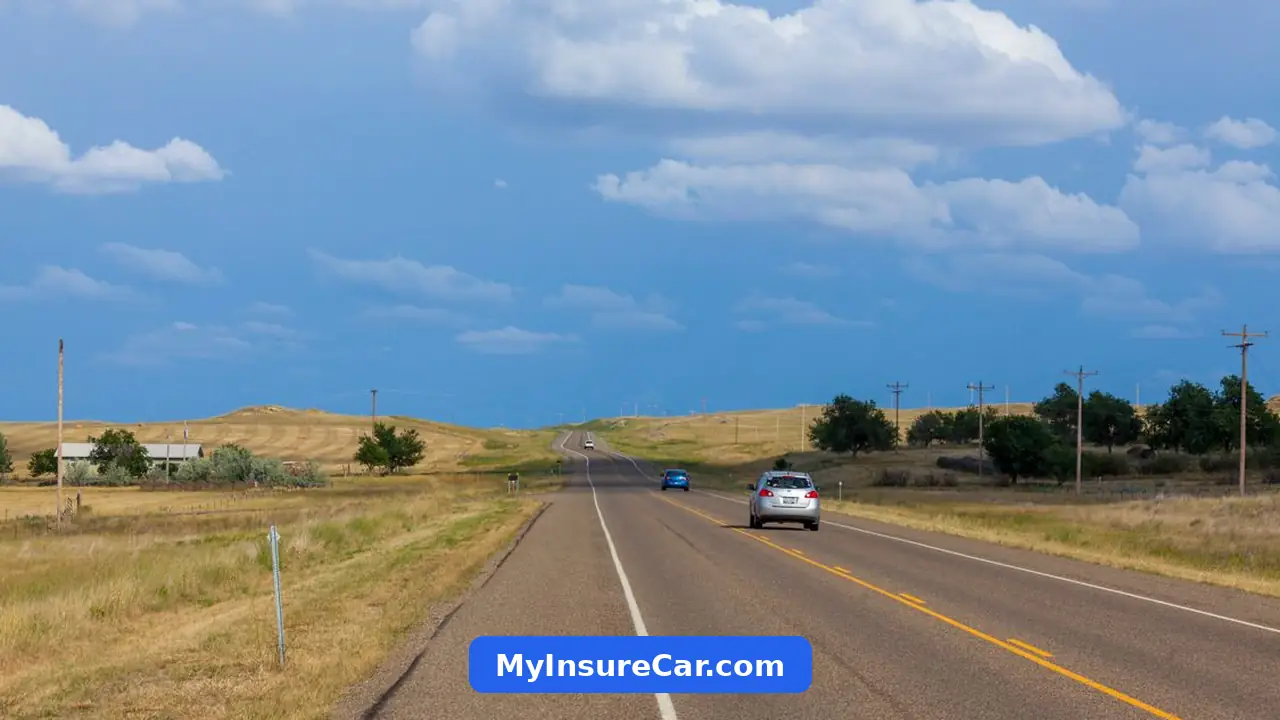
You are on a two-lane highway outside Fargo, nothing but flat fields and a huge sky, when a deer steps out of the ditch grass like it owns the road. You brake hard, miss it by a fender’s length, and keep driving with your heart hammering. Ten miles later you are calm again, and you are probably thinking: what if I had not missed it?
That is the North Dakota insurance question in one moment, because out here the hazards are distance, weather, and wildlife, and your policy has to answer all three. If this is you, the driver who racks up big rural miles between towns, or the Bismarck commuter who has watched a blizzard turn I-94 into a parking lot, this is written for you. Here is what auto insurance in North Dakota requires, how rural and winter driving should shape your coverage, and how to get a fair price.
What North Dakota actually requires you to carry
North Dakota requires every driver to carry liability insurance of at least 25/50/25: $25,000 of bodily injury coverage per person, $50,000 per accident, and $25,000 of property damage coverage. The state also requires uninsured motorist coverage of at least 25/50 and personal injury protection. That is a fuller required package than a lot of drivers expect from a small state, and each piece exists because of how people actually drive here.
Think about the distances. A crash on a rural highway can mean a long emergency response and a long tow, and the bills that follow reflect that. The required uninsured motorist coverage exists because if someone with no insurance hits you out on Highway 2, your own policy is what fills the gap. You are probably thinking: but I drive carefully, so why does someone else’s insurance matter to me? It matters because you share every mile of those empty highways with strangers, and your careful driving does not insure their car. The North Dakota Insurance Department publishes the current requirements and consumer resources, which is the official source to check.
Personal injury protection is the other required piece worth understanding. It pays your medical bills after a crash regardless of who caused it, which means faster care and faster payment without waiting for fault to be sorted out. If this is you, the driver who assumed PIP was only a big-city thing, it is not. It is your coverage on these roads, and it is the one that responds first after a crash.
Winter and rural miles are a coverage decision
North Dakota winters are not a season. They are a lifestyle, and they produce the state’s signature claims: blizzard whiteouts, multi-car pileups on the interstate, vehicles sliding off rural roads into ditches, and months of salt and gravel chewing through windshields. A policy built for a mild climate does not survive a North Dakota February. Your coverage has to match the roads you actually drive.
This is where liability limits deserve a hard look. Winter pileups involve multiple vehicles, which means multiple injury claims against one driver’s policy. The state minimum of 25/50 can run out fast in a five-car chain reaction on an icy interstate. You are probably thinking: that sounds dramatic for a minimum the state set itself. The state set a legal floor, not a recommendation. If you cause a serious multi-vehicle crash and the damages run past your limits, the rest can come after your savings and wages. Drivers with assets to protect usually buy more.
Then there is the wildlife. Deer are a year-round hazard on North Dakota’s rural highways, and a deer strike is a comprehensive claim, not a collision claim. If this is you, the driver putting thousands of rural miles a year on the odometer, comprehensive coverage is not optional thinking. It is the coverage that handles the deer, the hail, and the storm damage. The Insurance Information Institute tracks how wildlife and weather claims move premiums nationally, which puts the rural North Dakota angle in context.
Why your North Dakota quote looks the way it does
North Dakota is one of the more affordable states for car insurance, and low population density is a big reason. Fewer cars per mile means fewer crashes per driver, and insurers price that in. But affordable does not mean uniform. Fargo and Bismarck rates reflect urban density and commuter traffic. A driver garaging a car in a small prairie town often sees a different number for the identical policy, because insurers price by ZIP code on local claim data.
Your mileage is doing quiet work on your bill, and this is the part most North Dakota quote forms never ask about properly. Rural drivers can put serious annual miles on a car, and high mileage is a price lever. You are probably thinking: my insurer knows how much I drive. Does it? Most drivers set a mileage estimate when they first signed up and never touched it again. If your driving has changed, in either direction, a two-minute update can move your premium. Our method for comparing car insurance quotes online makes sure you are comparing real numbers, side by side, with identical coverage.
If you are new to North Dakota, get quotes before you assume anything. The company that was cheapest in your old state prices North Dakota on North Dakota’s loss history. If you are driving an older car and wondering about trimming down to the basics, read our breakdown of the cheapest liability-only car insurance options before you cut coverages a rural winter might make you miss.
How to actually lower your North Dakota bill
Start with three or four quotes for identical coverage. North Dakota insurers price the same clean record very differently, and the spread is widest when winter-rated coverages like collision and comprehensive are in the mix. Get the quotes, lay them side by side, and make insurers compete. Loyalty rarely beats a competitor who wants North Dakota business this quarter.
Then ask about every discount, out loud. Safe driver, multi-policy, good student, defensive driving course, low mileage, paid-in-full, paperless billing. You are probably thinking: surely the good ones apply automatically. Some do. Many do not, and the discount conversation almost always starts when you start it. Our roundup of the best car insurance discounts most drivers miss covers the ones agents forget to mention.
One North Dakota-specific lever: your deductible on collision and comprehensive. Raising it lowers your premium, and it makes particular sense in a state where small winter claims are common. A $500 deductible versus a $1,000 deductible changes your monthly number, but filing a $700 claim with a $500 deductible is often a losing trade once the rate impact lands. If this is you, the driver who files every little ding from gravel season, stop. Save the claims for the big ones and let the deductible do its job.
Your North Dakota action plan
Here is what to do this week, ideally before the first blizzard. First, check your liability, uninsured motorist, and PIP coverage against the state requirements. If you are sitting exactly at the minimums, decide whether that matches what you have to protect. Second, confirm your collision and comprehensive deductibles and make sure comprehensive is actually on the policy. Third, get three fresh auto insurance quotes, North Dakota drivers can do the whole thing in an afternoon, with identical coverage so the comparison is honest.
Then put winter on your calendar twice a year. Review your mileage when the snow melts and again when it returns, because your driving pattern shifts with the seasons and your premium should reflect that. North Dakota rewards the driver who treats insurance like winter tires: checked before the season, not after the slide into the ditch.
North Dakota car insurance rewards the driver who respects the roads. Know what the state requires, keep your rural and winter coverages honest, and shop every year. It takes one afternoon, and it pays you back every month after.
Frequently Asked Questions
nWhat is the minimum car insurance required in North Dakota?
North Dakota requires liability coverage of at least 25/50/25, plus uninsured motorist coverage of at least 25/50 and personal injury protection. That is a fuller required package than many states. Always verify current minimums with the North Dakota Insurance Department.
Why does North Dakota require personal injury protection?
Personal injury protection pays your medical bills after a crash regardless of who caused it, which means faster care and payment without waiting for fault to be sorted out. On long rural highways where emergency response can take time, PIP is the coverage that responds first. It is required on every North Dakota policy.
Is uninsured motorist coverage required in North Dakota?
Yes. North Dakota requires uninsured motorist coverage of at least 25/50. If a driver with no insurance hits you, this coverage pays for your injuries. On rural highways where you share long empty miles with strangers, it is protection worth keeping at solid limits.
Does comprehensive coverage make sense in North Dakota?
For most drivers, yes. Deer are a year-round hazard on rural highways, and hail and winter storms cause real damage. Comprehensive covers those non-collision losses, which liability-only policies do not. If you drive big rural miles, it is one of the most-used coverages you can buy.
How can I get cheaper auto insurance in North Dakota?
Get three or four quotes for identical coverage, because North Dakota insurers price the same driver very differently. Ask about every discount, update your annual mileage, and consider raising your collision and comprehensive deductibles. Shopping once a year keeps insurers competing for your business.
North Dakota rewards the driver who respects the distance and the season. Know the requirements, keep your winter and wildlife coverages honest, and shop your North Dakota policy every year before winter does your shopping for you. That is how you get auto insurance in North Dakota at a price that fits the miles you actually drive.
This guide is general education, not professional insurance advice, so confirm the details in your own policy and with a licensed insurance professional before you act. Full disclaimer