


You just locked the garage door, looked back at your car sitting there in the dim light, and did the maths in your head. Months of premiums for a car you will not drive once. You are probably thinking: why am I paying to insure something that is not going anywhere?
Cancel the policy and your parked car sits unprotected against fire, theft, and the tree branch that comes down in the next storm, while the gap in your insurance history follows you to your next policy and pushes your future premiums up.
The mistake that costs you twice
Your obvious move is to cancel everything and save the premium. It feels logical. Your car is off the road, so why pay for insurance on it?
A cancelled policy is a lapse, and insurers treat a lapse as a warning sign. When you insure the car again, you can be quoted as a higher risk driver, even though nothing about your driving changed. A few months of saved premiums can easily be wiped out by a year or two of higher rates. You already know the answer, you just do not want to pay it: the saving that feels clever today is the bill that comes back larger next year.
Cancelling also leaves the car itself exposed. Fire, theft, vandalism, a storm dropping a tree on the garage, a burst pipe in the building.
What to keep and what to drop
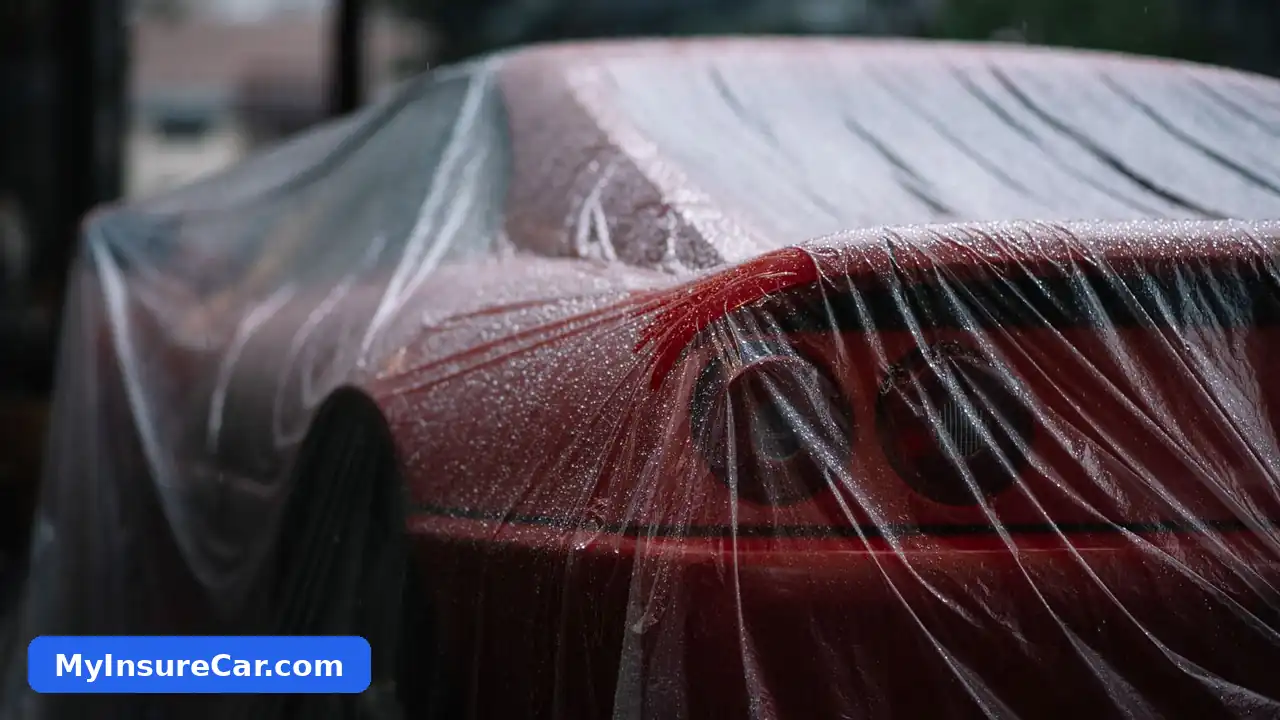
For a stored car, comprehensive cover is the part that earns its keep. It is the section that pays for theft, fire, vandalism, weather damage, falling objects, and animal damage. Those are exactly the risks a parked car still faces. If this is you, with a car sitting under a cover in a garage for six months, comprehensive is the cover standing between you and a total loss you never saw coming.
Collision cover is the part you can usually pause. It pays for damage from hitting another car or object while driving, and a car in storage is not driving. Liability cover is similar. It pays for damage you cause to other people with the car, and a parked car does not cause road accidents.
This is not the same as pausing your whole policy. Full pausing is rarely as simple as it sounds, and the rules vary by insurer and state. If you are weighing the two options, read our guide on whether you can pause car insurance temporarily before you decide.
Your state rules still apply
Some states require continuous insurance on any registered vehicle, even one in storage. If your state is one of them, cancelling outright can bring fines, a suspended registration, or trouble when you try to re-register. You are probably thinking: surely nobody checks a car sitting in my own garage? They do, and the fine arrives by post long after you have forgotten the car was ever an issue.
Do not guess at this. Check your state motor vehicle department or insurance department before you change anything. The Insurance Information Institute explains how state insurance rules differ and why a lapse can be expensive.
If the car is financed or leased
A lender or lease company changes the whole calculation for you. Most loan and lease agreements require you to keep both collision and comprehensive cover for the full term. Dropping collision, even while the car sits in a garage, can breach the agreement.
Ask in plain terms whether storage cover is acceptable, and get the answer in writing. If they insist on full cover, your options narrow to keeping the policy as it is or paying the car off. A breach can trigger forced placed insurance, which is expensive and covers the lender, not you. Part of you wants to skip this call and hope nobody notices. That hope is exactly how a forced placed policy lands on your bill.
Our guide to comprehensive versus collision insurance sets out what each section actually pays for, so you can have an informed conversation with your lender.
Getting the car ready for storage
Your car will deteriorate in predictable ways while it sits, and some of that damage you can prevent with a little preparation. If this is you, walking away for months and expecting to turn the key and drive off, the car will have other ideas.
Fill the fuel tank and add fuel stabiliser, so condensation has less room to form and fuel does not go stale. Change the oil, because old oil holds contaminants that are better out of the engine. Check the coolant and top it up. Inflate the tyres a little above normal pressure to resist flat spots, or put the car on stands if it will sit for a very long time.
Disconnect the battery, or connect it to a trickle charger, or it will usually be flat when you return. Stuff a cloth in the exhaust, cover air intake openings to keep rodents out, and remove any food from the cabin. Clean the car inside and out before you cover it, and use a breathable cover, not a plastic sheet that traps moisture. Do not engage the parking brake for long storage, since pads can seize to the discs.
What your storage cover does not protect
Comprehensive cover is broad, but it is not everything. Gradual deterioration is not covered. Rust, mould from damp storage, a dead battery, perished seals, or flat spotted tyres are maintenance problems, and insurers do not pay for maintenance. You are probably thinking: so I pay for cover and it still does not pay for half of what goes wrong? That is exactly right, and knowing it now is what stops you arguing with an adjuster later.
Belongings left in the car are another gap. Personal items are usually covered by a home or renters policy, not by car insurance. Take valuables out before you store the car.
Bringing your car back
Before you drive the car again, restore the cover you suspended. Do this before the car moves under its own power, not after. A quick drive around the block on a suspended policy is exactly how people end up uninsured in a crash. Part of you will say it is only one lap of the block. That lap is the one that counts.
Call your insurer, or use the app, and reinstate collision and liability. Check the start date and time of the reinstated cover. Then check the car itself: tyre pressures, fluid levels, brakes, lights, and whether anything has nested in the engine bay. Start it, let it idle for a few minutes, and look underneath for leaks before you set off.
If the car was stored for a year or more, a service is worth doing before any long trip. Fresh oil, a battery test, and a brake inspection are cheap compared with a breakdown or a claim. The National Association of Insurance Commissioners publishes consumer guidance on keeping cover continuous, which is worth reading if you are unsure how a gap would be viewed.
When storage cover makes sense
Storage cover makes sense for your car if it will sit for at least a few months and you intend to keep it. That covers your situation whether you are facing deployment, a long trip abroad, a restoration project, a second car you only use in summer, or a classic you bring out for shows. If the car will only sit for a few weeks, the saving is usually too small to justify the paperwork.
It also suits cars with real value. A cheap car that is barely worth more than a year of premiums may be better off sold or kept on a basic policy. Run the numbers honestly. If the yearly comprehensive premium is more than about a tenth of what the car is worth, the maths may point the other way.
If you later decide the stored car no longer fits your life, the cover question changes again. Leased cars have their own rules, and our guide on car insurance for leased cars explains how lease requirements shape your choices.
Frequently Asked Questions
Can I cancel car insurance completely while my car is in storage?
You can in most cases, but it is usually a poor idea for you. Cancelling creates a lapse that can raise your future premiums, and it leaves your car unprotected against fire, theft, and storm damage. Suspending collision and liability while keeping comprehensive is the safer route.
What is storage insurance?
Storage insurance usually means keeping comprehensive cover while suspending collision and liability. It protects your parked car against theft, fire, vandalism, weather, and animal damage at a much lower premium than a full policy.
Do I still need insurance if the car is not registered?
An unregistered car on private land may not need liability cover, but comprehensive cover is still worth having if your car has value. Check your state rules, since some states link registration and insurance in ways that affect fines and reinstatement.
Can I store a financed or leased car on comprehensive only?
Only if your lender or lease company agrees. Most contracts require collision and comprehensive for the full term. Ask first and get the answer in writing, since breaching the agreement can trigger forced placed insurance.
How do I restart cover after storage?
Contact your insurer before your car moves and reinstate collision and liability. Confirm the exact start date and time. Then check the car itself: tyres, fluids, brakes, lights, and battery, before driving anywhere.
Your stored car will reward you for planning ahead. Your next step is one phone call to your insurer: ask to suspend collision and liability while keeping comprehensive, then confirm the change with your lender if you have one. When the day comes to drive your car again, you will have a car that works and a policy that is ready.

[…] your classic spends long stretches off the road, you may also want to read our guide to insuring vehicles in long term storage, which covers how to protect a car that barely […]
[…] just adjust the cover. Ask what your insurer offers rather than cancelling outright. The guide to car insurance for vehicles in long term storage goes through the options in detail. If your car is sitting there now, that is your next read before […]