

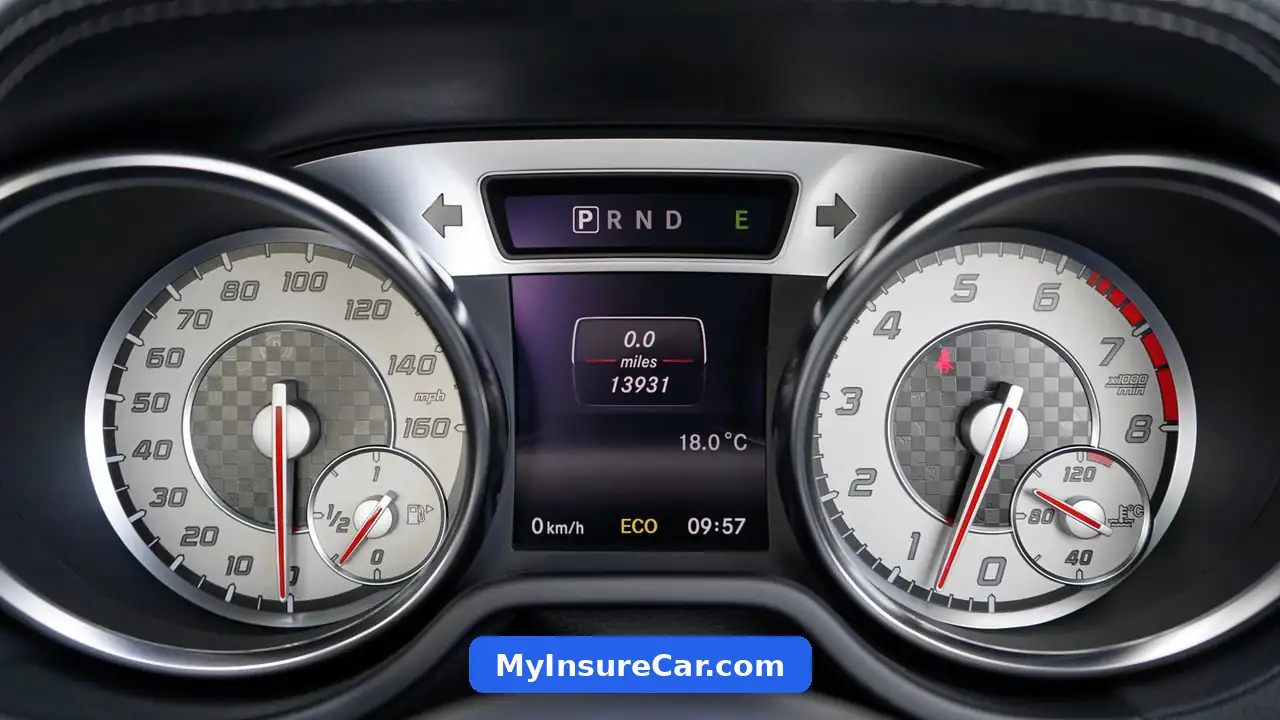
Your car has sat in the driveway since Tuesday, and the insurance bill in your inbox is the same as your neighbour’s, the one who drives a hundred miles a day. You stare at the two numbers and think: why am I paying for miles I never drove? That question is the whole idea behind pay-per-mile car insurance, and it is probably the question that brought you here.
Pay-per-mile policies charge you a small daily base rate plus a few cents for every mile you drive. Drive less, pay less. Drive more, pay more. For low-mileage drivers like you, the saving can be substantial. For everyone else, it can be a trap. Which one are you? If this is you: you work from home and the car moves twice a week, you are the driver this product was built for. If you commute fifty miles a day, you are the driver it punishes. The honest maths below tells you which one you really are.
How pay-per-mile actually works
Every pay-per-mile policy has two parts. The base rate is a flat daily charge that covers the car even when it never moves. It pays for the protection that does not depend on mileage: fire, theft, vandalism, and the fixed costs of the policy. The per-mile rate is a small charge for each mile driven, usually somewhere in the single-digit cents.
Your monthly bill is the base rate times the days in the month, plus the per-mile rate times the miles you drove. Some months will be cheap. Some will not. A month with a road trip can cost more than a traditional policy would have.
Most policies cap the daily charge. After a certain number of miles in one day, usually around 250, the meter stops for that day. That cap exists so that one long trip does not produce an absurd bill. Check whether your policy has one, because not all of them do.
Who saves money with it
You win with this product if you drive under about 10,000 miles a year. That is you if you work from home, you are retired, your household runs a second car, or you mostly use public transport. If your car sits in the driveway five days a week, you are paying a traditional insurer for risk you are not creating. You are probably thinking: so I have been subsidising strangers this whole time? Yes, and this is the product that stops it.
You can save as a city driver too, because your mileage stays low even when you use the car daily. Your short trips to the shops and school add up to few miles. You use the car, but you do not drive it far.
You lose with this product if you commute. If you drive 50 miles a day to work, pay-per-mile will almost always cost you more than a traditional policy. If you drive long distances, deliver for a living, or have a long daily commute, do not buy it on price alone. The page on how mileage affects car insurance cost explains why high-mileage drivers get better value from traditional pricing.
Working out whether it beats your current policy
Do the maths with your real numbers, not your optimistic ones. Take your current annual premium and divide it by twelve. That is your monthly target. Then work out your pay-per-mile price: base rate times thirty, plus per-mile rate times your average monthly miles. You already know the answer to the temptation here: the number you wish you drove is not the number to use. Your odometer is.
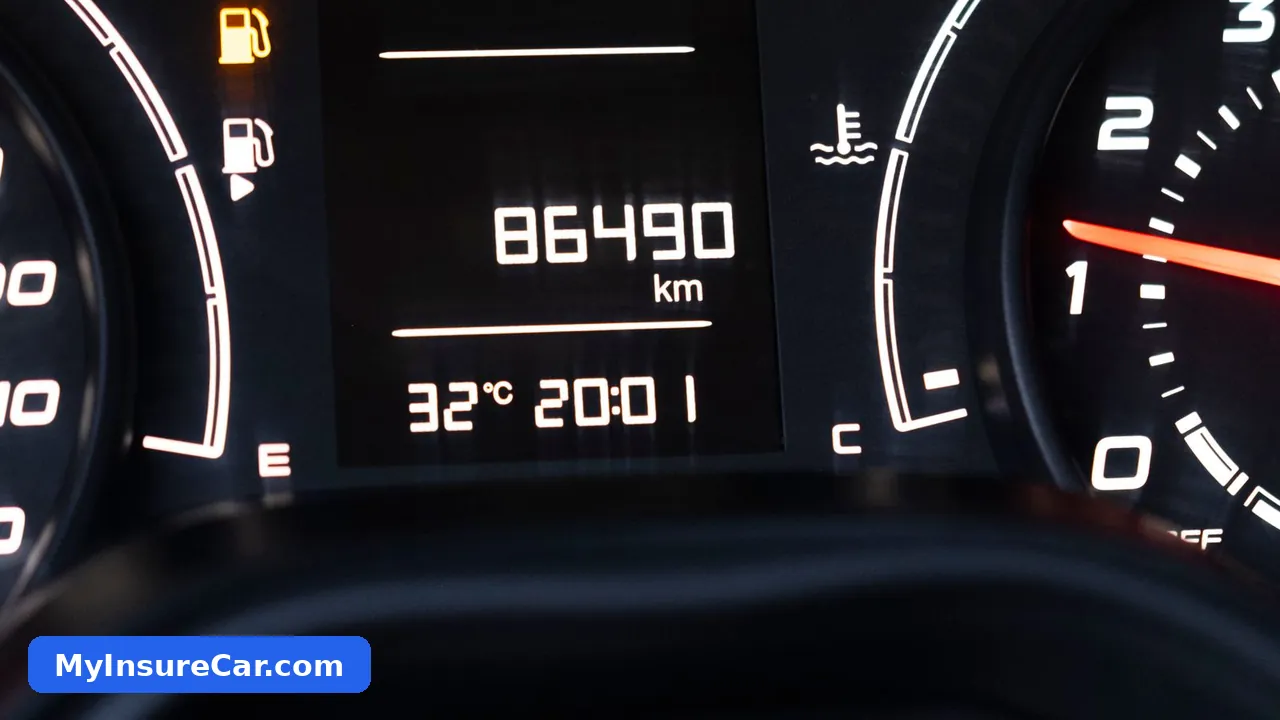
Use your real mileage. You probably underestimate how much you drive, sometimes by a lot. Check your odometer readings, your service records, or your inspection history for the last twelve months. Divide the total by twelve. That is the number to use, not the number you wish you drove.
Compare like with like. The pay-per-mile quote must have the same liability limits, the same deductible, and the same extras as your current policy. A cheap quote with lower limits is not a saving. It is less cover. The comparing car insurance quotes online approach applies here word for word.
How the miles get tracked
Your insurer will track your miles one of three ways. The simplest is a photo of your odometer, sent to the insurer each month. It is low-tech and private, but it relies on you remembering to send it. Miss a month and the insurer may bill you at an estimated rate.
The second method is a plug-in device that sits in your car’s diagnostic port. It reads mileage automatically and sends it to the insurer. It is accurate and effortless, but you may dislike having a device connected to your car.
The third method is a phone app that tracks driving. It is the most convenient and the most intrusive, because it knows where you drive as well as how far. If privacy matters to you, the odometer photo method is the honest answer, even though it takes a minute of effort each month.
One question to ask before you sign: does the insurer track speed, braking, and time of day, or only miles? Pure pay-per-mile policies track only miles. Usage-based policies that track behaviour are a different product, and they are priced differently. The usage-based versus traditional car insurance comparison explains where one ends and the other begins.
The honest pros and cons
The biggest advantage is fairness. You stop subsidising drivers who live on the road. That is the whole moral case for the product, and it is a good one. The second advantage is awareness. When every mile has a price, you notice how much you drive, and you may drive a little less.
The biggest disadvantage is variability. Your bill changes every month, which makes budgeting harder. A traditional policy costs the same every month. A pay-per-mile policy does not, and a month with a family emergency or an unexpected trip can produce a bill you did not plan for. If this is you: your months are never the same, one road trip, one emergency, one airport run, that variability is the part that will sting you, not the base rate.
The second disadvantage is the base rate. It never goes away. Even in a month when you never drive at all, you still pay the daily base rate. If you park the car for a whole season, you may find the base rate alone costs more than you expected.
The third disadvantage is availability. Pay-per-mile is not sold in every state, and not every insurer offers it. In some states, only one or two companies sell it, which means less competition and less room to negotiate.
A worked example
Now run your own numbers through a real example. Say you pay 1,200 dollars a year on a traditional policy, or 100 dollars a month. You drive about 500 miles a month. A pay-per-mile policy offers a base rate of 30 dollars a month and a per-mile rate of 6 cents.
Your pay-per-mile bill is 30 dollars plus 30 dollars for the miles, which comes to 60 dollars a month, or 720 dollars a year. You save 480 dollars a year. That is a real saving, and it is the kind of result that makes the product worth considering.
Now change one number. If you actually drive 1,200 miles a month, the same policy costs 30 dollars plus 72 dollars, which is 102 dollars a month. That is slightly more than your traditional policy, with none of the price stability. The product did not change. Your mileage did. Part of you wants to believe the low number. Your odometer already told you the truth.
Getting quotes and comparing properly
Get at least three quotes, and make sure each one is for the same cover. Ask each insurer three questions: what is the base rate, what is the per-mile rate, and is there a daily cap? Those three numbers determine the price. Everything else is detail.
Ask about the claims process too. A pay-per-mile policy should handle claims exactly like a traditional policy. If the insurer cannot explain the claims process clearly, that is a warning sign, not a detail.
Want the background before you decide? The Insurance Information Institute explains how mileage-based pricing fits into the wider auto insurance market.
And the National Association of Insurance Commissioners publishes research on how these products are overseen, so you can check what your state allows.
Frequently Asked Questions
How many miles make pay-per-mile insurance worth it?
As a rough guide, if you drive under about 10,000 miles a year you tend to save. Above that, a traditional policy usually wins for you. Run the maths on your real mileage before you decide.
Do I still get full coverage with pay-per-mile insurance?
Yes, if you choose it. Pay-per-mile is a pricing method, not a cover level. You can buy the same liability, collision, and comprehensive limits as on a traditional policy.
How does the insurer track my miles?
Usually by odometer photo, plug-in device, or phone app. Odometer photos are the most private. Apps are the most convenient but may also track where and how you drive.
Is pay-per-mile available in every state?
No. Availability varies by state, and in some states only one or two companies sell it. Check what is actually on offer in your state before you plan around it.
What happens if I drive more than expected one month?
You pay more that month, because your bill follows your miles. Most policies cap your daily charge after a set number of miles, so one long trip does not produce an absurd bill for you. Check whether your policy has a cap.
Pay-per-mile is a fair deal for the right driver and a bad deal for the wrong one. Check your real mileage, compare identical cover, and let the numbers decide. If the maths saves you money, take it. If it does not, a traditional policy is still the better buy for you.


[…] discounts for green vehicles or low annual mileage. You can also explore usage-based plans like Pay-Per-Mile Insurance if you don’t drive […]
[…] In practice, this can translate into real savings for responsible drivers. Many pay-per-mile or telematics-based policies already offer discounts for smooth, consistent driving. If that sounds like something you’d benefit from, check out my breakdown of pay-per-mile insurance. […]
[…] vehicles, protecting such electronic components becomes even more crucial. It’s similar to how gap insurance for auto loans bridges the cost difference after an accident. The logic is the same: small coverage, big payoff […]
[…] you’ve read about pay-per-mile car insurance, that’s one version of usage-based insurance. It’s designed for people who drive fewer miles […]
[…] example, listing a low-mileage garage address when you actually drive 50 miles daily is considered […]
[…] working from home, carpooling, or using public transportation—you may qualify for a low-mileage […]
[…] Instead of a flat annual rate, you pay a base fee plus a per-mile charge, typically $0.05 to $0.10 per mile. If you only drive 3,000 miles a year, your premium could be 40% to 60% lower than a traditional […]
[…] to pay-per-mile insurance: Ideal for low-mileage drivers. You pay a base rate plus a small fee per mile […]
[…] similar to the growing interest in pay-per-mile car insurance, where cost aligns with real usage. The key difference is that subscription-based insurance focuses […]
[…] In many cases, yes, but reinstatement is not guaranteed. Some insurers allow reinstatement within a short window, often 7 to 30 days after cancellation, provided you pay all overdue premiums plus fees. Reinstatement may or may not be retroactive. If it is not retroactive, you will still have a lapse on record, which affects rates. If reinstatement is denied, you’ll need to purchase a new policy, often at a much higher cost. This situation is particularly risky if you rely on specialized coverage such as short-term or pay-per-mile policies discussed in https://myinsurecar.com/pay-per-mile-car-insurance-guide/. […]
[…] coverage models. The insurance industry has evolved to offer highly flexible options for low-mileage […]
[…] students are ideal candidates for pay-per-mile policies, which charge a small base rate plus a per-mile fee. If the car mostly sits in a campus lot, this […]
[…] gain cover, look at usage-based options instead. Drivers who barely use a car can cut costs with pay-per-mile insurance, which charges a small base rate plus a per-mile fee. It is the legitimate way to pay less for a […]
[…] lower deductibles. A car that sits in a garage most days argues the opposite, and might even suit pay-per-mile pricing. Young drivers in the household, a new teen licence, or a move to a busier postcode are all moments […]
[…] absorb it. Ask about low-mileage discounts if the old car is a second vehicle or weekend driver. Pay-per-mile policies suit garage-kept older cars beautifully, since you stop paying commuter prices for a car that […]
[…] drivers. If you work from home or barely drive, say so: many insurers discount low mileage, and pay-per-mile policies can beat standard pricing outright for genuinely low-mileage […]
[…] while another is still passing it through. Drivers in exposed areas should also compare how pay-per-mile options treat garaged months, and make sure the basics are right with the III’s auto insurance […]