

Your renewal quote lands, and it feels wrong. You barely drive, you drive carefully, and yet you are paying the same as everyone else in your postcode. You are sitting there thinking: why am I paying for miles I never drive, and for risks I never take?
That exact frustration is what usage-based insurance claims to fix. Your insurer used to price you on what group you belong to: your age, your postcode, your car, your record. Usage-based insurance prices you on what you actually do behind the wheel. For you it could be a large saving. Or it could be a worse deal than the old way. The difference is how you really drive.
How traditional insurance prices you
Traditional insurance prices you on risk factors. Age, location, car model, annual mileage estimate, driving record, and credit history in states where it is allowed. The insurer groups you with similar drivers and charges the group’s average price, adjusted for your record.
You are probably thinking: what do I actually get for that? The strength of this system is predictability. Your price is set for the term, and it does not change because you braked hard once on a wet road. The weakness is fairness. If you are a careful driver who barely drives, you pay much the same as a careless driver in the same group who drives all day.
Traditional pricing also relies on your own estimate of mileage. You probably overestimate how much you drive, and you pay for miles you never use. Insurers rarely check, so the overestimate quietly costs you money year after year.
How usage-based insurance prices you
Usage-based insurance, also called telematics insurance, measures your actual driving. A plug-in device, an app on your phone, or the car’s own connected system records how many miles you drive, when you drive, how hard you brake, how fast you accelerate, how fast you corner, and sometimes how often you handle your phone.
You are probably thinking: so how do they actually charge me? There are two main types. Pay-per-mile charges a base rate plus a charge per mile. It suits you if you drive little. Behaviour-based pricing adjusts your rate according to how safely you drive, measured by the device. It suits you if you drive gently.
Many policies combine the two: a per-mile charge plus a driving score that moves the rate up or down. The score is usually shown in the app, so you can see what is helping you and what is hurting you.
Who saves with usage-based cover
If this is you, the one who works from home, uses public transport for commuting, or only drives at weekends, you save most. Pay-per-mile can cut your premium sharply. The saving is real because the insurer is no longer charging you for miles you never drive.
If you drive gently, you save too. Smooth braking, gentle acceleration, steady cornering, and daytime driving all push a behaviour score up. If you already drive that way, a telematics policy pays you for what you do anyway.
If you are a young driver with a clean record, you can also benefit. Traditional pricing charges you heavily if you are young, because the group is risky. Telematics lets you, as an individual young driver, prove you are not the group average. That proof is worth money to you.
Our guide to pay-per-mile car insurance covers the mileage side of this in detail for you.
Who pays more with usage-based cover
If you are a high-mileage driver, you pay more. If you commute long distances every day, a per-mile charge adds up fast. A traditional policy with a flat rate is usually cheaper for you.
If you drive at night, you pay more too. Driving late at night is statistically riskier, and telematics policies price for it. A nurse on night shifts or a worker on rotating shifts can be penalised for driving at the only times available to them. If that is you, the product is quietly working against you.
If you brake harshly and accelerate fast, you pay more, even if you never crash. Hard braking on a motorway because someone cut you off still counts against your score. The device measures what happened, not why it happened.
If you share the car, you can also lose out. If a teenager or a partner with a heavier foot drives the car, their driving lands on your score. Some policies let you tag who was driving. Many do not.
What the device actually measures
The measurements are simpler than the marketing suggests. Mileage is the big one. Then braking, acceleration, cornering, speed, time of day, and phone use. Each insurer weights them differently, and few publish the exact formula.
Hard braking is the measurement you will argue about most. Insurers treat it as a sign of inattention or following too closely. You would say it is often the correct response to someone else’s mistake. Both are right sometimes. The device cannot tell the difference, and the score does not care.
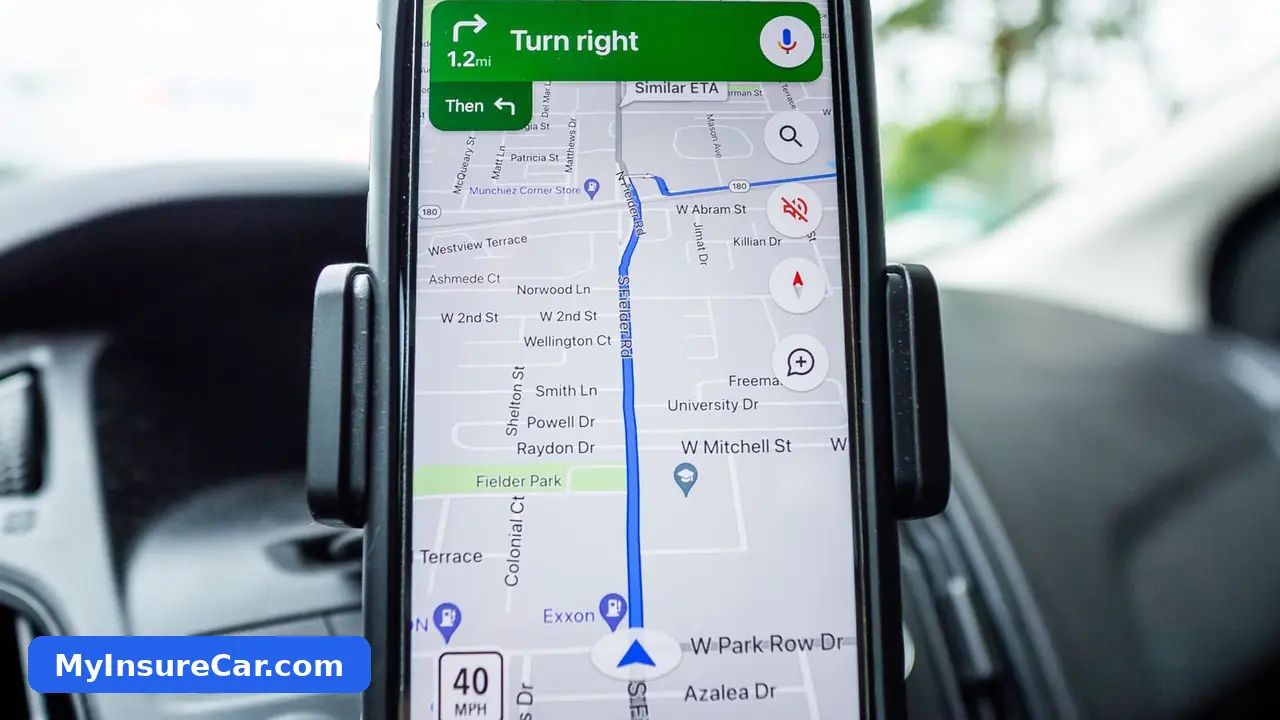
Phone handling is measured by some apps and not others. If your policy measures it, a phone in a dashboard mount is fine, but handling the phone while driving will cost you. The safest approach for you is to leave the phone alone entirely while the car is moving.
Speed is measured against limits in some policies and as absolute speed in others. A policy that penalises motorway speed is a poor fit for a driver who commutes by motorway. Ask how speed is scored before you sign up, because that answer decides whether the product fits your commute.
Privacy: the real cost
Usage-based insurance requires the insurer to know where you drive, when you drive, and how you drive. That is the product. There is no version of it that works without that data.
Read the privacy terms before you sign up. Check what is collected, how long it is kept, whether it is shared with third parties, and whether it can be used to deny a claim. Some insurers use driving data only for pricing. Others reserve the right to use it in claims investigations.
Ask one specific question: if I have a crash, will my driving data be used in the claim?
Also ask how long the data is kept, whether it is shared with third parties, and what happens if you leave the program. Some insurers delete the driving record when you unenroll, others keep it for a set period, and state rules vary on how telematics can be used in pricing, so check your state insurance department first. If you want the saving without handing over a full driving record, ask whether a mileage only program is available, and compare it with the other steps in our guide to lowering your car insurance premiums fast.
The answer varies by insurer, and it matters. Data that lowers your premium can also be used to argue that you were speeding before a crash.If that trade bothers you, traditional insurance is the answer. It asks nothing about your daily driving, and it costs you nothing in privacy. The saving from telematics is real, but it is not free. You pay for it in data.
How the discount is actually earned, and when it can raise your price
Many programs start with a small participation discount, then adjust your price at renewal from your driving score. That score is a pattern across months, not one trip. The hardware matters too. A plug-in device fits the OBD-II port and records the car itself, a phone app uses the phone sensors and GPS and can pick up trips when you are a passenger, and a connected car sends the data itself. Ask which one your insurer uses, and whether you can correct a trip that was not yours.
Use round numbers to test the choice. Say a traditional policy costs $1,200 a year. Say a pay-per-mile quote is $600 a year before mileage, plus 5 cents a mile. At 6,000 miles that is $900, a $300 saving on paper. At 12,000 miles it is $1,200, no saving at all. That is the decision rule: use your real annual mileage, then price both quotes on identical cover and the same deductible, because a telematics discount may apply to some coverages and not others. Our guide to how deductibles affect your car insurance costs explains that trade-off.
How mileage affects your price
You are probably thinking: what decides it for me? Mileage is the single biggest factor in your choice between the two systems. The more you drive, the more a per-mile charge costs, and the more a flat-rate traditional policy saves you.
The crossover point is usually around 7,000 to 10,000 miles a year, though it varies by insurer and by car. Below it, pay-per-mile usually wins for you. Above it, traditional usually wins. Your own number is easy to find: check your odometer readings from the last two years.
Be honest about your mileage. You may underestimate it when asked, and telematics measures it exactly. A policy chosen on an optimistic mileage guess will cost more than expected when the real miles land. Our guide to how mileage affects your car insurance cost explains the maths for you.
Switching between the two
You can switch. There is nothing permanent about either choice. You can try usage-based cover for a term, look at the result, and decide whether to stay or go back.
The trial period matters. Some insurers offer a trial that only lowers your price, never raises it. Others adjust in both directions from the start. A trial that only lowers is a free experiment. A trial that can raise your price is a commitment, and you should know which one you are signing.
If you switch back to traditional cover, your telematics score does not follow you. The new insurer prices you on the standard factors. If you want a straight comparison on the same car, get a few car insurance quotes for both types before you commit.
Which should you choose?
Choose usage-based if you drive under about 8,000 miles a year, drive gently, drive mostly in daylight, and are comfortable sharing driving data. You are the driver the product was built for.
Choose traditional if you drive a great deal, drive at night regularly, share the car with heavier-footed drivers, or dislike the idea of an insurer tracking your driving. You will pay a fair price for a predictable product.
Choose based on your real driving, not your idea of it. Check your mileage, think about your hours, and be honest about your braking. Then get quotes for both types on the same cover and compare the numbers. The cheaper one on paper, for your actual driving, is the right one. Your next step: read your last two odometer readings, then get one quote for each type on identical cover.
Before you decide, read the Insurance Information Institute guide to pay-as-you-drive and telematics.
The NAIC research on usage-based insurance is also worth reading.
Frequently Asked Questions
Is usage-based insurance cheaper than traditional insurance?
It depends on how you drive. Low-mileage, gentle, daytime drivers like you usually save. High-mileage, night, and hard-braking drivers usually pay more. Compare both types on the same cover for your real driving.
What does usage-based insurance track?
Typically mileage, braking, acceleration, cornering, speed, time of day, and sometimes phone use. Each insurer weights them differently. Ask how each factor is scored before you sign up.
Does hard braking lower my telematics score?
Usually yes. Insurers treat your hard braking as a risk signal, even when it was the right response to someone else’s mistake. The device measures what happened, not why it happened to you.
Can I try usage-based insurance without risk?
Some insurers offer a trial that only lowers your price, never raises it. Others adjust in both directions from the start. Ask whether the trial can raise your price before you agree to it.
Does my telematics score follow me to a new insurer?
No. Your score belongs to the insurer that measured it. A new insurer prices you on standard factors such as age, location, car, and record. A good score helps you only with the company that measured it.
This guide is general education, not professional insurance advice, so confirm the details in your own policy and with a licensed insurance professional before you act. Full disclaimer



[…] traditional policies exclude peer to peer services like Turo. Consequently, does car insurance cover rental […]
[…] a non-owner policy requires a slightly different approach than buying a traditional policy. Because these products are specialized, many major insurers do not offer online quotes for […]
[…] shopping around and comparing quotes from multiple providers is the single most effective way to save money. Because rates […]
[…] subscription insurance may merge with usage-based models, giving drivers complete control over both time and distance-based […]
[…] Usage-based insurance tracks how you actually drive through a phone app or plug-in device, then prices your premium on braking, speed, and time of day. Careful drivers routinely save 10 to 30 percent. If your driving is currently limited to careful local trips, you are the ideal candidate. […]
[…] policy may suit an older car, while a daily driver deserves a fuller comparison, including usage-based options if your mileage is […]
[…] other does not. For careful drivers, that is the fairest change the industry has made in decades. Usage-based insurance is where most drivers meet this technology […]
[…] Usage-based programmes track braking, speed, and driving hours through an app or device, then price you on behaviour instead of averages. Careful drivers commonly save 10 to 30 percent. If you already drive gently and avoid late nights, this is free money for habits you have. […]
[…] one company for the multi-policy discount, and if you drive little, ask about pay-per-mile cover or usage-based programmes that price on actual mileage and habits instead of […]
[…] A telematics programme measures how your teenager actually drives: mileage, speed, braking, and phone use. For a careful teenager, it can cut your premium noticeably, because it replaces the assumption that all teenagers drive alike with evidence about this one. For a teenager who drives hard, it can raise your price, so discuss it honestly with your teenager before you sign up. If you want the wider comparison, read our guide to usage-based versus traditional car insurance. […]
[…] insurance scores, so the same score can matter greatly in one state and not at all in another. Usage-based programs add another split by pricing your actual driving, so a careful low-mileage driver can pay far less […]
[…] and rarely, a usage based policy can beat a standard policy by a clear margin. Our comparison of usage based versus traditional car insurance explains how the two are […]
[…] add up fast. Our pay per mile guide works through the maths for low mileage drivers in detail, and our usage-based against traditional comparison sets out when behaviour pricing beats mileage pricing and when it does […]