

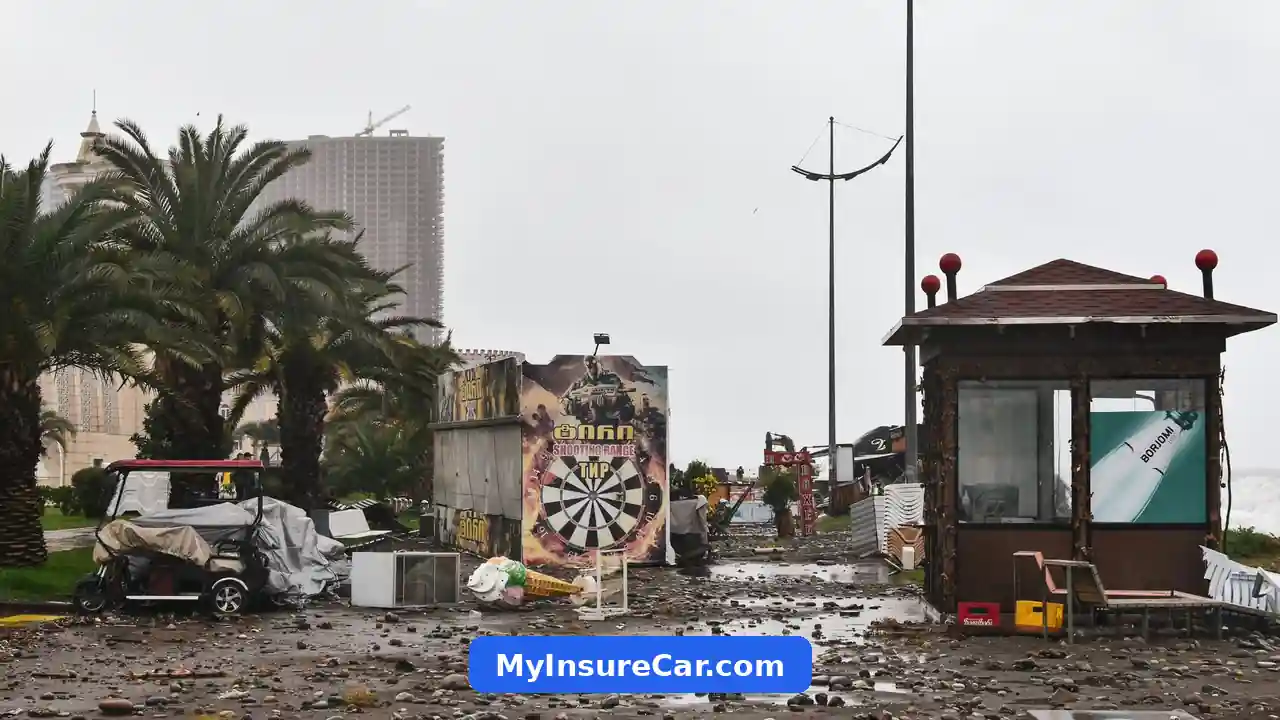
Your premium just went up, and nothing happened to your car. No claim, no ticket, no new car. You opened the renewal, stared at the number, and thought: what did I do? You did nothing. The answer is that your insurance is priced on the losses of the whole pool, not just on your street. Here is exactly how a disaster hundreds of miles away reaches your renewal notice, and what you can do about your bill.
When a disaster damages tens of thousands of cars at once, insurers pay out enormous sums in a few weeks. Those losses feed into the next round of rate filings, and premiums rise across a wide area. Your own driving record still matters, but it is not the only force moving your price. You did nothing wrong. Your bill moved because the pool moved, and the rest of this is about what you can still control.
How one disaster becomes everyone’s premium
Insurance works by spreading risk across many policyholders. Most years, the money coming in covers the claims going out, with a margin for the insurer. A major disaster breaks that balance. A single hurricane can generate more auto claims than a normal year in the affected region. Here is how that reaches you: when the pool pays out big, your renewal is where the bill lands.
Insurers respond in two ways. First, they raise rates to rebuild reserves. Second, they tighten underwriting, which means stricter rules about who they will cover and on what terms. Both effects show up at your renewal, even if you never filed a claim.
You are probably thinking: I live nowhere near that hurricane, why is it on my bill? Because the effect is not limited to the disaster zone. Insurers and reinsurers spread catastrophe risk nationally and globally, so a bad season in one region can push up the cost of reinsurance everywhere. Reinsurance is the insurance that insurers buy for themselves, and when it gets dearer, your premium follows.
Two hurricanes, two weeks apart: what 2024 cost
The scale of one disaster is hard to picture, so here is the most recent example in full. Hurricane Helene made landfall in September 2024 and caused $2.58 billion in insured losses in Florida from 155,182 claims, according to the Florida Office of Insurance Regulation. Hurricane Milton followed two weeks later in October 2024 and caused $5.6 billion in insured losses from 385,146 claims. Munich Re put the insured losses higher across all affected areas, $16 billion for Helene and $25 billion for Milton. For scale, Hurricane Michael in 2018 caused $9.1 billion in losses in Florida alone.
Two major storms hitting the same state two weeks apart is why the effect travels. Reinsurers, the companies that insure insurers, raise their prices after a season like that, and those higher reinsurance costs feed into premiums nationally, not just in Florida. That is how a hurricane you never saw reaches a renewal in a state it never touched. Our flood damage guide explains which part of your policy pays when water gets in, and our Florida guide sets out what drivers in the highest risk state actually pay and why.
Which disasters hit car insurance hardest
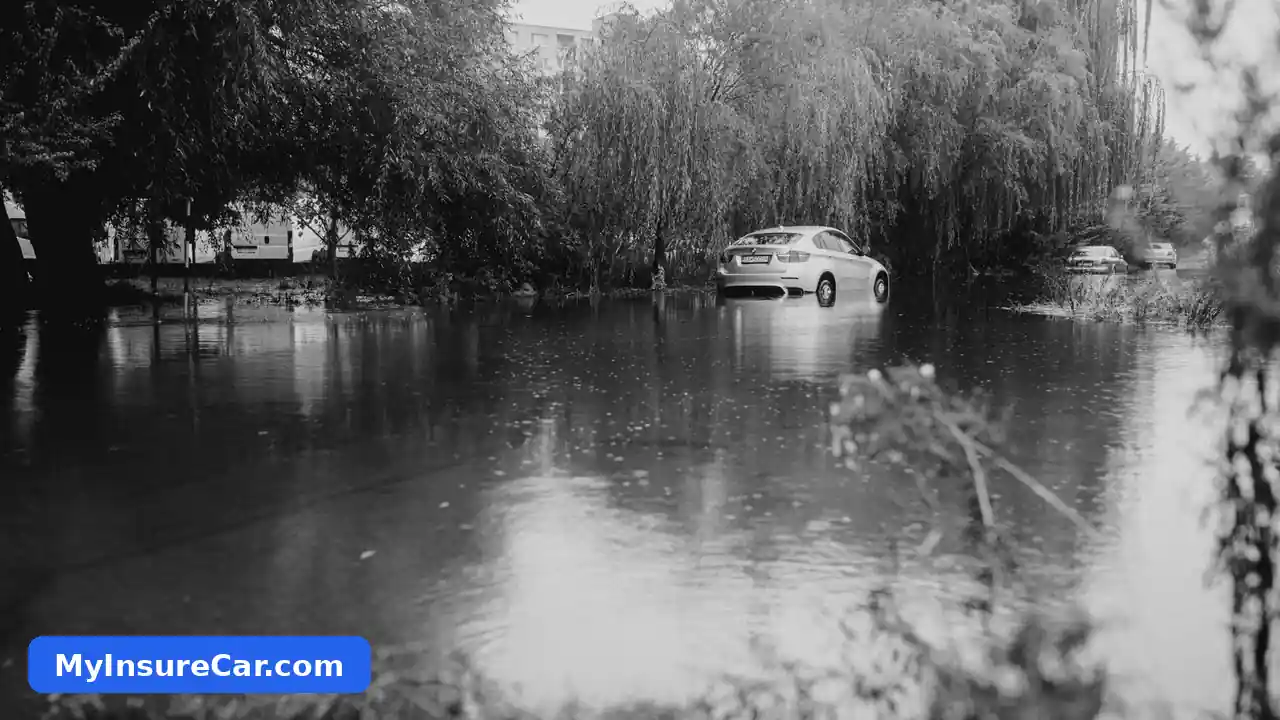
Hurricanes cause the largest car losses. A storm surge can flood thousands of parked cars in a night, and wind can throw debris through streets full of vehicles. Most of those claims fall under comprehensive cover, which is why comprehensive rates rise fastest after hurricane seasons.
Wildfires are next. A fire that moves through a suburb can destroy every car in its path. Unlike a flood, where some cars survive, a wildfire usually means total loss. The concentration of losses in a small area makes wildfire pricing brutal for the affected region.
Hail is the quiet one. A single hailstorm can dent thousands of cars across a city, and the claims arrive in a flood. Hail damage is often repairable, but the volume of claims makes it expensive. If you live in a hail prone area, you see it in your comprehensive premium year after year. But the question you have not asked yet is the one that decides your next renewal: why does your bill rise even when you never claimed? That is next.
The III guide to what a standard auto policy covers is a useful baseline for judging which disaster damage your policy actually includes. For you, the check is one line: does your policy include comprehensive? That is the one that pays.
Why your premium rises even if you never claimed
If you are the one with a clean record watching your price rise anyway, this is you. Insurers set rates by territory. If your territory had a bad year, your rate rises whether or not you personally claimed. That feels unfair, and you are right to say so. From the insurer’s side, the territory is the unit of risk, and a bad year for the territory means higher expected losses next year.
Repair costs make it worse. Disasters create shortages of parts, body shops, and rental cars, all at once. A repair that would take a week in normal times can take a month after a disaster, and the rental bill grows with it. Insurers price that in.
There is also a timing lag. Rate changes need regulatory approval in most states, so the increase you see at renewal may reflect a disaster from a year or more ago. That is why premiums can keep rising after the headlines have moved on. The article on how inflation affects car insurance premiums explains the repair cost side of the same problem. For you, the lag means one thing: this renewal is last year’s disaster, and shopping is how you fight it.
What disaster risk means for your cover choices
If you live in a hurricane, wildfire, or hail zone, comprehensive cover is not a luxury. It is the only part of a car policy that pays for weather damage. Liability and collision do not. Dropping comprehensive to save money in a disaster prone area is a false economy, because one storm can wipe out the savings many times over.
Check your deductible. Part of you wants the lowest premium on the screen. But a higher deductible raises what you pay out of pocket after a disaster. If a storm damages your car, the deductible is the first bill. Pick a deductible you could actually pay in the week after a disaster, not one that only looks good on a quote.
Flood damage deserves special attention. A car flooded in a driveway is a comprehensive claim, and flooded cars are often total losses. See whether car insurance covers flood damage for the detail.
Fire damage is similar. See whether insurance covers a car that caught fire.
The deductible decision, in dollars
Raising your deductible is the fastest lever on this page, and it is worth pricing before you pull it. Raising your deductible from $250 to $1,000 saves about $511 a year on average, which is roughly a fifth of the $2,578 national average full coverage premium. That is real money, but only raise it to an amount you could actually pay in the week after a disaster. In a disaster-prone area the deductible is the first bill after the storm, and a $1,000 deductible you cannot pay is worse than a $500 one you can.
Run the check this way. Look at your savings and ask what you could hand over the week after a storm, not what looks good on a quote screen. If the answer is $500, take the $500 deductible and find the saving elsewhere, by shopping at renewal or by asking about garaged parking and anti-theft discounts. Our guide to the discounts most drivers miss lists the reductions that still work in a disaster-prone area, and our guide to lowering premiums fast covers the other levers in order of saving.
What you can actually do about rising premiums
If your renewal just landed and the new number made you blink, this is you. You cannot control the weather, but you can control several things that affect your price. First, shop around at renewal. Insurers price disaster risk differently, and the gap between the cheapest and dearest quote for the same driver can be wide. Compare on identical limits and deductibles, or the comparison is meaningless.
Second, raise your deductible if you can afford the out of pocket cost. Third, ask about every discount you might qualify for: low mileage, garaged parking, anti theft devices, and a clean driving record all help. Fourth, consider the car itself. A car that is cheap to repair and holds up well in storms costs less to insure than a rare import with expensive parts.
Read your renewal notice when it arrives instead of filing it away. You already know the feeling: the envelope goes in the drawer, and the higher price just happens. Open it this time. It shows exactly what changed and why, and it gives you time to shop before the new price takes effect.
Finally, protect the car physically. A garage beats a driveway in a hailstorm. Moving the car to higher ground before a flood beats filing a claim after one. Insurers notice where a car is kept, and so does your deductible. Disasters raise everyone’s rates, but you still pay less when you manage the risks you control.
For official guidance on preparing for floods and storms, see Ready.gov flood guidance. For you, the preparation that pays is physical: garage, high ground, and a deductible you can actually pay.
Frequently Asked Questions
Why did my car insurance go up after a disaster I was not in?
Insurers price by territory and by the whole pool of losses. A major disaster raises payouts, reinsurance costs, and repair costs across a wide area, so your premium rises even if you never claimed.
Does car insurance cover hurricane damage to my car?
Comprehensive cover pays for hurricane damage, including flooding and wind-blown debris. Liability and collision do not. Without comprehensive, hurricane damage to your own car is your own bill.
Does car insurance cover wildfire damage?
Yes, under comprehensive. A car destroyed by wildfire is usually a total loss claim. Keep comprehensive cover if you live in a fire-prone area.
Will filing a disaster claim raise my premium?
A comprehensive claim can affect your premium, but usually less than an at-fault collision claim. The bigger driver of premium rises after a disaster is the territory-wide rate increase, which happens whether or not you claimed.
Can I lower my premium in a disaster-prone area?
Shop around at renewal, raise your deductible if you can afford it, ask about every discount, and park your car in a garage or on high ground. Insurers price your garaged and low-mileage car lower.
Disasters will keep moving premiums, and you cannot stop that. What you can do is be the driver who fares best: carry comprehensive cover, keep a realistic deductible, shop at renewal, and protect your car before the storm rather than claiming after it. Your next renewal is where your savings live.
This guide is general education, not professional insurance advice, so confirm the details in your own policy and with a licensed insurance professional before you act. Full disclaimer

[…] can result in higher premiums or non-renewal. This risk is amplified in areas prone to crime or natural disasters, both of which contribute to rising insurance costs as detailed in MyInsureCar’s analysis of […]
[…] Comprehensive coverage, as the name suggests, protects you from a wide range of non-collision incidents, such as theft, vandalism, or natural disasters. […]