

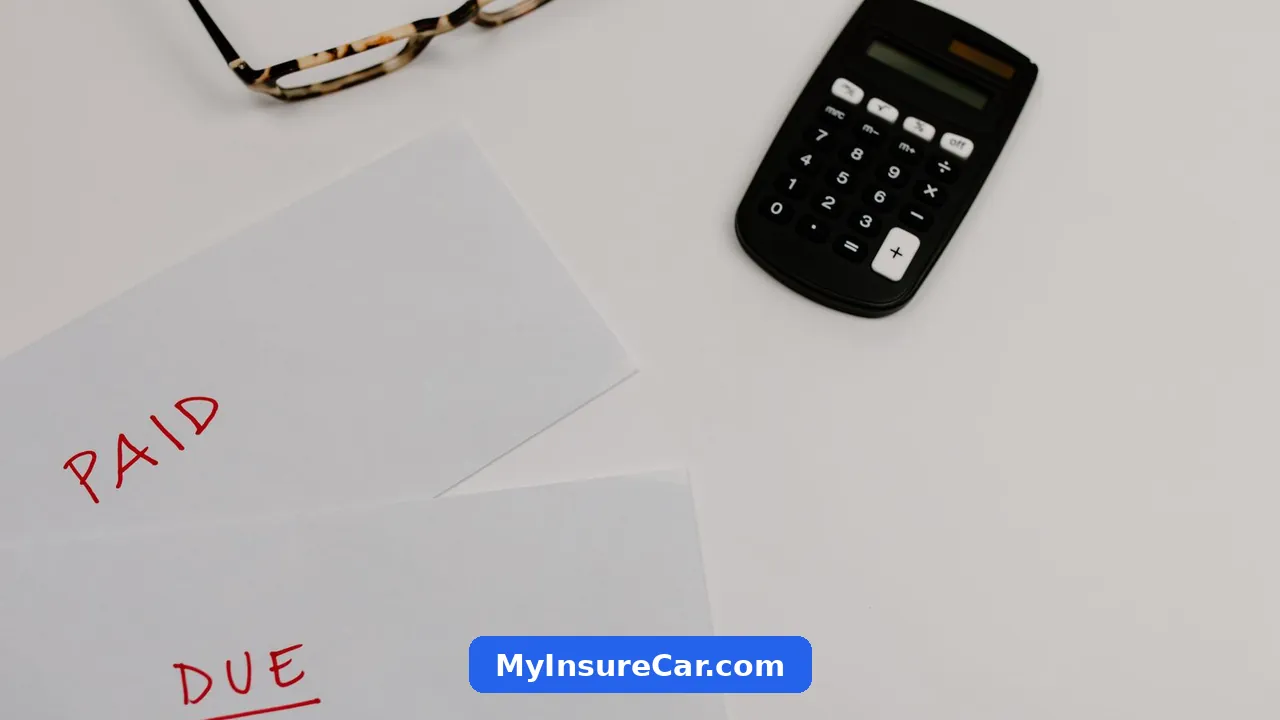
Your phone buzzes, and it is the payment reminder you forgot about. The premium was due three days ago. Your card expired last month, the new one is still in an unopened envelope, and now one thought loops in your head: am I even covered right now?
You are probably thinking: one missed payment cannot cancel everything, can it? Part of you wants to ignore it until payday. The answer is better than you fear and worse than you hope, and the next few days decide which one you get.
What a car insurance grace period actually is
A grace period is the short window after your payment due date during which your policy stays active while the insurer waits for the money. Think of it as a buffer, not a bonus. The cover continues, but the bill is still overdue and the clock is running.
Your insurer offers this breathing room because payments fail for ordinary reasons: your card expires, a bank transfer glitches, or a due date slips your mind during a busy week. The grace period separates a fixable hiccup from a genuine break in cover.
It does not mean the payment is forgiven or postponed without consequence. If you pay within the window, the policy continues as if nothing happened, but if you do not, the insurer can cancel the policy and the consequences that follow are much harder to undo. The Insurance Information Institute explains how policy cancellations and lapses work in plain terms.
If this is you, the driver who missed by three days and is already panicking, breathe. Three days is a hiccup, not a cancellation, and you can still fix it today.
How long does a grace period last
There is no single national rule for how long a grace period lasts. Most insurers allow somewhere from 10 to 30 days, and many settle on around two weeks. The exact length lives in your policy documents, not in a universal standard.
Your insurer may be more generous if you have never missed a payment, while others apply the same window to everyone. A few states set minimum notice requirements before a cancellation can take effect, which can stretch the practical timeline, but none of that changes the basic point: do not guess.
Check your policy declarations page or the billing section of your insurer’s app. If you cannot find it, call and ask for the number of days in writing. If you are thinking of changing insurers while you sort out a missed payment, read the guide to switch car insurance without a lapse before you make any move.
What happens if you miss a payment
When a payment fails, most insurers send a notice giving you a deadline to pay. That notice is the document to take seriously. It tells you the last day your cover remains in force and what happens next. The notice usually arrives by email and post, and it names the exact date your cover ends. When you call to pay, have the notice to hand, because the agent will ask for the reference on it.
If you pay before that deadline, your policy stays active and there is usually no break in cover. If you miss the deadline, the policy cancels, and that is when the real trouble starts, because a lapse after a missed payment can follow you for years. Insurers treat a gap in cover as a risk signal, and future quotes usually come back higher.
A lapse can also create legal exposure for you, since most states require continuous cover for any car that is registered and driven. Driving after a cancellation, even for one trip, can mean fines, a suspended registration, or worse if you are involved in a crash. The safest move is to treat the notice deadline as a hard stop and pay before it arrives. There is one catch, and it is the one that decides your claim: the deadline on the letter is the real one, not the date you meant to pay.
Can you pay your car insurance with a credit card
Yes, most insurers accept credit card payments, and paying by card is the fastest way to catch up when your payment has failed. You can usually pay online, through the insurer’s app, or over the phone. The payment typically posts the same day, which matters when a deadline is close.
There are two things to watch: some insurers charge a card processing fee, so check the total before you confirm, and paying by card fixes the immediate problem but not the underlying one. If the payment failed because the card on file expired, update the card details at the same time so the next payment does not fail again.
If a credit card is not an option, most insurers also accept bank transfer, debit card, and sometimes payment by phone or in person. The method matters less than the timing. Pay by whatever route posts fastest when you are inside the grace period. So am I covered or not while I wait for the payment to post? Yes, if you are still inside the window, and that is exactly why you pay today instead of next week.
What happens if you claim during the grace period
This is probably the question worrying you most, and the answer is reassuring with one important catch. If your policy is still within its grace period, it is still in force. A claim for a crash during that window should be handled in the normal way.
The catch is that the insurer can deduct the overdue premium from your claim settlement. If you owe a monthly payment and your car is written off, the insurer may pay the claim minus the amount you owe. That is standard practice, and it is another reason to pay promptly rather than letting the balance sit.
State insurance regulators set the rules that insurers must follow around cancellations and notices. The National Association of Insurance Commissioners publishes consumer guidance on auto insurance that is worth reading if you want to understand your rights. You are probably thinking: so the crash is covered, but I still lose the premium from the payout. Yes, that is exactly how it works, and it is still far better than no cover at all.
The notice rule: how much warning your insurer must give you
The grace period is your insurer’s billing window. The cancellation notice is a separate legal clock, and your state sets its length. California requires at least 10 days written notice for nonpayment and 20 days for other reasons. New York requires 15 days for nonpayment and 20 days for other reasons. Texas requires 10 days. Massachusetts requires 20 days. New Jersey requires 15 days for nonpayment, and North Carolina 15 days for nonpayment and 60 days for other reasons.
One more rule matters. In the first 60 days of a new policy, an insurer can cancel for almost any reason. After 60 days it can usually cancel only for nonpayment, fraud, or a suspended or revoked license. So the notice you receive is not a courtesy, it is a deadline your state wrote, and the date on it is the date that counts. Our guide to how to reinstate a canceled car insurance policy covers what to do if the deadline has already passed, and our guide to changing car insurance any time explains how to move insurers without opening a gap.
What happens when the grace period ends
If the deadline passes without payment, the insurer cancels the policy. Cancellation is usually backdated to the date the payment was due, which means the gap in cover stretches back further than you probably expect. Any claim for an incident after that date will be denied.
Reinstatement is sometimes possible, but it is not automatic. Some insurers will restore the policy if you pay within a short window after cancellation, while others require a brand new application, and the new policy may come with higher rates because of the lapse. You will also need to prove continuous cover to your state if your registration was flagged.
If your policy has already been cancelled, the guide on how to reinstate a cancelled car insurance policy covers the options step by step. If this is you, the driver who found the notice a week late, call today, because every day past the deadline narrows what the insurer can still do for you.

Your state finds out before you do: how cancellations reach the DMV
Insurers report policy cancellations electronically to the DMV in nearly every state, so a lapse is found in days, not months. California is a good example of the chain: once your insurer reports a cancellation and no replacement policy appears within 45 days, the DMV suspends the registration, and getting it back costs a $14 reinstatement fee plus proof of new insurance. In Florida, the insurer must report a cancellation within 10 days, and reinstatement costs $150 the first time, $250 the second, and $500 for later ones within three years.
Most states do not suspend immediately. The DMV usually sends a verification letter first, and you typically get 15 to 30 days to respond with proof of insurance. Answer it. A one-day overlap between your old policy and your new one keeps the DMV record continuous, which is why switching cleanly matters even when you never drive uninsured. Our guide to switching car insurance without a lapse walks through the exact sequence, and our guide to whether you can pause car insurance temporarily explains why a pause usually creates the same problem.
How to stop a missed payment happening again
The most reliable fix is also the simplest. Set up autopay from an account that always holds enough to cover the premium, and set a calendar reminder a few days before each due date. Autopay fails when the funding source fails, so the reminder is your backup.
If money is tight, talk to your insurer before the due date, not after it. Some insurers will move a due date, split a payment, or shift you to a different billing cycle, and they would much rather keep a paying customer than cancel a policy. You will not know what is available unless you ask.
If you are not driving the car at all for a while, pausing cover may look tempting. In most cases it is a poor trade, because a pause usually creates the same lapse problem. Read can you pause car insurance temporarily before you consider it.
Finally, review your payment method once a year. Cards expire, bank accounts change, and a premium that quietly increases can push a payment over an old limit. Five minutes of housekeeping once a year prevents most missed payments entirely. Then what do you do on Monday morning? Open the envelope, update the card, and set the reminder, and this stops happening to you.
Frequently Asked Questions
How long is a car insurance grace period?
Most insurers allow you 10 to 30 days after the due date, with around two weeks being common. The exact length is set by your insurer and your state, so check your policy documents or ask your insurer for the number of days in writing.
Am I still covered during the grace period?
Yes. Your policy stays in force during the grace period, so a claim during that window should be handled normally. Your insurer can deduct any overdue premium from your claim settlement, so it still pays you to settle the bill quickly.
Can I pay my car insurance with a credit card?
Most insurers accept credit card payments from you online, through their app, or over the phone. The payment usually posts the same day. Check for a card processing fee before you confirm, and update the card on file if an expired card caused your missed payment.
Can I cancel my car insurance at any time?
Yes, you can cancel your car insurance at any time, but timing matters for you. If you cancel before replacement cover starts, you create a lapse that can raise your future premiums. Arrange your new policy first, then cancel the old one with the start dates lined up.
What happens if I miss the grace period deadline?
Your insurer cancels your policy, usually backdated to the original due date. Any claim for an incident after that date will be denied, and the lapse can raise your future premiums. Contact your insurer immediately to ask about reinstatement or a new policy.
You missed a payment, not a deadline you cannot recover from. Pay it today, set up autopay, and check your payment details once a year. That is all it takes to make sure this never turns into a lapse.
This guide is general education, not professional insurance advice, so confirm the details in your own policy and with a licensed insurance professional before you act. Full disclaimer


[…] actual cash value. The insurer sends that amount to your lender. If there is still a remaining balance, gap insurance pays the difference, up to the policy limit. Gap insurance does not replace your […]
[…] also wise to have a written agreement outlining who pays what, how claims are handled, and what happens if one party wants to sell the […]
[…] see how to transfer car insurance to a new vehicle, and if you are between policies, check the car insurance grace period so the gap never becomes a […]