

Your bike is locked outside the station, or leaning in your garage, and one question keeps nagging at you: if something happens to it, does the insurance you already pay for cover it? The trouble is that bike insurance and car insurance look similar on paper, both offering liability, damage cover and protection against theft, yet they work quite differently in practice. And the word bike itself adds to the confusion, since it can mean a bicycle or a motorcycle, insured in completely different ways.
So let us settle it for your bike: which kind you own in your insurer’s eyes, whether your car or home policy already covers it, and what you still need to buy before you ride. There is one overlap that surprises most people, and it decides whether a claim gets paid.
First, which bike do you mean
When you say bike, you usually mean one of two things. A bicycle is pedal powered, sometimes with electric assistance. A motorcycle is a motor vehicle with an engine, a registration plate and a licence requirement. Insurers treat them as separate worlds, and guessing wrong is how claims get refused.
A bicycle is often covered, at least in part, through a home or renters policy. A motorcycle needs its own dedicated motor policy, much like a car. An e-bike sits in between, and how it is treated depends on its power, top assisted speed and your insurer. If you ride an e-bike, you are probably thinking: mine is just a bicycle with a battery, surely it counts. It might not. Check the wording rather than assuming.
So for the rest of this article, bicycle means a pedal cycle or a low powered e-bike, and motorcycle means a registered motorbike. Getting this straight is the step that makes everything else click.
Your bicycle vs your car
Bicycle insurance for you is usually about theft, damage and liability, and the sums involved are small compared with car insurance. A bicycle worth a few hundred pounds can often be covered as personal property under your home policy. A high value racing or electric bike may need a specified item, a dedicated bicycle policy or a floater that lists your bike by serial number. If this is you, the rider whose bike lives locked outside the station all day, that is exactly the bike thieves look for.
Liability works differently too. If you injure a pedestrian or damage a parked car while cycling, your car insurance will not cover you, even if you also own a car. Some home policies include personal liability that would respond, some do not. If you ride regularly in traffic, check whether your home policy covers your cycling liability, and what the limits are, because that answer decides whether one bad moment on your bike becomes your bill.
Your car insurance, by contrast, is built around a heavy, fast vehicle that can cause serious damage. Liability limits are far higher, and most states or countries require at least a minimum level of liability cover before you can legally drive your car. No such requirement applies to your ordinary bicycle. So what does that mean for you? If you ride in traffic, the liability question matters more than the bike itself, because you are the one who pays.
The claims process differs as well. A bicycle theft claim usually needs proof of ownership, a serial number and evidence of how the bike was locked. That means the photo of your serial number and the receipt you filed away matter more than anything you say after the theft. A car claim involves police reports, repair estimates and third party negotiation. Both need documentation, but your bicycle claim stands or falls on details you recorded before the theft, so photograph that serial number today.
The e-bike trap: three classes, one expensive mistake
The bike most likely to catch you out is the electric one, because the law sorts e-bikes into three classes and your insurer sorts them differently again. Class 1 is pedal assist only, with the motor cutting out at 20 mph. Class 2 adds a throttle and also cuts out at 20 mph. Class 3 is pedal assist to 28 mph and must have a speedometer. All three are capped at 750 watts, and more than 40 states use this class system. The class, top assisted speed, and motor wattage are printed on a label fixed to the frame, and that label is what decides how the bike is treated.
Cross the line and the bike stops being a bicycle in the eyes of the law. A bike without working pedals, or with a motor of 750 watts or more, is a motor-driven cycle in many states, which needs a license, registration, and insurance. Illinois goes further: from January 1, 2027, high-speed e-bikes capable of more than 28 mph will need a driver license, title, registration, and liability insurance under Senate Bill 3484. Before you buy, read the label and check your state rules, because the bike the shop sold as a bicycle may be a motor vehicle on paper. Our guide to insuring an unregistered car explains how registration and cover connect, and our full coverage explainer sets out what the label full coverage actually buys you.
Your motorcycle vs your car
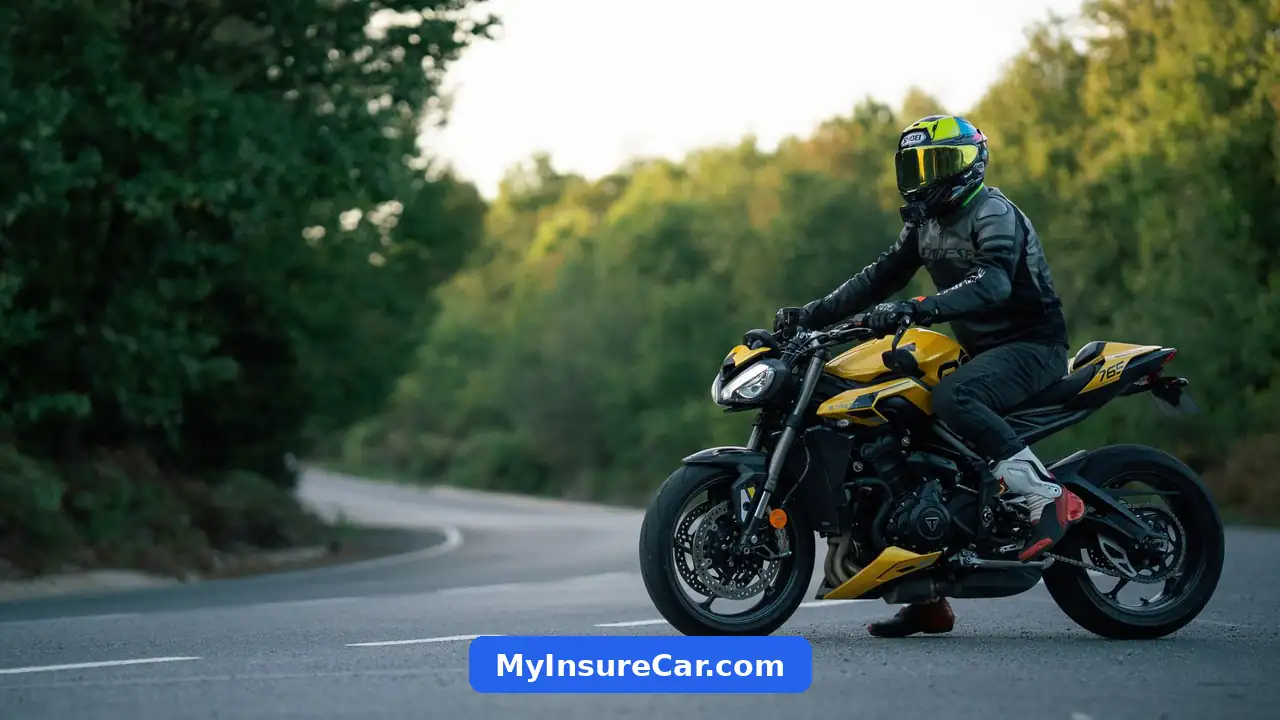
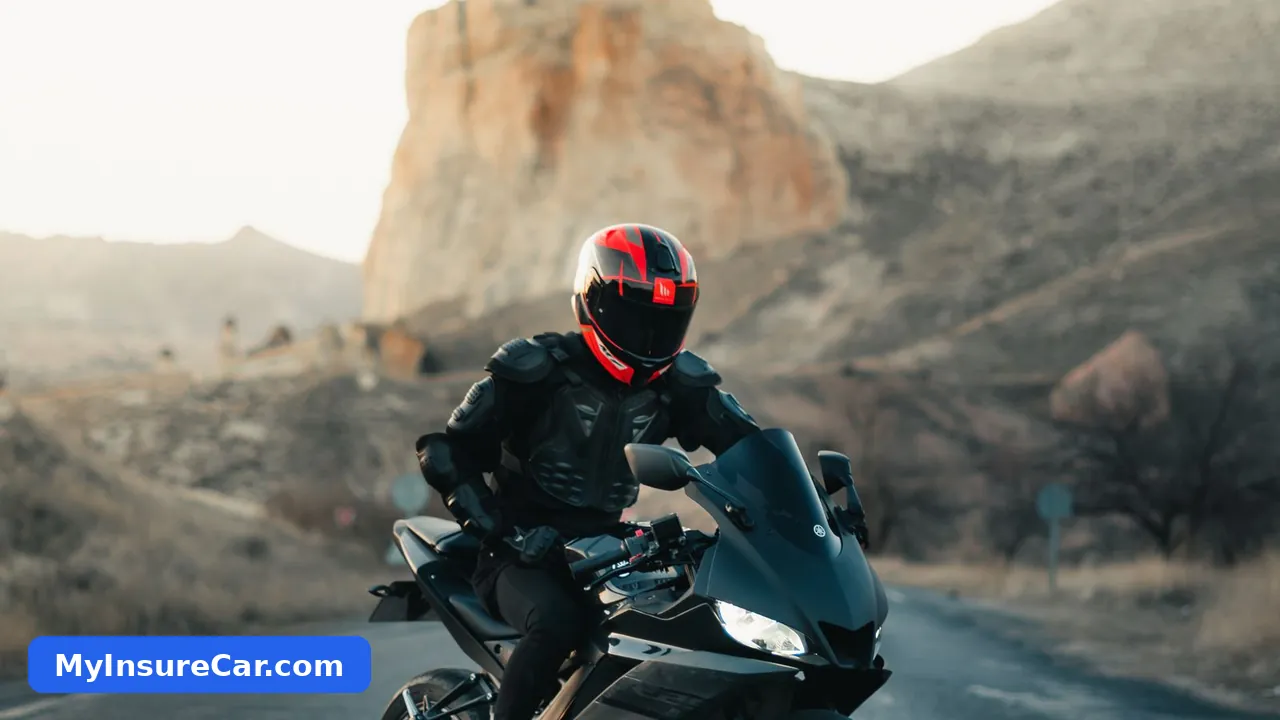
Motorcycle insurance is the closest of the three to car insurance. The coverage types will look familiar: liability, collision, comprehensive and uninsured motorist cover. The Insurance Information Institute sets out the basics of motorcycle insurance cover, including guest passenger liability and cover for customised parts, two areas you rarely think about as a car driver.
The biggest difference is you, the rider. On a motorcycle you have no steel cage, no airbags and no seat belt. The same crash that dents a car door can put you in hospital. You already know this, you feel it every time a car pulls out without looking. That is why medical and uninsured motorist cover carry extra weight on your motorcycle policy, and why price is so sensitive to your experience and training.
The second difference is theft. Motorcycles are easier to steal, strip for parts and move. Comprehensive cover matters more for your bike parked on the street overnight than for your car in a locked garage, and where you store it and what lock you use can move your premium noticeably. If your bike sleeps on the street, that is the first thing to fix.
What your car insurance covers
Your car insurance is the broadest of the three. A standard policy can cover liability to others, damage to your own car from a collision, damage from fire, theft, vandalism and weather, medical costs and losses caused by an uninsured driver. The Insurance Information Institute explains the six standard types of auto insurance cover behind most car policies, a useful reference when you compare them with a bike policy.
One phrase to be careful with is full coverage. It is not a standard policy type, and it means different things at different insurers. Our guide to what full coverage car insurance really means explains why you should compare the actual coverage list rather than the label, because the label is what lets you think you are covered when you are not.
The real differences for you, at a glance
Cost
Your motorcycle policy is often cheaper than your car policy in headline premium, because the vehicle costs less to repair or replace. That does not make it cheaper per unit of risk: injury claims on motorcycle policies are more severe, and that severity is priced in. Your bicycle cover is far cheaper than either, because the values and liability exposure are far smaller.
Risk profile
Car insurance prices the risk you cause to others and the risk to your vehicle. Motorcycle insurance prices those too, plus a much higher risk of serious injury to you as the rider. Bicycle insurance prices theft first, then liability, then damage. You can be low risk in a car and high risk on a motorcycle, because the vehicle changes what a crash means.
Legal requirements
Car insurance is legally required almost everywhere before you can drive. Motorcycle insurance is also required in most places, with liability minimums that often mirror those for cars. Bicycle insurance is not legally required for your ordinary pedal cycle. The practical lesson: your car or motorcycle without insurance is a legal problem, your bicycle without insurance is a financial gamble.
Motorcycle insurance in dollars, and the Florida exception
The headline premium on a motorcycle is usually lower than on a car, and the numbers show why. ValuePenguin puts full coverage motorcycle insurance at $33 a month, or $399 a year, for a 45 year old rider on a mid-size cruiser. MoneyGeek puts it at about $30 a month, or $364 a year, for a 40 year old rider with a clean record. The range widens fast with age and bike: a 16 year old pays about $1,446 a year for full coverage, and a 1,000cc sport bike costs about $3,948 a year. By state, Montana is cheapest at $170 a year and Rhode Island most expensive at $565 a year.
Florida is the exception that proves the rule. It is the one state that does not require motorcycle insurance to register or ride, but the freedom ends at the first crash: after an at-fault crash you must prove financial responsibility of at least 10/20/10, and riders over 21 who want to ride without a helmet must carry at least $10,000 in medical benefits. Motorcycles are also excluded from Florida no-fault PIP, so your own medical bills after a crash are not covered the way a car driver would be. One discount is worth chasing everywhere: completing a Motorcycle Safety Foundation Basic RiderCourse earns 5 to 15 percent off with most major insurers, GEICO lists 10 percent, and the course itself usually costs $150 to $350. Submit your completion card within 30 to 90 days, because missing that window can cost you the discount for the whole policy year. Our guide to comparing quotes online sets out a method that works for motorcycle quotes too, and our guide to the discounts most drivers miss lists the other reductions worth asking about.
What affects your premium
Car premiums respond to your driving record, mileage, location, car and claims history. Motorcycle premiums respond to similar factors, plus engine size and style, your riding experience and whether you have completed a recognised safety course. If this is you, a new rider on a sports bike, yours is one of the most expensive combinations an insurer will price. The rule of thumb: the faster the bike and the newer the rider, the harder the premium hits you.
Your bicycle premium responds to the value of your bike, where you store it, how you lock it and whether you compete or ride off road. A bike kept in a locked garage with a sold secure lock is cheaper to insure than the same bike left on a city street.
One factor cuts across all three: claims history. A clean record keeps every policy cheaper. A claim for a bicycle theft will not usually affect your car premium, but a motoring conviction will affect both your car and motorcycle premiums, because insurers see one driver behind both vehicles. When you are ready to compare prices, our guide to comparing car insurance quotes online sets out a method that works for motorcycle quotes too.
Choosing the right cover for you
Start with the legal minimum, then build up. For your car, that means liability at a level that protects your assets, plus collision and comprehensive if the car is worth protecting. For your motorcycle, the same, plus serious thought about medical and uninsured motorist cover. For your bicycle, checking your home policy first, then deciding whether your bike is valuable enough to need its own cover. Part of you wants to skip this and assume you are covered. Do not.
Read the collision and comprehensive definitions carefully: the words do not mean the same thing across all three policy types. Our guide to comprehensive cover against collision cover explains the distinction in plain terms, and it applies to motorcycle policies as well.
If you own more than one vehicle, ask about bundling. Insuring your car and your motorcycle with the same company can earn you a multi policy discount, and it makes renewal simpler. Compare the bundled price against separate quotes before you commit.
Frequently Asked Questions
Does car insurance cover a motorcycle?
No. Your car policy does not cover your motorcycle. Your motorcycle needs its own dedicated policy with its own liability, collision and comprehensive cover.
Does home insurance cover a bicycle?
Often, yes, for theft and damage at home, up to your policy limits. A high value bike of yours may need to be listed separately. Check your limits, your excess and whether your cover applies away from home.
Is motorcycle insurance mandatory?
In most places, yes. Liability cover is usually required before a motorcycle can be ridden legally, with minimum limits that often match those for cars.
Which is cheaper, bike insurance or car insurance?
Bicycle cover is far cheaper than either motor policy. Motorcycle cover often has a lower headline premium than car cover, but the injury risk it prices is higher.
Can I use the same insurer for bike and car cover?
Yes, and many insurers offer you a multi-policy discount. Compare your bundled price against separate quotes on matching terms before you commit.
So back to your question: does the cover you already have protect the bike you ride? Check which kind of bike you own in your insurer’s eyes, confirm whether your car or home policy already covers it, and then fill the gap that is left. Your next step is one check of your home policy wording for cycling liability, and one question to your insurer about your motorcycle or e-bike. That order keeps you legal.
This guide is general education, not professional insurance advice, so confirm the details in your own policy and with a licensed insurance professional before you act. Full disclaimer

Really insightful post! It’s surprising how many people don’t realize the cost and coverage differences between bike and car insurance until something actually happens. I was comparing policies recently and ended up digging way deeper into how risk profiles affect premium hikes — especially for younger riders.
On a side note (totally different niche but kind of related to digital safety), I’ve also been looking into safe APK downloads lately — tons of fake sites out there. If anyone’s into Android apps or modded games, TouchItRikka.top has been one of the cleanest sources I’ve found so far. Definitely check insurance and tech sites carefully — scams are everywhere these days.
Thanks again for breaking this down so clearly!
[…] Bike vs Car Insurance […]
[…] car insurance after a license suspension feels impossible, but options exist. Many insurers offer policies […]
[…] paid and whether you’ll face out‑of‑pocket expenses. Understanding Medpay Vs Pip Car Insurance helps you choose the right protection for your […]
[…] Car insurance fraud is a growing problem that affects every driver—whether directly or through higher premiums. If you’ve ever wondered how to avoid car insurance fraud, the answer starts with awareness, vigilance, and smart habits. Fraudulent claims cost the industry billions annually, and those costs are passed on to honest policyholders like you. By learning to spot red flags, understanding common scams, and protecting your own information, you can stay safe and keep your rates low. […]
[…] you can pause car insurance temporarily—but only under specific conditions and with major caveats. Most standard auto […]
[…] car insurance generally covers flood damage, including both partial and total losses. If rising water enters your […]
[…] insurance is one of the most misunderstood add-ons in car insurance. Some drivers pay for it for years without ever needing it, while others skip it and end up owing […]
[…] involved in a car accident, one of the first questions that comes to mind is: how long does a car insurance claim take? The answer isn’t one-size-fits-all—it depends on several factors, including […]
[…] you’re over 50 and shopping for car insurance, you’re not just looking for any policy—you want the best car insurance for drivers […]
[…] just received your car insurance policy documents, and you’re staring at a page titled “Declarations” or […]
[…] thought about if your car insurance covers accidents on private property? This guide will help you understand car […]
[…] a teenager to your car insurance policy often feels like hitting a financial speed bump. The immediate question on most […]
[…] Car insurance for first-time drivers is one of the most stressful expenses parents face. Premiums can be shockingly high, and many families don’t know where to start. The right strategy can save thousands over time while still keeping your teen legally protected. This parent’s guide breaks down exactly how car insurance works for new drivers, what affects rates, how to build a cost-effective setup, and money-saving tactics most families overlook. Whether your child is getting their permit or license next month, this article gives you a practical, cheapest setup plan plus expert tips to reduce costs without sacrificing essential coverage. […]
[…] of the least appreciated but most powerful factors in determining car insurance rates is repair cost. Some cars are simply more expensive to fix. This could be because of […]
[…] credit score can have a direct impact on how much you pay for car insurance in many parts of the United States. While it might seem unrelated to driving, insurers use […]
[…] Most drivers assume the person behind the wheel is fully responsible, but in reality, car insurance usually follows the vehicle, not the driver. Knowing exactly how coverage works when a friend, […]
[…] member, letting a friend drive occasionally, or co-owning a car with a partner, understanding how car insurance works when someone else is listed as the policyholder is essential. This guide breaks down the […]
[…] you’re wondering what is full coverage car insurance, you’re not alone. Many drivers hear the term but aren’t entirely sure what it […]
[…] the right amount of car insurance is not just about meeting legal requirements—it’s about protecting your finances from […]
[…] you can get car insurance without a credit check—but it depends on where you live and which insurer you choose. In most […]
[…] car insurance sounds simple, but one wrong step can create a coverage lapse that follows you for years. Even a […]
[…] what is covered, partially covered, or completely excluded. This guide explains in detail whether car insurance covers theft from your car, which policy types apply, what insurers typically refuse to pay for, […]
[…] One of the most critical—and often misunderstood—aspects is securing the right car insurance. If you’re leasing a vehicle, standard minimum coverage won’t cut it. Leasing companies […]
[…] vehicles like BMWs, Mercedes-Benzes, Porsches, or Rolls-Royces. That’s why finding the best car insurance for luxury cars isn’t just about cost—it’s about comprehensive coverage, superior […]
[…] a car insurance claim doesn’t have to be overwhelming—if you know the right steps. Whether you’ve […]
[…] car insurance can cover engine damage—but only under specific conditions and policy types. Most standard […]
[…] coverage when your vehicle is used for commercial purposes. That’s why finding the best car insurance for delivery drivers isn’t just smart—it’s essential. Without proper coverage, a […]
[…] you can change car insurance anytime—but it’s not always as simple as clicking a button. Most drivers don’t […]
[…] you know that a single speeding ticket or red-light violation can spike your car insurance premium by hundreds of dollars per year? Traffic violations increase insurance rates because […]
[…] standard auto insurance may cover the market value, but what if you still owe more on the loan or […]
[…] instead of daily drives to the office. But did you know that how you use your vehicle affects your car insurance rates? Many remote workers are overpaying simply because their policy doesn’t reflect their […]
[…] the right deductible can make a big difference in how much you pay for car insurance. A deductible is the amount you agree to pay out of pocket when filing a claim before your […]
[…] a car insurance claim can feel overwhelming, especially when you’re already dealing with the stress of an […]
[…] car insurance policy has been cancelled—now what? Whether it was due to missed payments, a lapse in […]
[…] reviewing your current policy—and you keep hearing about comprehensive vs collision insurance. What’s the difference? Which one do you actually need? If you’ve ever wondered whether […]
[…] you can technically have two car insurance policies on one car—but it’s rarely a good idea and often not allowed by insurers. Most […]
[…] a speeding ticket isn’t just a minor inconvenience—it can significantly impact your car insurance rates. If you’ve recently been pulled over for speeding, you’re likely wondering how […]
[…] the best car insurance for college students doesn’t have to be overwhelming. Whether you’re commuting to […]
[…] you ever wondered what happens if you’re in a car accident—and the other driver has no insurance? You’re not alone. Every year, millions of drivers face this exact situation. That’s […]
[…] for the best car insurance deal? Comparing car insurance quotes online is the fastest, smartest way to save money without […]
[…] Car insurance discounts can reduce your premium by hundreds of dollars per year, yet most drivers only receive the obvious ones and miss several others simply because they never ask. Insurance companies do not automatically apply every discount you qualify for. Many discounts require verification, enrollment, or a direct request. This guide breaks down the most overlooked car insurance discounts, explains why insurers don’t always mention them, and shows you exactly how to ask for them the right way. […]
[…] price your coverage based on how much and how safely you drive. Understanding how mileage impacts car insurance can help you save hundreds over […]
[…] you might also need your own car insurance. Knowing what’s covered can help avoid surprises if something goes […]
[…] Car insurance for vehicles in long-term storage is about protection, not permission to drive. A parked car can still be stolen, damaged, burned, flooded, or vandalized. Dropping coverage completely exposes you to losses that insurance is designed to handle. The right approach is adjusting coverage to match risk while staying legally and financially protected.Car insurance in storage is often misunderstood because drivers assume that if a car is not being driven, it does not need insurance. In reality, insurance and registration rules, lender requirements, and physical risks still apply even when a vehicle sits unused for months. […]
[…] sudden increase in your car insurance premium can feel frustrating, especially if nothing obvious has changed in your driving habits. […]
[…] further insight into vehicle insurance comparisons, visit Bike vs. Car Insurance. And for updates on how evolving vehicle technology affects insurance worldwide, the International […]
[…] Car insurance in 2026 is not a fixed monthly expense, it varies widely depending on who you are, where you live, what you drive, and how you drive. Still, most drivers want a clear benchmark before they start comparing quotes. […]
[…] responsibilities, especially when it comes to insurance. If you’re wondering how to transfer car insurance to a new vehicle, the good news is that most insurers allow you to do so seamlessly. However, […]
[…] look into car insurance and what happens if your car catches fire. Because its the obvious questions that comes in the mind […]
[…] a vintage beauty from the 70s? Classic car insurance is custom-built for vehicles […]
[…] a lot on your shoulders. Between raising kids, working, and keeping the household together, car insurance can feel like one more expense eating into a tight budget. The good news is, there are smart ways […]
[…] Car insurance rates are heavily influenced by age, more than almost any other factor. Insurers use age as a key indicator of driving experience, risk level, and likelihood of filing claims. This is why a 20-year-old driver can pay more than double what a 40-year-old pays for the same coverage. Understanding how insurance costs change with age helps you estimate your premium more accurately and plan ahead. […]
[…] for repairs that aren’t cheap. In this detailed guide, we’ll break down exactly how car insurance handles vandalism claims, what’s covered, what’s not, and how to protect yourself from […]
[…] choosing a car insurance policy, most drivers focus on coverage and price, but the way you pay for your insurance can also […]
[…] you’re here, you probably want to cut through the noise and get the cheapest liability-only car insurance you can, without making a mistake that’ll bite you […]
[…] Car insurance rates are not random. Every premium is calculated using a combination of risk factors that help insurers predict how likely you are to file a claim and how expensive that claim might be. Some of these factors are within your control, while others are based on your personal profile and environment. Understanding the most important ones can help you reduce your costs without sacrificing coverage. […]
[…] Car insurance can take a big chunk out of your monthly budget, especially if your rates have increased recently. The good news is that you don’t have to wait years to see a difference. There are several proven strategies that can reduce your premium almost immediately if you apply them correctly. […]
[…] the family is an exciting milestone, but it often comes with the daunting reality of skyrocketing car insurance premiums. For parents of 16-year-olds, finding affordable coverage can feel like an impossible […]
[…] question that arises in these situations is: “Can I add my boyfriend or girlfriend to my car insurance policy?” This seemingly straightforward query actually involves several nuances, depending on […]
[…] DUI typically affects car insurance rates for 3-5 years, but some states and carriers impose penalties for up to 10 […]
[…] this detailed guide, we’ll break down exactly when and how car insurance covers windshield replacement, what types of policies apply, how much you might pay out of pocket, […]