

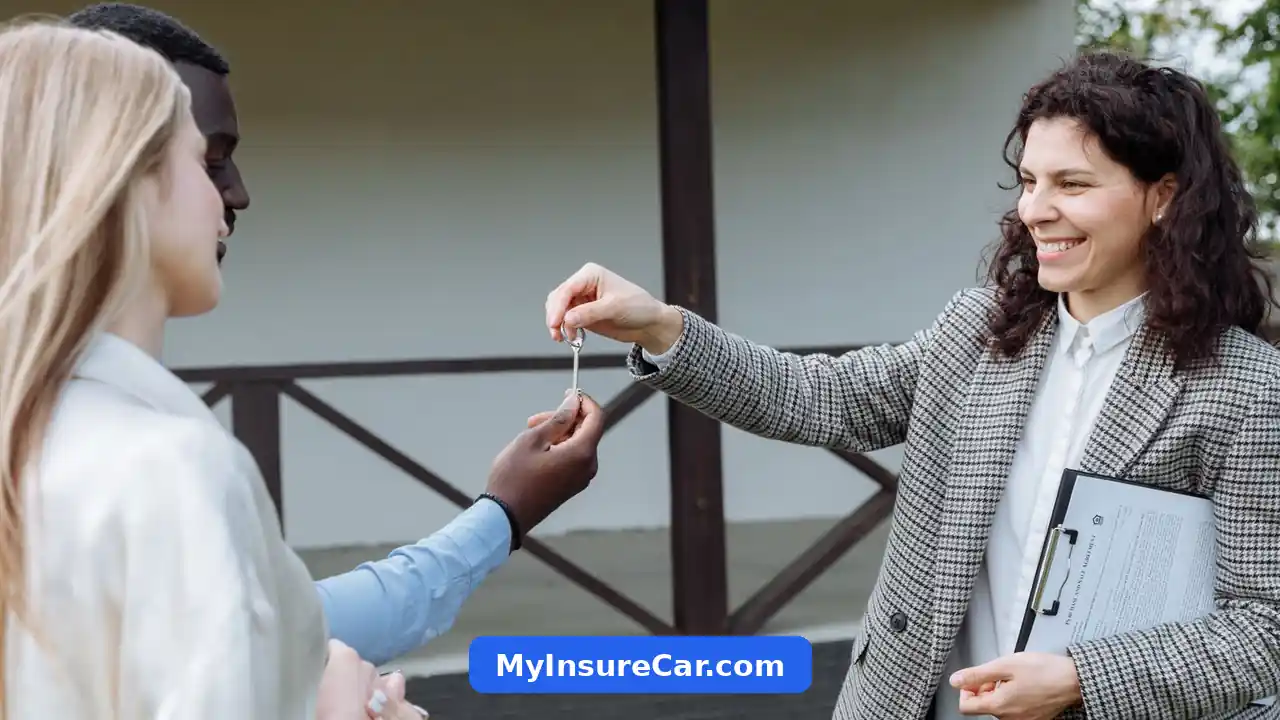
Your friend tosses you the keys and says you can use the car for the week. Or your own policy ends Friday and the new one starts Monday. Or a relative is visiting and needs wheels. Whatever your version is, you need car insurance for one week, and you need it sorted before anyone turns the key.
You are probably thinking: surely I can just buy seven days of cover? The question is simple, and the answer is less simple than it should be: true seven-day car insurance barely exists in the United States.
Does one-week car insurance exist?
Almost no insurer sells a standalone seven-day policy in the US. Insurers write policies by the month or by six months, and their systems are built around that. A seven-day policy costs almost as much to set up as a six-month one, so they do not bother.
You are probably thinking: so what do I do instead? What exists instead is a set of products that cover short periods in other ways: monthly policies you can cancel, pay-per-mile policies, non-owner policies, and the cover that comes with a rental. Each of them solves a different version of the one-week problem.
The right question is not whether a seven-day policy exists. It is what you are actually doing for that week. Driving your own car, borrowing someone else’s, or renting one all lead to different answers, and your answer is one of those three.
Option 1: buy a monthly policy and cancel
Some insurers sell monthly policies with no cancellation fee. You buy a month, use a week, and cancel. You pay for the days you used, plus any fees the insurer charges.
This works best when the car is yours. If this is you, the one who just bought a car and needs cover while sorting a longer policy, a monthly policy is the clean solution. It is real insurance, with your name on it, and it keeps your cover continuous.
Check the cancellation terms before you buy. Some monthly policies charge a short-rate fee, which means you pay more than a straight daily rate when you cancel early. Ask the insurer what a one-week cancellation actually costs, in dollars, before you commit.
Option 2: non-owner insurance
If the car is not yours, non-owner insurance is often the answer for you. It is a liability policy for people who do not own a car, and it covers you when you drive a borrowed or rented car.
A non-owner policy is usually sold by the six-month or yearly term, but it is cheap, and it keeps you continuously insured. If you borrow cars a few times a year, keeping a non-owner policy running is cheaper than arranging cover each time.
It does not cover damage to the car you are driving. If you crash a borrowed car, the owner’s collision cover pays for the car, or the owner pays out of pocket. Your non-owner policy pays the other driver. That is the gap to understand before you rely on it.
Our guide to cheapest non-owner car insurance covers this product in full for you.
Option 3: pay-per-mile insurance
Pay-per-mile insurance charges a low base rate plus a per-mile charge. If you drive very little in that week, the cost stays low. If you drive a great deal, it can cost more than a standard policy.
The catch is setup time. Most pay-per-mile policies need a device or an app installed in the car, and some need a few days to activate. For a single week, the setup can eat the whole period. It works better as an ongoing solution for low-mileage driving than as a one-week fix for you.
There is one exception. If you already have a pay-per-mile policy, a quiet week costs almost nothing. The product rewards exactly the situation a one-week driver is in.
Option 4: rental car cover
If this is you, the one facing a week in a rental car, the rental counter sells you everything you need. Liability, collision, personal effects, the lot. It is the simplest option, and the most expensive one per day.
You may already have cover without knowing it. Your own car insurance often extends to rental cars. Your credit card may cover damage to the rental car if you pay with it. A non-owner policy covers your liability. Between the three, you may already be covered and may not need the counter’s products at all.
Before you buy anything at the counter, check those three sources. Call your insurer, read your card’s terms, and ask what is actually covered. The counter staff are selling insurance. Their job is to sell it, not to tell you that you already have it.
Our guide to whether car insurance covers rental cars walks through the details for you.
Option 5: borrow a car that is already insured
If you are borrowing a friend’s or relative’s car, their policy usually covers you as a permissive user. Permission is the key word. The owner must have given you permission to drive the car.
Permissive use covers occasional borrowing. It does not cover regular use. If you drive the car every day for a week, that is regular use, and the owner’s insurer can argue the claim. For a genuine one-off week, it is usually fine for you.
Ask the owner to check their policy before you drive. Some policies restrict permissive use, and some exclude drivers under a certain age. A two-minute check prevents a denied claim.

One week, priced four ways
There are four ways to price one week, and they are not close to each other. A monthly policy: a $150 a month policy covers the week for about $35 plus any fee. A non-owner policy: about $325 a year, so the week share is about $6, but you cannot buy it for one week, you buy the year. A rental counter: a loss damage waiver runs $10 to $30 a day, so $70 to $210 for the week. A pay-per-mile policy: a $29 a month base plus 6 cents a mile, so a 300 mile week costs about $25.
The cheapest week is usually cover you already have: your own policy, a credit card benefit, or a non-owner policy you already hold. The most expensive week is the one you buy at a rental counter with no other cover in place. Before you pay for anything, check whether your own policy already covers the car, in our guide to whether car insurance covers rental cars, and if you borrow cars often, see what non-owner car insurance is, because a year of it costs less than two rental counter weeks.
What one week of cover actually costs
You are probably thinking: what will my week actually cost? The cost depends on which option you pick. A monthly policy cancelled after a week costs a week’s share of a monthly premium, plus any cancellation fee. A non-owner policy costs a share of a cheap yearly premium. Rental counter cover costs the most per day by a wide margin.
The cheapest honest option is usually the one you already have. Check your existing policy first. You could be paying for rental cover at the counter while your own policy already covers the rental.
The most expensive mistake is driving uninsured. A single ticket for driving without insurance costs more than a week of any of these options, and a crash without insurance can cost everything. There is no version of this problem where driving uninsured is the smart move for you.
The short-rate sting: what a one-week cancellation really costs
Cancel a monthly policy after one week and the refund is not pro rata. Most insurers use short-rate cancellation, which keeps about 10 percent of the unused premium, or a flat $25 to $50. Worked example: a $200 monthly policy cancelled after a week has about $150 of unused premium. Pro rata would refund the full $150. Short-rate keeps about $15 and refunds about $135.
The gap is small on one policy, but it is the reason a one-week policy bought for a single trip costs more than one week of a monthly policy. The insurer prices the hassle of selling, billing, and cancelling into the short rate. Ask for the dollar figure before you buy, not after you cancel, and if you plan to switch insurers, read how to switch car insurance without a lapse and check the car insurance grace period so the switch never leaves you uncovered for a day.
Temporary cover and gaps in insurance
A gap in insurance is a period with no cover, and insurers charge you more afterwards. Even a short gap can raise your next premium. This is why a one-week problem deserves a real solution rather than a week of hoping.
A monthly policy that you cancel after a week does not create a gap. A non-owner policy does not create a gap. Borrowing a car under the owner’s policy does not create a gap. Driving uninsured for a week does, and it is the most expensive option on this list in the long run.
If you are between policies, overlap them by a day. Start the new policy the day before the old one ends. One extra day costs almost nothing. If your week involves a rental while your own car is repaired, our guide to rental reimbursement coverage explains what happens.
What to check before you drive
Three checks, five minutes. First, whose policy covers the car, and does it cover you? Second, what does it cover: liability only, or damage to the car as well? Third, what is the excess or deductible you would pay after a claim?
Get the answers in writing if you can. A text from the owner confirming permission, a screenshot of your policy, or a note of the call. If anything goes wrong, that evidence is what gets the claim paid.
And check the car itself. Photograph it before you drive it, inside and out. If the owner later claims you caused damage that was already there, your photos settle the argument.
The best option for each situation
Your own car, one week: a monthly policy you cancel, or a standard policy if you are keeping the car. Borrowed car, one week: the owner’s policy as a permissive user, or your non-owner policy if you have one. Rental car, one week: your own policy plus your credit card, or the counter’s cover if you have neither.
Visiting from abroad: a rental with the counter’s cover, or a non-owner policy if you will be driving for longer. New car, waiting for a policy: a monthly policy from day one, never a gap.
None of these is a true seven-day policy, because that product barely exists. All of them get you covered for a week, legally and properly. So here is your move: match your situation to the option above, run the three checks before you drive, and keep the evidence. That is the whole job.
The Insurance Information Institute explains auto insurance basics clearly.
The National Association of Insurance Commissioners publishes consumer guides that are worth reading.
Frequently Asked Questions
Can I get car insurance for one week?
True seven-day policies barely exist in the US. Instead, use a monthly policy you cancel, a non-owner policy, pay-per-mile cover, or rental cover. The right option for you depends on whether the car is yours, borrowed, or rented.
What is the cheapest way to insure a car for a week?
The cheapest honest option is usually cover you already have: your own policy extending to a rental, or the car owner’s policy as a permissive user. After that, a monthly policy you cancel early is usually cheaper than rental counter cover.
Does my insurance cover a rental car for a week?
Often yes for liability, and sometimes for damage to the rental car. Check your policy and your credit card terms before buying the rental company’s cover. Many drivers pay for cover they already hold, and you may be one of them.
Can I drive a borrowed car for a week without insurance?
You still need cover. The car owner’s policy usually covers you as a permissive user for occasional borrowing. If you drive it every day, the owner should check whether their policy treats that as regular use.
Will a one-week gap in insurance raise my premium?
Yes, it can. Insurers charge you more after a gap in cover, even a short one. Overlap your policies by a day when switching, and never leave a week uninsured to save a small amount.
This guide is general education, not professional insurance advice, so confirm the details in your own policy and with a licensed insurance professional before you act. Full disclaimer

[…] This is especially useful if you mostly work from home or use public transit. You might also find one-week car insurance useful if you only need occasional […]
[…] money’s tight, short-term policies like one-week car insurance can be a useful option while you shop […]
[…] if I only need insurance for a short period? One-week car insurance can be a solution for temporary […]
[…] insurers even bundle it with one-week car insurance or monthly coverage extensions, letting you control your insurance like a streaming subscription […]
[…] Communicating with the insurer if issues ariseIf payment flexibility is needed, some drivers explore alternative billing structures or short-term solutions cautiously. This overview explains how short-term coverage works and where risks exist: https://myinsurecar.com/one-week-car-insurance-guide/ […]
[…] you’re unsure about coverage flexibility, check my breakdown on One-Week Car Insurance – short-term coverage can sometimes bridge gaps when switching vehicles or […]
[…] if you own multiple vehicles but drive each one infrequently. Combined with short-term plans like One-Week Car Insurance, it’s ideal for temporary use or shared car […]
[…] can also consider pay-per-mile car insurance or short-term options like one-week car insurance if you’re an infrequent driver. These flexible plans can balance coverage with cost […]
[…] all receipts. Towing, storage, and temporary transportation costs may be […]
[…] can also explore flexible coverage types, such as one-week car insurance, if you only need temporary protection after selling or replacing your […]
[…] renewal—especially if you’re on a pay-per-mile or usage-based plan. Some programs allow temporary adjustments without […]
[…] Most standard policies include a “grace period” (typically 7 to 30 days) that allows temporary coverage for a newly acquired car. But relying on this window without action is risky. If you get […]
[…] If you’re exploring temporary solutions, such as insuring a new EV for a week or while testing ownership costs, check out my guide on one-week car insurance. […]
[…] a lapse occurs, act immediately. Bind new coverage the same day. Some insurers offer short-term or temporary options, but availability is limited. Drivers with lapses often face higher costs and fewer […]
[…] ties closely with practical guides such as one-week car insurance options, where temporary coverage can also benefit from short-term roadside assistance, especially during […]
[…] the reason behind the increase helps you determine whether it’s temporary or […]
[…] most carriers treat a first-time DUI as a temporary mark rather than a permanent penalty. Accordingly, the surcharge typically starts to fade after […]
[…] around for the best rates, you can soften the financial blow. Remember, this initial high cost is temporary, gradually decreasing as your teenager gains experience and maintains a clean driving record. […]
[…] the damage and repair costs. Keep all receipts and documentation related to towing, rental cars, or temporary […]
[…] short gaps between policies, such as when switching cars, short-term cover can bridge the period without creating a lapse. And if anyone in the household rides a motorbike as […]
[…] very short coverage windows, such as between court dates, short-term car insurance can bridge the gap without a […]