

You are standing outside the courthouse with a piece of paper in your hand. The judge has just given you limited driving privileges: work, school, medical appointments, nothing else. You feel relieved, and then a new thought hits you: does this piece of paper actually mean I can drive?
You are probably thinking: the court said yes, so the insurance must follow. It does not. A court’s permission to drive is not your insurer’s permission to cover you. Those are two separate systems, and a claim can be denied even when the court said you were allowed behind the wheel.
What court-ordered driving actually means
Court-ordered driving usually means a restricted or hardship licence. The court lets you drive for specific purposes, such as work, school, medical appointments, or childcare, after a suspension. The restrictions are precise about when, where, and why you may drive.
Common triggers include drink driving convictions, repeat violations, or unpaid fines. The court sets the driving terms, and it says nothing about your insurance. That gap is where drivers get into trouble.
If you break the restrictions, you face serious consequences on top of the original penalty, including further suspension or jail time. The National Association of Insurance Commissioners offers consumer guidance on auto insurance that helps explain how state rules and insurance requirements interact.
If this is you, the driver holding a hardship licence and wondering whether the hard part is over, it is not. The court gave you permission. Now you have to make your policy match it, or that permission is worth nothing after a crash.
Does your car insurance cover court-ordered driving
Yes, but only if your policy accurately reflects your situation. Standard policies assume a fully licensed driver. A restricted licence, an SR-22 filing requirement, or an ignition interlock changes your risk profile, and your insurer needs to know about it.
If you hold a restricted licence and your insurer does not know, you may be driving on a policy that was priced and issued for a different risk. After a crash, the insurer can investigate, discover the undisclosed suspension, and deny the claim. That is the single most expensive mistake in this whole area.
So what do you do on Monday morning? You tell your insurer before you drive. It may raise your premium, and it may mean moving to a different policy or a different insurer, but that is still far cheaper than an uncovered crash. The guide to car insurance for high risk drivers covers how to find cover after a conviction or suspension.
What is an SR-22
An SR-22 is not insurance. It is a certificate your insurer files with the state proving that you carry at least the minimum required liability cover. Courts and licensing agencies commonly require it after drink driving convictions, serious violations, or driving without insurance.
In practice, it is a filing attached to your policy. You buy the policy, the insurer files the certificate with the state, and the state keeps it on record for the required period, which varies by state and offence.
The cost comes in two parts: a small filing fee, and the higher premium that comes with being classified as a high risk driver. The filing itself is cheap, while the premium increase is where the real money goes. For the full breakdown, see the SR-22 insurance cost and filing guide.
One warning matters more than the rest. If the policy behind the SR-22 lapses or cancels, the insurer notifies the state, and your licence can be suspended again. Continuous cover is not optional while an SR-22 is in force, because it is the whole point of the filing. Ask for written confirmation that the filing has been made, and keep it with your court papers. You already know the answer, you just do not want to pay it: one missed payment can restart the whole suspension cycle.
Can you drive a car without insurance
In almost every state, no: driving without insurance is illegal, and a court order granting limited driving privileges does not waive the insurance requirement. The court’s permission to drive and the state’s requirement to carry cover run side by side, so you need both.
The penalties for driving uninsured are steep and get worse with repeat offences. Fines, licence suspension, vehicle impoundment, and personal liability for any damage you cause are all on the table. If you crash without cover, you can be sued personally for the full cost of the other party’s injuries and property damage.
You may only drive rarely under a restricted licence, but that does not make the risk small: one short trip is all it takes. If you cannot afford cover, you cannot afford to drive, and the court will treat it that way too. You are probably thinking: but I only drive to work and back, surely that counts for something. It does not, because one short trip is all a crash needs.
If your licence is currently suspended and you are working out your options, the guide on how to get car insurance with a suspended license explains the routes available.
Getting cover with a restricted licence
Finding cover with a restricted licence is harder than with a full licence, but it is usually possible. Your options depend on exactly what the court allowed you to do. When you call, the insurer will ask for the court order details and whether an SR-22 is required, so have the paperwork in front of you.
With a restricted or hardship licence, you can usually get a standard or non-standard policy, provided you disclose the restriction and any SR-22 requirement. Non-standard insurers specialise in this market and are used to filing SR-22 certificates. Their premiums are higher, but they understand the situation and will not drop you for disclosing it.
With no licence at all, you have fewer options. Some insurers will issue a policy if you are an unlicensed owner with a licensed driver as the primary operator of the car, while others will not. If nobody in the household holds a licence, cover becomes very hard to obtain, and parking the car until the licence is restored is often the only safe choice.
In every case, honesty on the application is essential. A policy obtained by hiding a suspension can be voided when you need it most. The Consumer Financial Protection Bureau publishes consumer resources on auto insurance that explain your rights when dealing with insurers. But the price you pay depends on one question you have not asked yet: does your current insurer even know about the restriction, or are you still covered as the driver you were before the suspension?
How to stay compliant with court-ordered driving
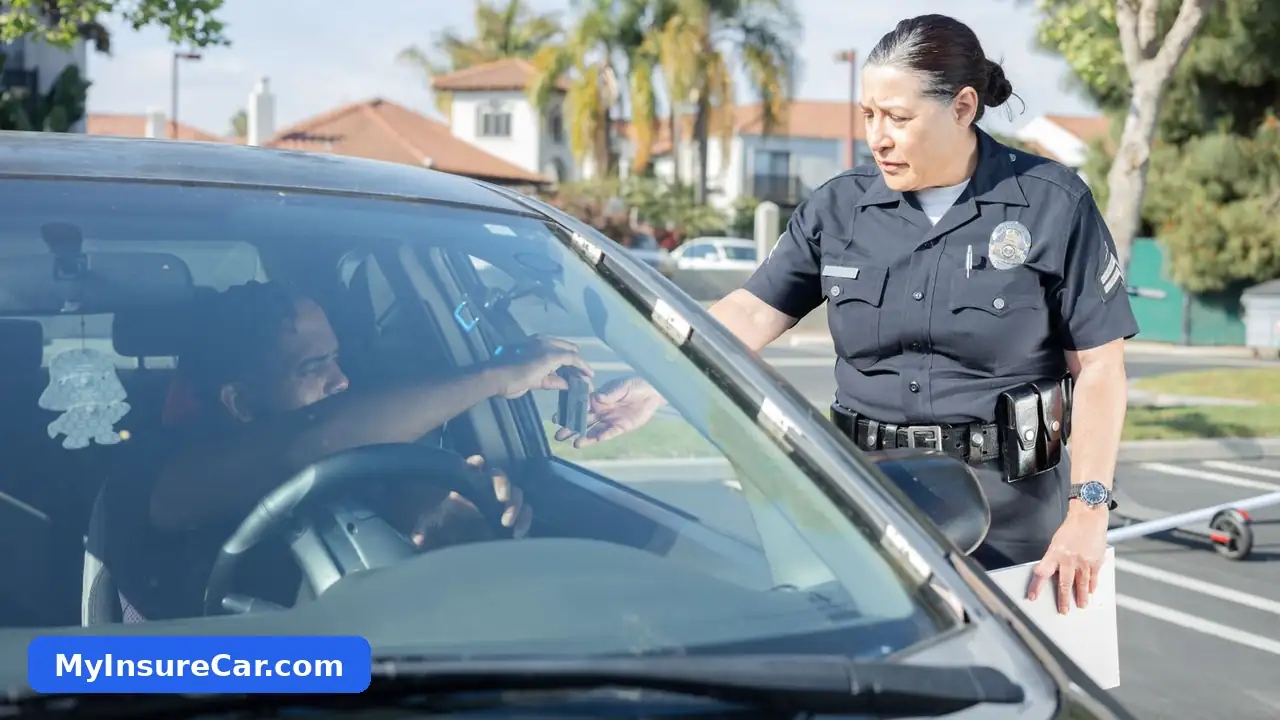
Staying compliant comes down to four habits. First, carry proof of both the court order and your insurance in the car, because if you are stopped, you need to show both. A restricted licence alone is not enough, and an insurance card alone is not enough.
Second, drive only within the court’s restrictions. If the order allows driving to work and back, do not detour to the shops, and if it sets hours, respect them. Officers and courts treat violations of a hardship licence seriously. If this is you, the driver tempted to detour to the shops on the way home from work, that one detour can cost you the licence the court just gave back.
Third, keep the policy active without a break. Set up autopay, keep the funding source current, and do not let the SR-22 lapse. A single missed payment can restart the whole suspension cycle.
Fourth, tell your insurer about any change. If the court extends the restriction, lifts it, or adds an ignition interlock requirement, update your insurer the same week. Your policy has to match your real situation at all times, not just on the day you bought it. There is one catch, and it is the one that decides your claim: the policy that matched your life last month may not match your life today.
Frequently Asked Questions
Does car insurance cover court-ordered driving?
Yes, if your policy reflects your situation. Your insurer must know about your restricted licence and any SR-22 requirement. If your insurer does not know, a claim can be denied even though the court allowed you to drive.
What is an SR-22?
An SR-22 is a certificate your insurer files with the state proving you carry at least the minimum required liability cover. It is not insurance itself. Courts commonly require it after drink driving convictions, serious violations, or driving without insurance.
Can you drive a car without insurance if a court allows you to drive?
No. A court order granting you limited driving privileges does not waive your insurance requirement. You need both the court’s permission and valid insurance cover. Driving uninsured can mean fines, suspension, impoundment, and personal liability for any crash.
What happens if my policy lapses while an SR-22 is in force?
Your insurer notifies the state, and your licence can be suspended again. Continuous cover is essential while your SR-22 is in force. Set up autopay and keep your payment details current so your policy never lapses.
Can an unlicensed driver get car insurance?
It depends on your situation. Drivers with a restricted licence can usually get cover through standard or non-standard insurers. A driver with no licence at all may only get cover if a licensed driver is listed as the primary operator. Always disclose your licence status honestly on your application.
Your court order gave you back limited driving. Your job now is to keep it: tell your insurer, keep the policy alive, and drive only within the restrictions. Do that, and you get through this period with your licence intact.


[…] pushes extra coverage, and you must make a quick decision. Consequently, you might wonder, does car insurance cover rental cars? (everything you need to know starts with your own policy […]
[…] its the obvious questions that comes in the mind after the tragedy, My Car Caught On Fire Will My Insurance Cover It? We’ll cover the different types of coverage and the claims […]