You open your insurer’s app, and there it is: a driving score. It knows how hard you braked on Tuesday. It knows you drove home at midnight. You stare at the number and you are probably thinking: since when does my insurance company know how I drive, and what is it going to do with that?
Your car already knows more about your driving than any insurer ever did. It knows how hard you brake, how fast you take corners, and what time you drive home. The city around it is learning too. Traffic sensors, connected signals, and roadside cameras now measure how traffic flows, where crashes happen, and which intersections are dangerous. Insurers are starting to use that picture to set prices.
That is the idea behind smart cities and car insurance. It is not one product. It is a shift in how risk is measured, from broad groups to your actual behavior and the places you drive. So here is your question, answered in your terms: what does the shift mean for your premium, what does it ask of you in return, and how do you decide whether to join in?
How city data changes risk assessment
Your insurer has always priced by place. A car parked where theft and vandalism are frequent costs more to insure than the same car parked somewhere quiet. Smart city data makes that picture sharper. Instead of pricing by ZIP code alone, insurers can look at the actual risk of the roads you drive, the time you drive them, and the way you drive them. If this is you, the careful driver who has always paid the same as the reckless one on your street, this is the first time the price can tell you apart.
Traffic sensors measure congestion, average speeds, and near misses at intersections. Roadside cameras and connected signals record where crashes cluster. Weather stations add rain, ice, and flooding. Combined, these sources let insurers see which stretches of road are genuinely dangerous, rather than guessing from old claims data. Your daily route is no longer a guess.
So what does this mean for your premium? Pricing starts to follow your behavior more closely. If you avoid the worst intersections at rush hour, brake gently, and drive fewer miles, you may pay less than someone with the same car and the same ZIP code who does the opposite. That is the core promise of data driven pricing, and it is why artificial intelligence is changing how premiums are set. But the promise only matters if it shows up in your bill.
The named programs and what they actually pay
Usage-based pricing sounds abstract until you see the program names and the discounts. Nationwide SmartRide gives you 10 percent off the moment you enrol, with savings up to 40 percent once you complete the monitoring period and show safe habits. State Farm Drive Safe and Save offers up to 30 percent off, with 10 percent for joining, and it is not offered in California, Massachusetts, or Rhode Island. Progressive Snapshot reports an average sign-up discount of $169 and an average yearly saving of $322 once the program is complete, with discounts up to 30 percent, but about one driver in five pays more after enrolment. Allstate Drivewise advertises up to 40 percent off for high scores. GEICO DriveEasy typically pays 5 to 15 percent, up to 25 percent.
Two warnings belong with those numbers. First, maximum advertised discounts apply only to the best scoring drivers; typical discounts across all participants run closer to 10 to 20 percent. Second, California does not allow driving behaviour in pricing, so mileage-based programs are the option there and several telematics programs are not offered at all. Our usage-based against traditional comparison works through which driver each model suits, and our pay per mile guide covers the simpler option if you drive little but would rather not be scored on how you brake.
Where you see it in your premium today
You are most likely to see it in usage based insurance. Usage based insurance prices your cover on how you actually drive, measured by an app or a device in the car, rather than on averages for drivers like you. Gentle braking, steady speeds, and low mileage can lower the price. Hard braking, late night driving, and high mileage can raise it.
Pay per mile cover is a simpler version of the same idea. You pay a base rate plus a charge for each mile you drive. If you work from home or use public transport for most trips, you can save real money, because the price follows your miles rather than a guess about them. If this is you, the driver whose car sits in the driveway six days a week while you pay for 14,000 miles a year, pay per mile charges you for the driving you actually do.
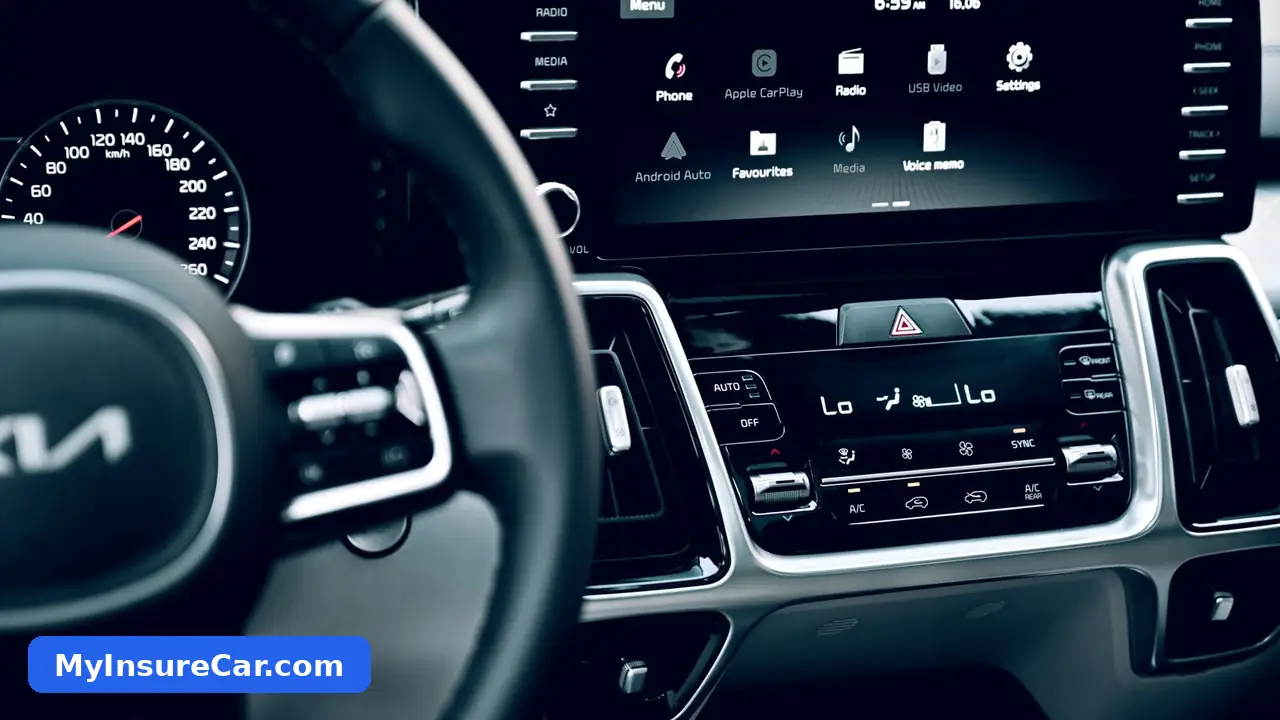
You may also see it in discounts for driver assistance systems. If your car has automatic emergency braking, lane keeping, and blind spot warnings, you are in a group involved in fewer crashes, and many insurers discount that. The discount is not for the technology itself. It is for the lower crash rate the technology produces. Now, where does all of this show up in your life? In the app on your dashboard, the one with your score on it.
Digital insurance and the app on your dashboard
Smart city pricing depends on digital insurance: policies bought, managed, and renewed through an app, with data flowing both ways. You buy cover online, the insurer measures your driving through the app or a device, and your price adjusts at renewal based on what the data shows. This is a real change from the old model, where you bought a policy once a year and the insurer knew nothing about you until you claimed. You are probably thinking: so now they watch me all year. Yes, and that watching is the deal: your data for a price set by your driving.
Digital car insurance also makes switching easier. Quotes arrive in minutes, documents live in the app, and you can change your mileage or your cover without a phone call. That convenience is genuine, but it comes with a trade off. The more data you share, the more your price depends on it. Read the privacy notice before you agree to share driving data, because the privacy notice is the real contract.
Some drivers worry that an app will punish a single hard stop. You might worry about that too. In practice, most usage based programs score patterns, not single events. One emergency stop does not ruin your score. A habit of hard braking, speeding, and late night driving does. If you are considering a program, ask how the score is calculated and what happens if you stop sharing data.
What it means for high risk drivers
Data driven pricing cuts both ways if your record is not clean. On one hand, you can prove, through measured driving, that your behavior has improved. A year of gentle, low mileage driving recorded by an app is stronger evidence than a promise. Some insurers use that evidence to offer better renewal prices. If this is you, the driver with a bad year behind you who has genuinely changed how you drive, the app lets you prove it instead of just saying it.
On the other hand, the same data can confirm a high risk profile. If you brake hard, drive fast, and drive late at night, you will see that behavior reflected in the price. The Insurance Information Institute explains how insurers use data to set prices: the data does not judge you, it measures you, and the measurement becomes the price.
If you prefer not to share data, traditional policies remain available. You can still buy cover priced on the old factors: age, record, car, and place. The price may be higher than a measured policy for a careful driver, but it does not depend on an app. The choice is yours, and it is worth making deliberately rather than by default.
Claims get faster too
Smart city data does not only change pricing. It also changes claims. Your connected car can report a crash automatically, with the location and the severity. Traffic cameras can confirm what happened at a intersection. Weather data can confirm that a storm passed through at the time of the damage. All of this can shorten the time between reporting your claim and getting a decision.
Faster claims help you, but they also help insurers spot fraud. A claim that contradicts the sensor data is investigated more quickly than one that matches it. If you are honest, you benefit, because faster decisions mean faster repairs and faster payment. You are probably thinking: so the sensors are witnesses now. They are, and they are witnesses that never forget.
There is a limit worth remembering. Data can show where and when your crash happened, but it cannot always show who was at fault. A camera at a intersection may show both cars, but it may not show the signal state. Sensor data is evidence, not a verdict, and it works best alongside your photos, witness statements, and a police report.
The case that proved the risk was real: GM and OnStar
The privacy section below is not hypothetical. In March 2024 a New York Times investigation found that General Motors, through its OnStar Smart Driver feature, collected driving data including hard braking, speeding, and late-night driving, and sold it to data brokers LexisNexis and Verisk, whose reports insurers used to set rates. Some drivers saw their premiums rise after their data was collected and sold, and many had no clear understanding they had consented. GM ended Smart Driver in 2024. The Federal Trade Commission then banned GM from sharing geolocation and driver behaviour data with consumer reporting agencies for five years, and on October 29, 2026 GM agreed to pay $220 million to settle claims from 36 states. More than 370,000 drivers had been told by the OnStar app that they were not enrolled in Smart Driver when they were.
The practical lesson is a check you can run yourself. You can request your free consumer report from LexisNexis and from Verisk and ask what driving data they hold on you, the same way you would check a credit report. If you drive a connected car, check the privacy settings in the car app and switch off any driving score feature you did not knowingly join. Our guide to how AI is rewriting car insurance pricing explains the wider shift toward data-driven pricing, and our usage-based against traditional comparison sets out the choice between sharing data for a discount and staying on a traditional policy.
The privacy trade off
The price of data driven insurance is your data. To price your driving, your insurer has to see it. To price your route, it has to know where you go. That makes many people uneasy, and the unease is reasonable. Location and driving data are sensitive, and once shared they are hard to take back. If this is you, the driver who likes the discount but not the tracking, you are the person this section is written for.
Before you join a program, ask four questions. What data is collected? Who sees it? How long is it kept? Can you delete it? If the answers are vague, do not join. If the program shares data with third parties, ask who they are and why. A program that will not answer is not worth the discount.
The National Highway Traffic Safety Administration publishes guidance on vehicle safety and connected vehicle technology. Read it before you decide, because the decision is yours and the data is yours.
Frequently Asked Questions
Do smart cities make car insurance cheaper?
They can, for careful drivers like you. Data driven pricing rewards your gentle driving, low mileage, and safer routes. Drivers with risky habits may pay more, because the same data measures their behavior too.
What is usage based car insurance?
Usage based insurance prices your cover on how you actually drive, measured by an app or a device, rather than on averages. Gentle braking, steady speeds, and low mileage can lower your price.
Do I have to share my driving data?
No. Traditional policies priced on age, record, car, and place remain available for you. Sharing data is a choice, and you should read the privacy notice before you agree.
Can a driving app punish one hard stop?
Most programs score patterns, not single events. One emergency stop does not ruin your score. A habit of hard braking, speeding, and late night driving is what raises your price.
Does smart city data help claims?
Yes. Your connected car can report a crash with location and severity, and traffic and weather data can confirm what happened. Faster evidence usually means a faster decision for you, though data alone does not decide fault.
So here is your decision, and it comes down to one question: do you want your price set by your driving, or by averages? If you drive carefully and drive less, say yes. Get a usage based quote, compare it with your current renewal, and check the privacy answers above before you share anything. If you value privacy over price, or your driving would not score well, say no and stay traditional. There is no wrong answer here, only a deliberate one. For drivers who want to pay for miles rather than averages, our guide to pay per mile cover is the natural next step.
This guide is general education, not professional insurance advice, so confirm the details in your own policy and with a licensed insurance professional before you act. Full disclaimer