

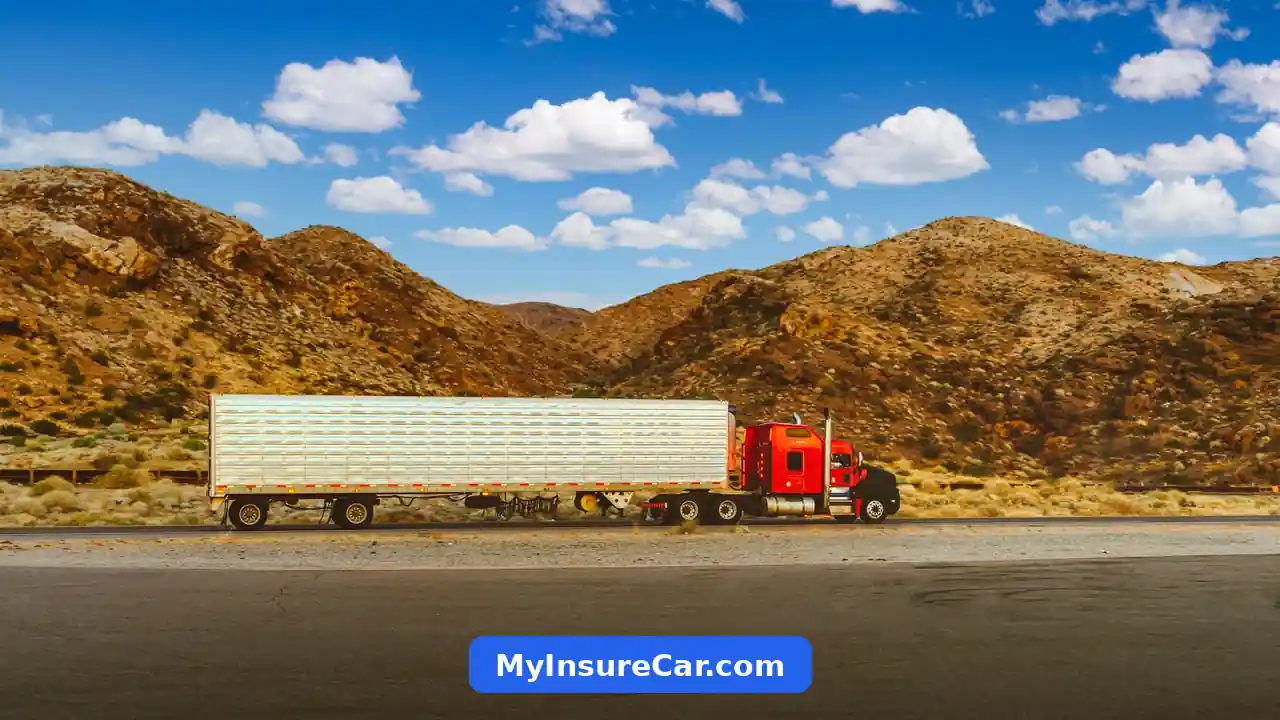
Your renewal quote is on the screen, and the number is higher than you expected. You have driven a truck for a living for years, passed the tougher tests, handled a vehicle ten times the size of your car, and lived under stricter rules than any ordinary driver. You are probably thinking: after all that, should my insurance not be cheaper than this?
It is a fair question, and it deserves an honest answer. A CDL does not automatically lower your personal car insurance. Some insurers give a little credit for a clean commercial record. Others ignore the licence entirely when they price your private car. So let us follow your exact question: where does your CDL help you, where does it not, and what can you do to get the best price on your own car?
What a CDL actually is
Yours is the licence that lets you drive large or specialised commercial vehicles. Your class covers anything from combination vehicles such as tractor trailers down to smaller vehicles carrying hazardous materials or sixteen or more passengers, each with endorsements for tankers, doubles and triples, hazardous materials, and passengers.
Getting one is not a formality, and you know that better than anyone. You passed a written knowledge test, a skills test in the type of vehicle you will drive, and a medical exam. You also agreed to a lower alcohol limit when you are behind the wheel of a commercial vehicle, and to stricter penalties for serious offences. The Federal Motor Carrier Safety Administration sets the national framework for these licences, and each state issues them. So you have earned something real. The question is whether your insurer pays you for it, and that is where the story turns.
How insurers price your personal car
When an insurer quotes your personal car, it looks at risk, not at job titles. The biggest factors are your motor vehicle record, any at fault accidents or claims in the last three to five years, your years of licensed driving experience, where the car is parked overnight, how many miles you drive, and the car itself. Your credit based insurance score is used in most states as well, though a few states restrict it. If this is you, the driver who expected the CDL itself to show up as a discount line, it will not, because insurers do not price the card in your wallet.
A CDL enters this picture only through your record. If your commercial years gave you a long stretch with no tickets and no accidents, that clean record helps, because the record is what the insurer scores. The licence card on its own does not add a discount in the way a defensive driving course sometimes does. Your years of safe driving are the discount. The card is only the proof.
There is one more thing worth knowing, and it cuts the other way. Insurers check both your personal and your commercial driving history. A ticket or accident in a truck does not stay in a separate box. It lands on the same record, and it can raise the price of your personal policy just as a ticket in your own car would. That is the catch most CDL holders never hear about until the renewal lands.
Where a CDL can help your rates
There are a few places where your commercial experience works in your favour. If you have held your licence for many years with no violations, insurers see a long, stable driving history, and that counts. If you drive for a living and rarely use your own car, your low personal mileage can also help, because fewer miles usually means less exposure. Some insurers ask about your occupation and give a small amount of credit for professional driving experience.
If you keep your own car insured continuously, with no gaps in cover, you will get better quotes than a driver who lets cover lapse. Continuity matters more than the CDL itself. If you are comparing quotes after a change of job or a move, keep your existing cover running until the new policy starts, so there is no gap on your record. You are probably thinking: a gap of a few weeks cannot matter that much. It can, because a gap is the first thing a new insurer sees, and it prices you like a driver who let cover go.
If you drive a company vehicle most days, you may also qualify for a policy that reflects the fact that your own car spends much of its time parked. That is not a CDL discount. It is a usage discount, and it comes from telling the insurer the truth about how the car is used. And if your car barely moves all week, that truth is worth real money to you.
Where a CDL does not help
A CDL will not rescue a bad record. A drink driving conviction, a reckless driving charge, or a string of speeding tickets will raise your premium whether you hold a commercial licence or not. In fact, for high risk drivers, serious offences carry extra weight, because insurers know the standards are higher, and they price you like someone who knew the standard and broke it anyway.
A CDL also does not change how your car is rated. A powerful car, a car with expensive parts, or a car that is stolen often costs more to insure regardless of who drives it. And a CDL does not exempt you from the rules of your state. If your state requires a particular minimum level of liability cover, you must carry it, commercial licence or not. If you are unsure how your state treats a specific violation, your state insurance department can explain the local rules. So the licence helps you in exactly one way, and the next section is where drivers mix that way up with something else entirely.
Commercial vehicle insurance is a different policy
People often mix up two different products. Your personal car insurance covers your own car for private use. Commercial vehicle insurance covers trucks, vans, and other vehicles used for business. If you drive a company truck, that truck is normally covered by your employer, and your own personal policy does not need to cover it. You are probably thinking: so the truck is their problem and my car is mine. Mostly yes, until the two worlds overlap, and they overlap more often than you would expect.
Problems start when the two worlds overlap. If you use your own car for work deliveries, for example, your personal policy may exclude that use. If you drive a company car for personal errands, the company policy may not cover you. Read both policies before you assume you are covered. If you are not sure whether a company vehicle counts as covered, ask the employer who owns it and check the policy wording, because the overlap is where uncovered driving hides.
Getting the best rate with a CDL
Start with your record. Pull a copy of your driving record and check it for errors. A ticket that should have aged off, or an accident listed as at fault when it was not, can cost you real money every month until it is corrected. Then shop properly. Get quotes from at least three insurers, and give each one the same details so the quotes are comparable.
Be precise about mileage. If you drive a company truck all week and your own car only at weekends, say so, and give a realistic annual mileage figure. Ask about discounts you may actually qualify for, such as a discount for a clean record, for low mileage, for bundling home and car cover, or for a defensive driving course. Do not claim a discount you have not earned. Insurers verify, and a misstatement can void a claim.
Finally, keep your cover continuous. If you switch insurers without a gap, pay on time, and avoid small claims for minor damage, you will pay less over time than a driver who chops and changes. A CDL shows you took driving seriously, and a clean licence record is what turns that into a better price. Your record, not your card, is what the insurer is buying.
Frequently Asked Questions
Does having a CDL lower my car insurance?
Not automatically. Insurers price your personal car on your driving record, claims history, mileage, and the car itself. A clean commercial record can help you, but the licence card alone does not guarantee you a discount.
Does a ticket in a truck affect my personal car insurance?
Yes. Tickets and accidents in a commercial vehicle go on the same driving record that personal insurers check. A serious offence in a truck can raise your personal premium.
Do I need personal car insurance if I only drive a company truck?
If you own a car, you need cover for it, even if you rarely drive it. If you own no car, a non-owner policy may be the right option for you. Check whether your employer’s policy covers any personal use of the company vehicle.
Can a CDL help after a serious violation?
No. Serious offences such as drink driving or reckless driving raise your premium and can threaten your commercial licence. A CDL does not offset a serious violation for you.
Should I tell my insurer I hold a CDL?
Yes, answer honestly. Insurers ask about your licence type and occupation, and giving accurate details keeps your policy valid. A clean commercial history may help your quote.
You earned your CDL by proving you can drive to a higher standard. Treat it the same way when you insure your own car: as proof of experience, not as a coupon. Keep your record clean, keep your cover continuous, and shop with accurate details about your mileage and your record. That combination is what actually moves your price.

[…] You might interested: Does Having a CDL Lower Car Insurance? […]
[…] Also Read: Does Having a CDL Lower Car Insurance? […]
[…] A guide for you about: Does Having a CDL Lower Car Insurance? […]
[…] you’re unsure about how violations impact your future, my guide on CDL-related discounts can give you more insight into how licensing affects your rates […]