

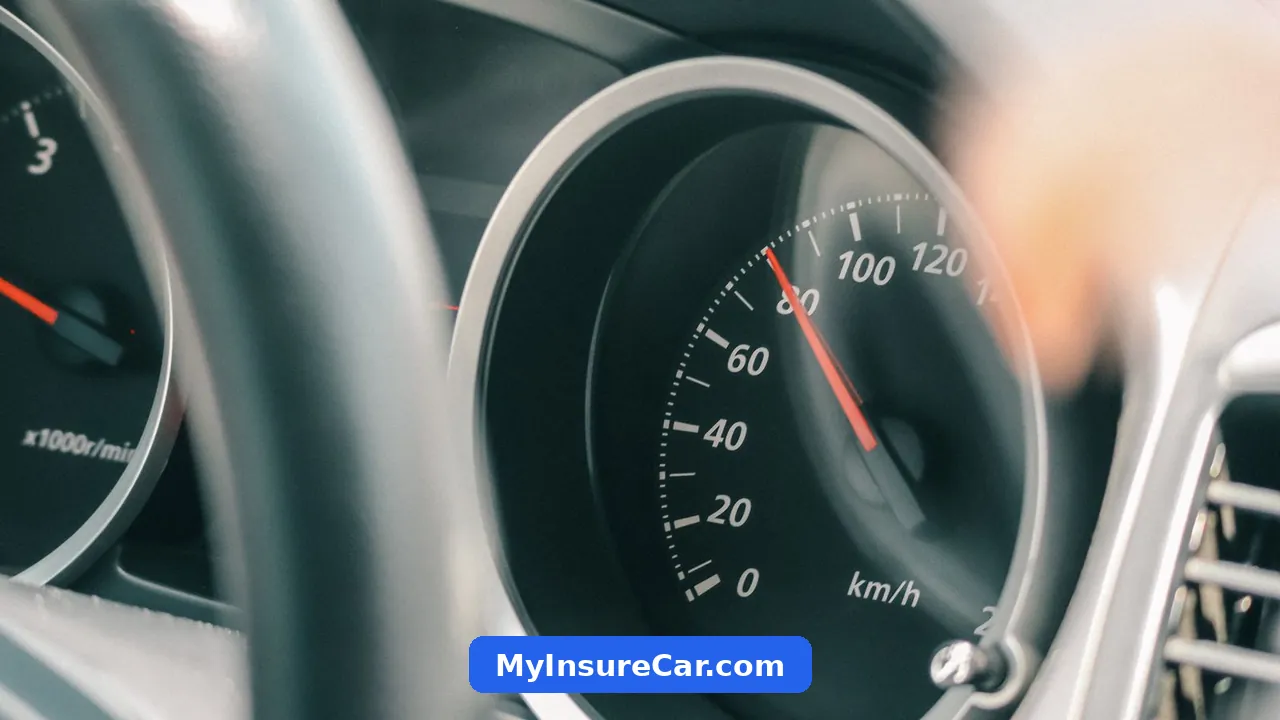
You have just been pulled over, and the fine in your hand is not what is worrying you. What is worrying you is the renewal bill that will land months from now, and how big it will be. You are probably thinking: one ticket, one moment, how bad can it really be? Here is what actually happens to your insurance, how long it lasts, and what you can do about it.
The reason is straightforward. Speeding is a moving violation, and your insurer treats it as evidence that you are more likely to claim. Research from NHTSA links higher speed with greater crash and injury risk, which is why your insurer takes your ticket seriously even when no crash occurred. See the NHTSA page on speeding and crash risk. The ticket itself is small money. The renewal letter months later is where it really costs you.
Why insurers care about a speeding ticket
Your insurer prices risk, and your conviction is one of the clearest risk signals it has. Your ticket tells the underwriter that, across millions of policies, drivers with your record claim more often than drivers without one.
Most companies translate violations into a surcharge that appears at your renewal. One minor ticket adds a small surcharge to your premium, while a large excess over the limit or a repeat offence can move you into a higher priced tier. It is not personal. It is how the maths works across a large book of policies. You will usually see it as a surcharge line on your renewal documents, or simply as a higher premium with no explanation at all. If this is you, staring at a renewal that jumped for no obvious reason, call your insurer and ask them to break the renewal figure down for you. Traffic violations work the same way across the board, and our guide to how traffic violations increase insurance rates explains the wider pattern.

How much does a speeding ticket raise insurance
There is no single figure for you, because your increase depends on how far over the limit you were, your prior record, your state, and your insurer’s surcharge schedule. Your first ticket a few miles over the limit with an otherwise clean record costs you far less than a second ticket within a year or a ticket for a large excess.
That spread is why the phrase speeding ticket insurance increase covers such a wide range in online discussions. One driver sees a modest rise, another sees a steep one, and both can be telling the truth about different insurers and different violations. So do not judge your bill by someone else’s. Part of you wants to compare with a friend who got off lightly. Do not. The only number that matters is yours, on your renewal, with your insurer.
Your surcharge usually lands hardest on liability and collision, the coverages most tied to your driving behaviour. Your comprehensive cover, which handles theft and weather, usually moves less. Your overall premium still rises, because liability makes up the largest slice of your policy.
How long a speeding ticket affects rates
How long your speeding ticket affects your rates depends on your state and your insurer, but in most cases the effect lasts three to five years. The violation stays visible on your motor vehicle record for that period, and your insurer will generally surcharge you for as long as it can see it.
The effect on you is not always flat. Many insurers reduce your penalty over time if you stay clean, so a ticket from four years ago usually costs you much less than one from four months ago. Time plus a clean record is your most reliable cure, and every clean month from here is money back in your pocket.
Your state’s rules set the framework for you. Points systems, lookback periods, and surcharge rules are set state by state. Some states cap how much insurers can surcharge you for a first minor violation, while others leave it to the market. Here is how you check yours: search your state motor vehicle department’s site for its point schedule. It tells you exactly how many points your ticket carries and how long it stays visible. That page, not a forum thread, is your source of truth.
Why the same ticket costs different drivers different amounts
Surcharges vary widely between companies. One insurer might raise your rate modestly for your minor ticket while another raises it sharply for the same violation. A few companies offer first violation forgiveness that wipes your slate clean once.
This is why shopping around after your ticket matters more than at any other time. The cheapest insurer for a clean driver is rarely the cheapest for you now that you have a violation. Get at least three quotes before your renewal and compare them on identical cover.
When one ticket becomes a high risk label
A single minor ticket rarely makes you a high risk driver. The label usually follows a pattern: several violations in a short period, a very large excess over the limit, or your ticket combined with an at fault crash.
Once you are classed as high risk, your market narrows. Some insurers will decline to renew you, and the ones that accept you charge accordingly. If this is you, two tickets in and watching your options shrink, your way back is the same slow road: a clean record, time, and careful shopping. Our guide to car insurance for high risk drivers sets out the options if you find yourself in that position.
Keeping the increase as small as possible
You cannot undo your ticket, but you can shrink its financial damage. Start by looking into a state approved defensive driving course. Many states let you take one to keep points off your licence or earn a discount, and some insurers cut your premium for course completion regardless.
Next, ask your insurer directly what your ticket did to your rate and whether any discount offsets it. Then shop the market. The National Association of Insurance Commissioners advises drivers to keep a good record and to compare prices, since companies charge different rates for the same driver. See its tips for saving on auto insurance.
Finally, consider usage based insurance. If your ticket was out of character and you genuinely drive carefully, telematics pricing rewards your actual habits rather than your record. Our guide to proven tips for lowering your premiums fast covers the other levers that work after a violation, from raising your deductible to dropping cover you no longer need.
Fighting the ticket, and what happens if you ignore it
If you believe your ticket was issued in error, contesting it in court is an option. A dismissed ticket does not reach your record at all. Weigh the court costs and your time against your likely premium saving before deciding. Ask yourself this: will the saving over three years of renewals beat a day in court? For a small first ticket, usually not. For a big one, often yes.
Ignoring your ticket is the worst choice you could make. Unpaid fines can lead to your licence being suspended, and driving on a suspended licence creates problems that dwarf one surcharge. You already know this is the option you cannot take. Deal with your ticket, then deal with your insurance.
Frequently Asked Questions
Will one speeding ticket always raise my insurance?
Almost always, unless your insurer offers first violation forgiveness or your ticket is dismissed in court. Even a minor ticket usually adds a surcharge at your next renewal.
How long does a speeding ticket affect insurance rates?
Commonly three to five years, matching how long the violation stays visible on your motor vehicle record. Your surcharge often shrinks each clean year, so your rates usually improve gradually rather than dropping all at once.
Can a defensive driving course help after a ticket?
In many states, yes. A state approved course can keep points off your licence or earn you a discount, and some insurers cut your premium for completion regardless. Check your state’s rules before you enrol.
Do speeding tickets affect every type of cover?
No. Your liability and collision take the biggest hit because they reflect your driving risk. Your comprehensive cover, which handles theft and weather claims, usually changes little.
Should I tell my insurer about the ticket?
You do not need to call the moment it happens. Your insurer will pull your motor vehicle record at renewal and will find it. Shopping for quotes before that renewal often finds a company that prices your violation more gently.
Your next move
You came here worried about what that ticket in your hand will do to your renewal. Now you know: the effect usually lasts years rather than months, but it is not fixed. Your next move is to check whether a defensive driving course can keep points off your licence, then get three quotes before your renewal lands. Treat the renewal, not the fine, as the real bill, and you will pay less than the driver who waits for it to arrive.


[…] were, whether it was a first offence, and your insurer’s own surcharge table. Our guide to how speeding tickets affect car insurance breaks down the numbers in detail for […]