

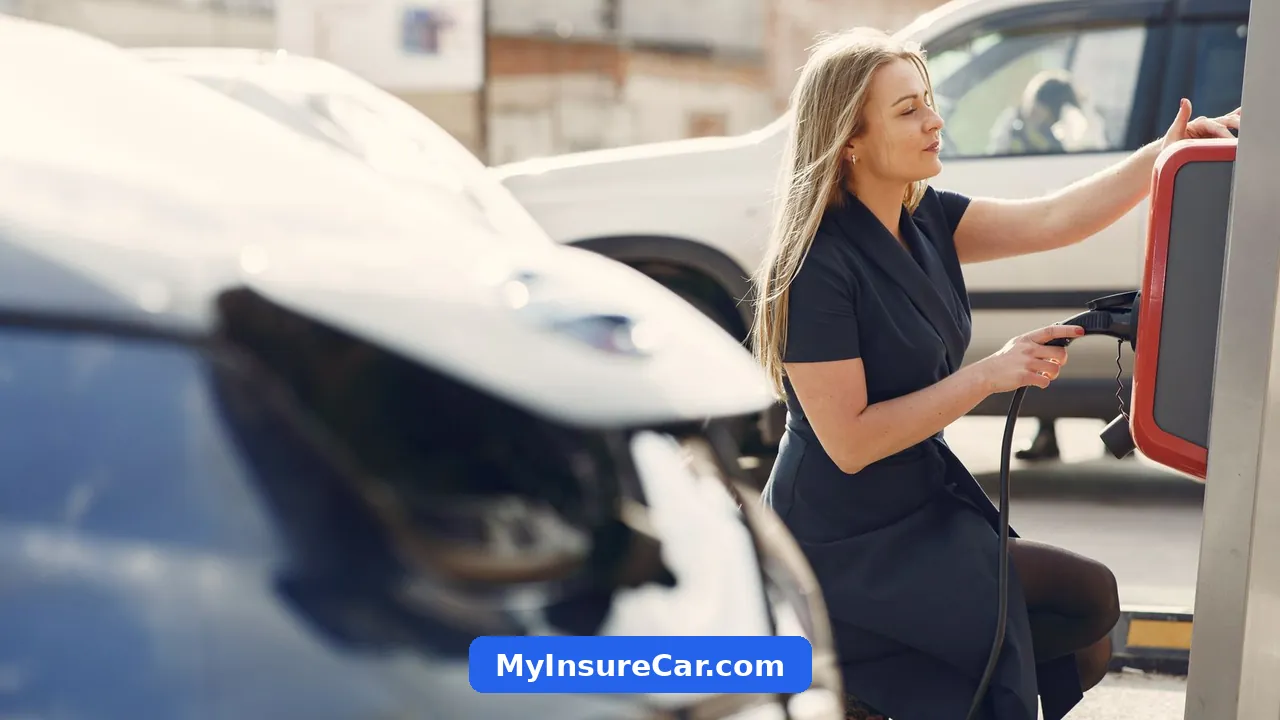
You are standing in the dealership car park, looking at the electric car you want, and your phone is full of warnings from people who have never owned one. One friend says it costs a fortune to insure. Another says the battery will get the car written off after a small bump. You want the car, but the stories are getting in your way.
You are probably thinking: which of these stories are true, and which ones are just internet noise? The truth is quieter than the debate. Some EV insurance claims are true, some are out of date, and some were never true at all.
Myth: EVs always cost more to insure
This one is partly true, but the gap is smaller than the stories suggest, and it is closing. Electric cars do cost more to insure on average than similar petrol cars. The reasons are repair costs, parts availability, and the price of the car itself, not the fact that the car is electric.
If you buy a new EV, it is usually dearer than the petrol car it replaces. A dearer car costs more to repair or replace, so the premium follows. As EV prices fall and repair networks grow, that gap narrows. Older, cheaper EVs already insure for prices close to petrol equivalents.
You are probably thinking: so is every EV expensive to insure? No. What varies most is the model you pick. A mass-market EV with a big repair network can be cheaper to insure than a rare petrol sports car.
Myth: a damaged battery always means a write-off
This is the myth that scares buyers most, and it is out of date. Early in the EV market, some insurers did write off cars with battery damage because battery repair was rare and battery replacement was expensive. That is no longer the standard response.
Your battery pack is modular. If it is damaged, it can often be repaired by replacing the damaged modules rather than the whole pack. Specialist repairers now handle this work, and insurers increasingly pay for module-level repair rather than full replacement.
Your battery is also well protected. It sits low in your car, inside a reinforced casing, and it is the last part of the car to take damage in most crashes. Minor and moderate accidents rarely touch it at all. When the battery is genuinely destroyed, the car is usually a write-off for the same reason any car with a destroyed drivetrain would be.
The fire numbers, plainly stated
The comparison most often quoted comes from National Transportation Safety Board data analyzed by AutoinsuranceEZ: electric cars catch fire at about 25 fires per 100,000 vehicles sold, against about 1,530 per 100,000 for gasoline cars and about 3,475 for hybrids. Read the multiplier as an order of magnitude, not a precise figure, because the method mixes a single year’s fire count with lifetime sales. But the direction is consistent across every dataset: battery fires are rarer than gasoline fires by a wide margin.
What is different is severity. A battery fire can burn hotter, it can reignite hours later, and it needs specialist firefighting, which is why insurers price for severity even when frequency is low. For you, the practical risk is charging: most charging fires involve a damaged battery, damaged equipment, or a setup that ignores the manufacturer’s instructions. Our guide to insurance for electric vehicles explains how battery cover works, and our guide to whether car insurance covers a car fire walks through what happens after one.
Myth: EV fires are a bigger insurance problem
Your electric car can catch fire. So can a petrol car, at a higher rate per vehicle. The data on this is consistent: battery fires are rarer than petrol fires, but they get far more attention when they happen.
What is different is how a battery fire behaves. It can burn hotter, it can reignite, and it needs specialist firefighting. That makes an individual fire more difficult to deal with, and it can make the damage worse when one does happen. Insurers price for severity, not just frequency.
If this is you, the one charging at home on a proper charger, the practical point is simple. Charging fires are rare, and most happen with damaged batteries, damaged charging equipment, or charging setups that ignore the manufacturer’s instructions. A healthy battery on a proper home charger is a low-risk combination.
Myth: nobody can repair an EV
This was closer to true five years ago than it is today. Early EVs had to go to dealer workshops for almost anything. Independent repairers were scarce, parts were slow, and repair times stretched for weeks.
The picture has improved for you as a buyer. Independent EV repairers exist in most areas now, parts supply has grown, and many common jobs, tyres, brakes, suspension, body panels, are the same as on any car. The specialist work is concentrated in the battery, the motor, and the power electronics.
Repair time can still be longer than for a petrol car, especially for battery or electronic parts. That is why courtesy car cover matters more for you than for a petrol driver. If your car is in a workshop for three weeks, a courtesy car is not a luxury.
Before you buy an EV, ask your insurer which repairers they use in your area and how long battery repairs typically take. The answer tells you more about your real experience than any headline about repair costs.
Myth: charging at home is not covered
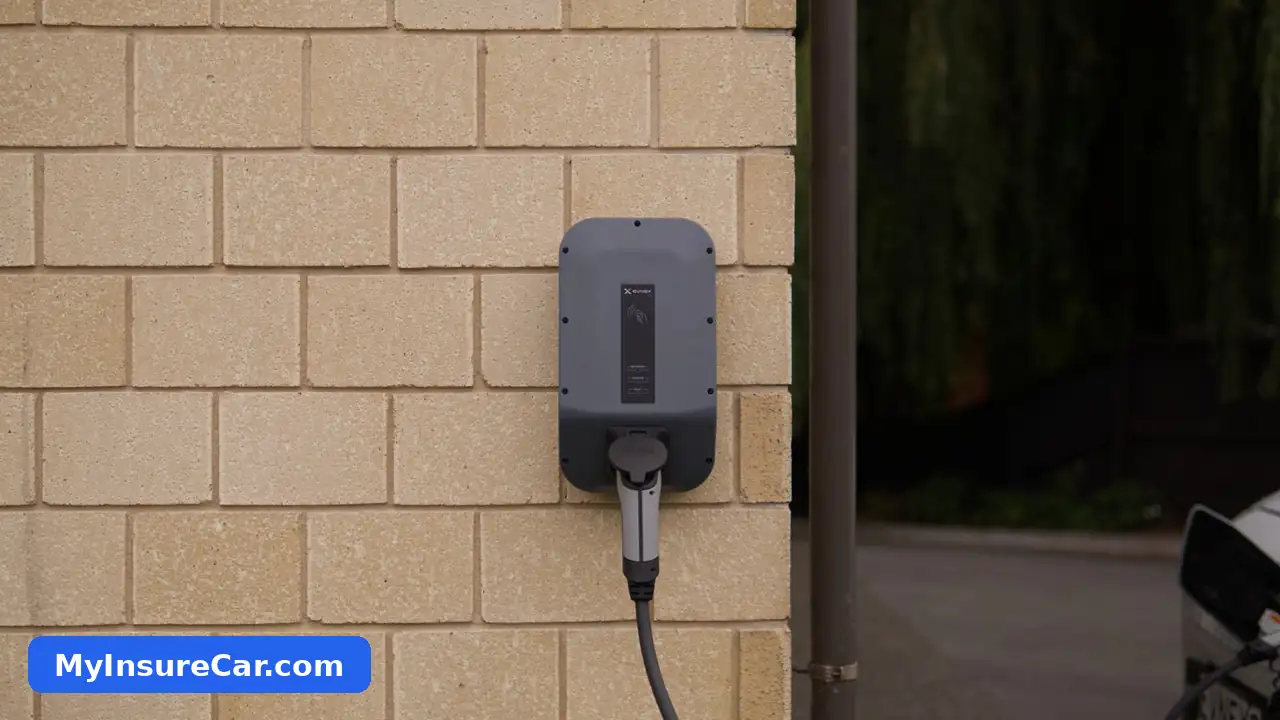
Home charging is covered in most policies, but the details matter for you. Damage to the car while charging is normally treated like any other damage to the car. Damage to the charger itself is a different question.
A charger fixed to your house is usually part of your home, not your car, so it falls under home insurance rather than car insurance. A portable charging cable is usually treated as part of the car or as personal property, depending on the policy. Check both policies, not just one.
One condition appears in many policies: the charger must be installed by a qualified electrician to the manufacturer’s standard. A do-it-yourself install can void cover for a charging fire. Keep the install certificate with your home documents. The Insurance Information Institute explains green insurance and how insurers handle electric and hybrid vehicles.
Myth: EVs wear out tyres so fast the savings vanish
Your electric car is heavier than a petrol equivalent, and it delivers instant torque. Both wear tyres faster. You will replace tyres more often than a petrol driver, typically by a noticeable but not dramatic margin.
You are probably thinking: so the fuel savings are a lie? No. The running cost comparison still favours your EV. Electricity costs less per mile than petrol, and an EV has fewer moving parts to service. No oil changes, no exhaust system, no clutch. Tyre costs eat into the saving, they do not erase it.
You can slow tyre wear by choosing tyres rated for EVs, keeping pressures correct, and driving smoothly. Hard acceleration is the fastest way to wear any tyre out, and an EV makes hard acceleration easy.
The tire bill nobody budgets for
Electric cars wear tires faster than gasoline cars, and the gap is real. Michelin puts the difference at about 20 percent faster wear on average, because the battery adds up to 1,000 pounds of weight and the instant torque is hard on tread. In a Consumer Reports survey, more than half of EV owners who had replaced tires did so at or before 30,000 miles, and more than 30 percent said the tires wore out sooner than they expected.
That cost does not cancel the fuel saving, but it is a real line in the budget. Tires made for EVs use harder compounds and stronger sidewalls to carry the weight, and they are worth the premium on a heavy car. Rotate them on schedule, about every 6,250 miles, the interval Tesla recommends, and keep pressures correct, because an underinflated tire on a heavy car wears fastest of all. Our guide to insurance for electric vehicles explains the repair costs that follow an EV, and our guide to why some cars are cheaper to insure than others shows how tires and repair costs feed into your premium.
Myth: your EV policy is the same as a petrol policy
The core of the policy is the same. Liability, collision, comprehensive, and the rest work the same way. The differences sit in the details that are specific to electric cars.
Three details deserve your attention. First, battery cover: does the policy cover the battery at full replacement value, or does it depreciate? Second, charging equipment: what is covered, and under which policy? Third, software and updates: some EVs rely on software features that affect the car’s value and safety. Check whether your policy treats them as part of the car.
Roadside cover also deserves a second look from you. A flat battery in an EV is not solved by a can of petrol. You need a tow to a charger. Make sure your roadside cover includes towing to the nearest charging point, not just to the nearest garage.
Our guide to insurance for electric vehicles covers these details in full for you.
Our comparison of comprehensive versus collision insurance explains which part of the policy pays for what.
What actually drives EV premiums
Four things drive your price. Your car’s value, the cost and speed of repair, the availability of parts and trained repairers, and your driving record. The drivetrain itself matters less than you might think.
That is good news for you as a buyer. It means the premium is not a fixed EV tax. A cheaper EV, a model with a strong repair network, and your clean driving record will produce a premium close to a petrol equivalent. A rare, expensive EV with a thin repair network will not.
It also means shopping around matters more for EVs than for petrol cars. Insurers differ widely in how they price EV risk. Some have invested in EV claims expertise and price keenly. Others add a margin for unfamiliarity. The spread between the cheapest and dearest EV quote is often larger than for petrol cars.
If this is you, the one about to sign for an EV this month, get several quotes before you buy the car, not after. An EV that looks cheap on the forecourt can turn expensive once the premium lands. A few car insurance quotes on the exact model, before you sign, will tell you the real running cost.
The honest summary
Electric cars are not uninsurable, not fire traps, and not guaranteed write-offs. Yours is a car with a different drivetrain, a heavier weight, and a repair network that is still catching up. Those differences raise premiums for some models and barely touch others.
So here is where you stand. The best approach is the boring one, and it is yours to run: compare the exact car, read the battery and charging clauses, check repair times in your area, and get several quotes before you sign. The myths will keep circulating. The numbers in front of you are what matter.
For the technical side of how EVs work, the US Department of Energy’s FuelEconomy.gov electric vehicle technology guide is clear and factual.
Frequently Asked Questions
Do electric cars cost more to insure?
On average, yes, but the gap is smaller than often claimed and it is closing. The main drivers for you are your car’s value, repair costs, and parts availability, not the fact that your car is electric.
Does a damaged EV battery mean the car is written off?
Not usually any more. Your battery pack is modular, and damaged modules can often be repaired or replaced without replacing the whole pack. Only severe battery damage normally leads to a write-off.
Are EV fires more common than petrol car fires?
No. Battery fires happen less often per vehicle than petrol fires, though they can burn hotter and need specialist firefighting. For you, the risk that matters is charging: charging fires are rare and usually involve damaged batteries or faulty charging setups.
Is home charging covered by car insurance?
Damage to your car while charging is normally covered. A fixed wall charger is usually covered under your home insurance, not car insurance. Keep your install certificate, as a DIY install can void cover for a charging fire.
Can any garage repair an electric car?
Common work such as tyres, brakes, suspension, and body panels can be done by most garages. Battery, motor, and power electronics work needs a specialist. Check which repairers your insurer uses in your area before you buy.
This guide is general education, not professional insurance advice, so confirm the details in your own policy and with a licensed insurance professional before you act. Full disclaimer



[…] Read moreCommon Myths vs Facts About EV Insurance You Should Know […]
[…] rear-end another vehicle and the impact damages your engine block or internal components, collision insurance should cover the repair or replacement costs—minus your […]
[…] insurance is usually unnecessary if you made a large down payment, have a short loan term, bought a used car with slower depreciation, or owe less than the […]
[…] shows only about 0.3 percent of 2022 and newer EVs have needed one outside of recalls. Our guide to common EV insurance myths against the facts separates the battery stories that are true from the ones that are not, and our guide to what […]
[…] guide to insurance for electric vehicles explains the EV-specific risks in full, and our guide to common EV insurance myths against the facts separates the battery stories that are true from the ones that are […]