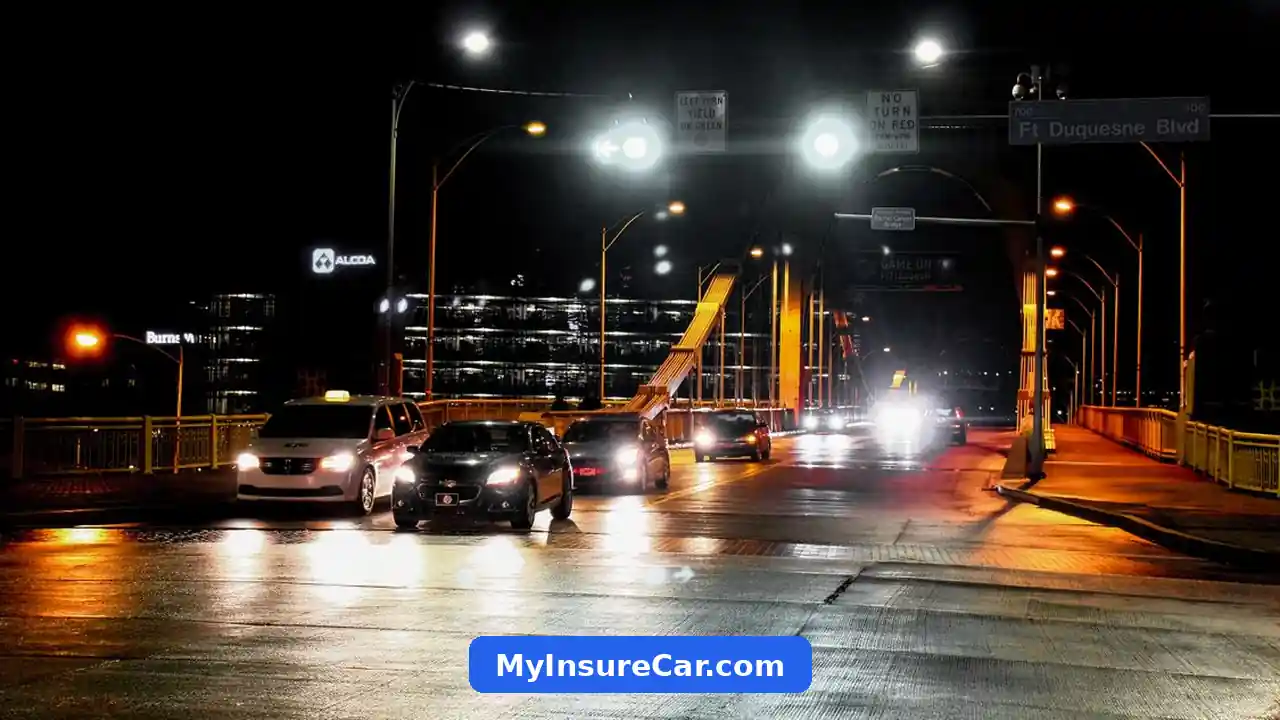
You are sitting in tunnel traffic on the Parkway East, watching the brake lights snake ahead of you into the dark, and the thought that crosses your mind has nothing to do with the car insurance Pittsburgh quoted you last month. Then you remember the number. It was the kind of quote that makes you grip the steering wheel a little tighter. You are probably thinking: I drive carefully, I have no tickets, so why does my policy cost like I commute through a demolition derby?
Fair question, and Pittsburgh has a real answer. This city packs bridges, tunnels, steep hills, and winter weather into a driving environment that insurers watch closely, and Pennsylvania layers a legal choice on top of it that most drivers sleepwalk through. If this is you, the commuter who white knuckles it down a snow covered hill in the South Hills every January, or the driver who picked the cheapest option on the application five years ago and never looked back, this is written for you. By the end you will know exactly what Pennsylvania requires, what that tort choice you barely remember means for your wallet, and how to shop for car insurance Pittsburgh companies actually compete on.
Pittsburgh is a special case, and your insurer knows it
Most cities are flat grids. Pittsburgh is a topography experiment with 446 bridges, tunnels that swallow highways whole, and hills that turn a light snow into a physics lesson. Insurers price what they see in the claims data, and what they see in Pittsburgh is fender benders at tunnel merges, winter slides on grades, and the kind of intersection geometry that keeps adjusters employed. Your premium reflects that long before it reflects you.
You are probably thinking: so my address is doing this, not my driving. Mostly, yes. Where you garage the car inside the metro area matters, and the difference between a quiet neighborhood and a high traffic corridor can be bigger than the difference between a clean record and one speeding ticket. If this is you, the Pittsburgh driver who assumes a ticket is the only thing that moves the rate, the ZIP code math is the thing worth learning first. It is the lever you did not know you were pulling.
The second Pittsburgh factor is winter, and it is not a small one. Western Pennsylvania gets the freeze thaw cycle, the lake effect spillover, and black ice on bridges that freeze before the roads do. Every winter brings a wave of claims, and insurers bake that seasonal pattern into every Pittsburgh quote. That is not a reason to overpay. It is a reason to shop smart, because the company that prices Pittsburgh winter best this year is worth finding.
What Pennsylvania actually requires you to carry
Pennsylvania requires 15/30/5 in liability coverage: $15,000 per person for bodily injury, $30,000 per crash for bodily injury, and $5,000 for property damage. It also requires $5,000 in first-party medical benefits, which pays for your own medical costs after a crash regardless of who caused it. Those are among the lowest minimums in the country, and the gap between those numbers and a real crash bill is where Pennsylvania drivers get hurt financially.
The Pennsylvania Insurance Department publishes the official requirements and walks through your coverage options in plain language. It is the one source that is not trying to sell you anything, so read it before you talk to an agent. Knowing the state’s baseline makes every sales pitch easier to judge.
Here is the honest warning about those minimums. Fifteen thousand dollars of bodily injury coverage can disappear in a single emergency room visit, and five thousand dollars of property damage does not replace a modern car. The state minimums are a legal floor, not financial advice. Our breakdown of comparing car insurance quotes online shows how to price out higher limits side by side, because the jump from minimum to meaningful coverage usually costs less per month than drivers expect.
The tort choice you made without realizing it
Pennsylvania is a choice no-fault state, which means every driver picks between limited tort and full tort coverage. This is the most important box you ever checked on a Pennsylvania insurance application, and most drivers checked it without understanding it. Limited tort costs less, and in exchange you give up the right to sue for pain and suffering after a crash, except in serious cases defined by law. Full tort costs more and keeps that right intact.
You are probably thinking: I have no idea which one I picked. That is the most common answer in Pennsylvania, and it is worth finding out today. Pull your declarations page and look for the words. If you chose limited tort years ago to save money and your life looks different now, a family, a mortgage, real assets, the calculation may have changed. The cheaper choice is not automatically the wrong one, but an uninformed choice about your legal rights is a bad way to save money.
Here is how to think about it plainly. Limited tort is a discount you buy by limiting what you can recover after someone else hurts you. Full tort is insurance for the scenario where an injury changes your life and a check for medical bills is not enough. If this is you, the driver with people depending on your income, full tort deserves a serious look, and the price difference quoted side by side is the only honest way to decide. Never let an agent choose this for you. It is your right to recover, and your signature is on it.
How to actually lower your Pittsburgh bill
Start the way every smart shopper starts: three or four quotes for identical coverage, tort choice included. Pittsburgh insurers disagree with each other, sometimes wildly, because every company weights the city’s bridges, tunnels, and winter claims a little differently. Identical coverage on every quote is the rule that keeps the comparison honest, and most drivers who skip this step overpay for years without knowing it.
Then go hunting for the discounts Pennsylvania drivers leave on the table. Safe driver, multi-policy, good student, defensive driving course, low mileage, paid-in-full, paperless billing, and telematics programs that price your actual driving instead of your ZIP code’s reputation. Our rundown of the car insurance discounts most drivers miss is a checklist worth running through line by line, because Pittsburgh drivers routinely miss two or three of these and each one is money back.
Then look at the car itself, because what you drive shapes your Pittsburgh rate more than most people realize. Some cars cost far less to insure than others, and the reasons are boring and practical: repair costs, theft rates, safety ratings, and how often that model shows up in claims data. If you are car shopping, or even just curious why your neighbor’s sedan costs less to insure than your crossover, our explanation of why some cars are cheaper to insure than others will change how you look at the next car you buy.
Your Pittsburgh action plan
Do this before winter sets in. First, find your tort selection on your declarations page. If it says limited tort and you cannot remember choosing it, that is your sign to price full tort side by side and decide with your eyes open. Second, get three fresh quotes with identical coverage from companies that compete hard in western Pennsylvania. Third, run the discount checklist and ask every agent about telematics, because a careful Pittsburgh driver is exactly the profile those programs reward.
The Insurance Information Institute tracks how choice no-fault systems like Pennsylvania’s affect claim costs and premiums over time, which is useful background when you are deciding what your tort choice is really worth. Context turns a confusing legal checkbox into a financial decision you can defend.
Frequently Asked Questions
nWhat is the minimum car insurance required in Pennsylvania?
Pennsylvania requires 15/30/5 in liability coverage plus $5,000 in first-party medical benefits. That means $15,000 per person for bodily injury, $30,000 per crash, and $5,000 for property damage, along with medical coverage for your own injuries. These are among the lowest minimums in the country, so many Pittsburgh drivers buy higher limits to protect their savings and assets.
What is the difference between limited tort and full tort in Pennsylvania?
Limited tort costs less but restricts your right to sue for pain and suffering after a crash, except in serious injury cases defined by law. Full tort costs more and preserves your full right to recover those damages. Every Pennsylvania driver chooses one when buying a policy, so check your declarations page to see which one you currently have.
Why is car insurance expensive in Pittsburgh?
Pittsburgh’s hills, bridges, tunnels, and winter weather produce a steady stream of collision claims that insurers price into every local quote. Your ZIP code within the metro area also matters, because insurers use local crash and theft data to set rates. Comparing several quotes and asking about every discount are the most reliable ways to bring the number down.
Should I switch from limited tort to full tort?
It depends on your life situation. Full tort protects your right to recover pain and suffering damages if someone else seriously injures you, which matters more if you have a family depending on your income or significant assets. Get quotes for both options side by side so you can see the actual price difference before you decide.
How can I lower my car insurance bill in Pittsburgh?
Get three or four quotes for identical coverage, since Pittsburgh insurers price the same driver very differently. Work through the full discount checklist, including safe driver, multi-policy, good student, defensive driving, low mileage, and telematics programs. Review your tort choice and liability limits once a year, because the right answer changes as your life changes.
Pittsburgh drivers face bridges, tunnels, hills, and a legal choice most states never ask about, but none of that means overpaying is mandatory. Find your tort selection, price it both ways, and never renew a Pittsburgh policy without three fresh quotes and your eyes fully open. That is how you drive this city without letting it drive your budget.
This guide is general education, not professional insurance advice, so confirm the details in your own policy and with a licensed insurance professional before you act. Full disclaimer