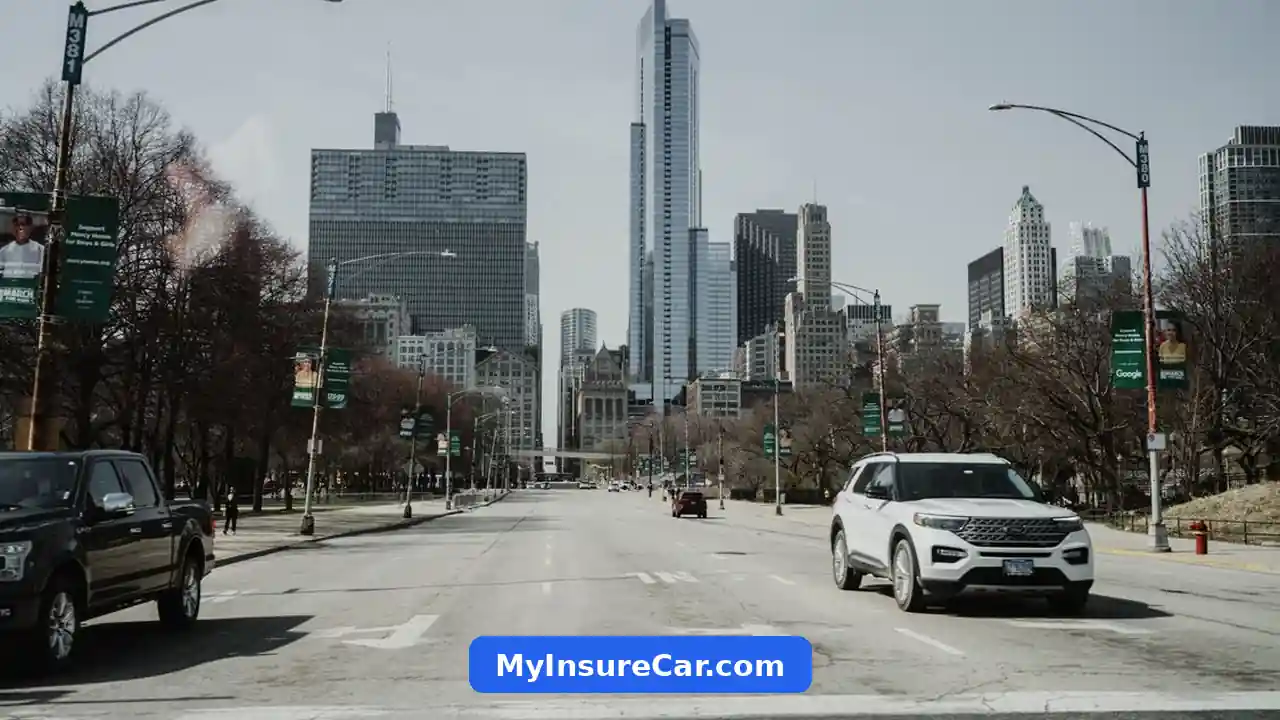
You are on Lake Shore Drive in February, and the lane in front of you just became a sheet of ice while the renewal letter sits on your passenger seat with a number that made you laugh out loud. It did not feel funny for long. You are hunting for the best car insurance Chicago winter will respect, that actually answers the phone when a black ice slide turns your bumper into abstract art against a guardrail, and you are probably thinking: does any company understand what driving here is like?
The answer is yes, but the price you get depends on whether the company is pricing the real Chicago or a spreadsheet version. If this is you, the commuter crawling down the Kennedy at 7 a.m. while your neighbor with the same car pays a totally different rate, or the renter in Logan Square whose quote just came in higher than the car payment, this is written for you. By the end you will know what Illinois requires, what is already built into every policy sold here, and the exact moves that separate the best car insurance Chicago drivers buy from the policies that just bleed money.
Why Chicago drives your rate more than your driving record does
Here is the uncomfortable truth about Chicago car insurance. Your ZIP code does more to your premium than almost anything you do behind the wheel. Insurers price Chicago by neighborhood because the numbers are honest: denser traffic means more collisions, higher theft rates mean more comprehensive claims, and winter means more of everything. A driver in a quiet suburb and a driver in the city can buy the identical policy from the identical company and see very different numbers.
You are probably thinking: so I am being punished for where I live. In a way, yes, but it cuts both ways. The same pricing system that stings in the city rewards a move to a calmer ZIP code with real savings, and it rewards garaging your car in a secured garage instead of on the street. If this is you, the city driver who parks on the street every night, a garage or even a secured lot is one of the few rating factors you can actually change, and it can move the needle more than a year of clean driving.
Winter is the second half of the Chicago equation. Lake effect wind, black ice, and the kind of slush that hides potholes until they have already eaten your alignment mean Illinois insurers see a claim pattern that Sun Belt states never experience. That is exactly why hunting for the best car insurance Chicago offers is not a one afternoon chore you do once. It is a habit, because the company that priced winter correctly this year may not be the one that prices it correctly next year.
What Illinois actually requires you to carry
Illinois keeps its minimums simple and, honestly, low. The state requires 25/50/20 in liability coverage: $25,000 per person for bodily injury, $50,000 per crash for bodily injury, and $20,000 for property damage. Those numbers are the legal floor. They are not a recommendation, and anyone who has ever priced out an emergency room visit knows that floor sits uncomfortably close to the ground.
The Illinois Secretary of State publishes the current insurance requirements and explains what happens if you drive without coverage, which ranges from fines to a suspended registration. It is worth reading the official page once, if only so you know the rules better than the agent quoting you. Illinois takes uninsured driving seriously, and the penalties are designed to sting.
Now the part that matters more than the minimums. Illinois law builds uninsured motorist bodily injury coverage into every auto policy sold in the state. That means if a driver with no insurance hits you, your own policy still has a layer of protection for your injuries. You are probably thinking: wait, I have that already? You do, by law, though the limit matters, and many drivers carry the minimum without realizing what a serious injury can cost. Before you compare a single quote, pull out your declarations page and look at what you actually have. Our walkthrough of how much car insurance you really need will help you read it like someone who plans to keep their savings.
The uninsured motorist detail most Illinois drivers miss
Chicago has a real uninsured driver problem, which is exactly why that built in coverage matters so much here. A policy that looks cheap can be carrying the bare minimum of uninsured motorist protection, and the minimum is a thin blanket on a cold night. Raising it costs less than most drivers expect, and it is the coverage that protects you from the exact driver you are most likely to meet on a Friday night on the Dan Ryan.
Here is the scenario to picture. An uninsured driver rear ends you at a stoplight. Your car is fixable, but your shoulder is not, and physical therapy runs for months. Liability coverage on the other driver does not exist, because there is no other driver insured. Your uninsured motorist bodily injury coverage is the thing standing between you and the full bill. If this is you, the driver who has always bought minimums because nothing bad has happened yet, this is the coverage line to raise before you raise anything else.
There is one more Illinois nuance worth knowing. Property damage from an uninsured driver is a separate question from bodily injury, and the default structure of many policies treats them differently. When you get quotes, ask the agent to show you both numbers side by side. A five minute conversation about uninsured motorist limits can be worth more than an hour of coupon clipping across every other discount on the list.
How to actually find the best car insurance in Chicago
Start with quotes, plural, and get them for identical coverage. Chicago insurers disagree with each other more than most drivers expect, and the company that is cheapest for your coworker can be the most expensive for you, because every company weights your ZIP code, your car, and your record a little differently. Three or four quotes is not overkill in this city. It is the whole game, and our guide to comparing car insurance quotes online shows the side by side method that keeps every quote honest.
Then interrogate the discounts, because Chicago companies offer more of them than most drivers collect. Safe driver, multi-policy, good student, defensive driving course, low mileage, paid-in-full, paperless, telematics programs that track your actual driving. You are probably thinking: I already asked about discounts. Did you ask about all of them, by name, on a recorded line? Most drivers leave at least one on the table because the agent never volunteered it. Ask for each one individually.
Then look at how you pay. This is the part of the bill most people never question, and it quietly adds up. Paying monthly feels easier, but many insurers add installment fees to every payment, which means you pay more for the privilege of paying in pieces. Paying once or twice a year can cut those fees out entirely. Our breakdown of whether it is cheaper to pay car insurance monthly or yearly runs the real math so you can see what your payment schedule is actually costing you.
Your Chicago winter action plan
Do this before the first real snow. First, photograph your declarations page and check three lines: your liability limits, your uninsured motorist bodily injury limit, and whether you have comprehensive coverage for the ice and hail damage winter guarantees. Second, get three fresh quotes with identical coverage from companies that actually compete in Chicago. Third, ask every one of them about garage parking discounts, winter mileage, and telematics, because a Chicago driver who drives less in January than in July is a profile some companies will pay to insure.
The Insurance Information Institute tracks how winter weather patterns drive claim costs across the Midwest, which is useful context when your quote feels personal. It is not personal. It is weather, traffic density, and theft maps doing math. Your job is to be the driver who understands the math and shops against it instead of just paying it.
Frequently Asked Questions
nWhat is the minimum car insurance required in Illinois?
Illinois requires 25/50/20 in liability coverage: $25,000 per person for bodily injury, $50,000 per crash for bodily injury, and $20,000 for property damage. The Illinois Secretary of State enforces these minimums, and driving without coverage can lead to fines and a suspended registration. Many Chicago drivers buy higher limits because serious crash costs pass these minimums quickly.
Is uninsured motorist coverage really included in every Illinois policy?
Yes. Illinois law requires uninsured motorist bodily injury coverage on every auto policy sold in the state. It protects you if a driver with no insurance injures you in a crash. The limit matters, so check your declarations page, because the legal minimum of this coverage may not match the real cost of a serious injury.
Why is car insurance more expensive in Chicago than in the rest of Illinois?
Insurers price by ZIP code using local crash, theft, and claim data. Chicago’s density means more collisions, and the city sees higher theft and winter weather claim numbers than the suburbs or downstate. Parking in a secured garage, driving fewer miles, and comparing several quotes are the most effective ways to fight the city premium.
How can I get the best car insurance rates in Chicago?
Get three or four quotes for identical coverage, because Chicago insurers price the same driver very differently. Ask about every discount by name, including safe driver, multi-policy, good student, defensive driving, low mileage, and telematics programs. Check whether paying yearly instead of monthly removes installment fees from your bill.
Does winter driving really affect my Illinois car insurance?
Yes. Ice, snow, and slush drive up collision and comprehensive claims across Illinois every winter, and insurers build that seasonal pattern into Chicago-area pricing. Comprehensive coverage protects against ice, hail, and falling branches, and it is worth reviewing before the first snow. Your driving record through one clean winter can also help future quotes.
Chicago driving will always cost more than driving somewhere calm, but there is a wide gap between the driver who auto renews every year and the driver who shops it like a sport. Check your uninsured motorist limits, raise them before winter, and never renew a Chicago policy without three fresh quotes sitting next to it. That is how you stop paying the city’s lazy tax.
This guide is general education, not professional insurance advice, so confirm the details in your own policy and with a licensed insurance professional before you act. Full disclaimer